Planning a trip abroad? Whether you’re heading to Europe for a Schengen visa, shopping in Dubai, or visiting family in the United States, travel insurance is probably already on your checklist.
For many Kenyans, however, travel insurance is simply something you buy because the embassy requires it. Once the visa is approved, the policy is forgotten.
But here’s what most people don’t realize: travel insurance is much more than a visa requirement. It protects you from unexpected medical bills, travel disruptions, legal liabilities, lost documents, and several hidden expenses that could cost you hundreds of thousands — or even millions — of shillings while you’re overseas.
Let’s explore the travel insurance benefits that most travellers never use simply because they don’t know they exist.
Key Takeaways
Travel insurance covers far more than the Schengen visa requirement — including lost passports, legal liability, and daily hospital cash.
Flight delays and missed connections can be reimbursed if your policy includes the right add-ons.
Your destination matters — Europe, Dubai, and the USA each call for different priority benefits.
Keeping receipts and reporting incidents immediately makes claims far easier to process.
A quick chat with a licensed advisor helps you pick cover that matches your real risks, not just visa rules.
Join Our Insurance Community on WhatsApp
Interested in insurance trends, tips, and news? Join our WhatsApp community to connect with others who follow the insurance space in Kenya and beyond.
When you’re outside Kenya, even small emergencies become expensive.
Imagine:
A simple hospital visit in the United States costing over KES 250,000.
Missing your connecting flight in Europe and paying for a hotel yourself.
Losing your passport in Dubai days before your return flight.
Without proper travel insurance, these unexpected situations can quickly ruin both your trip and your finances.
The good news? A comprehensive travel insurance policy is designed to protect you against exactly these kinds of situations.
1. Lost Passport? Your Insurance Can Help
Losing your passport abroad is every traveller’s nightmare.
Besides the stress, replacing travel documents involves:
Police reports
Embassy visits
Consular fees
Transport costs
Emergency travel documents
Many comprehensive travel insurance policies reimburse these expenses, helping you replace your documents without carrying the full financial burden yourself.
2. Personal Liability Cover
Here’s a situation most people never think about.
Imagine accidentally damaging expensive property while shopping in Dubai. Or accidentally knocking someone over while sightseeing in Europe, resulting in injuries.
In many countries, you may be legally required to compensate the affected person. That’s where Personal Liability Cover comes in.
Depending on your policy, it may help pay for:
Third-party property damage
Legal defence costs
Compensation awarded by courts
Out-of-court settlements
It’s one of the least talked-about benefits — but one that could save you a significant amount of money.
3. Daily Hospital Cash Benefit
Medical bills aren’t the only costs when you’re hospitalized overseas.
Even if your insurer settles your treatment, you’ll still spend money on:
Meals
Internet access
Phone calls
Transportation for family or friends
Other personal expenses
Some travel insurance plans provide a daily cash allowance while you’re admitted to hospital. This benefit gives you extra money to cover these day-to-day expenses without affecting your medical cover.
Quick Links: Explore More on Travel Insurance
Resource
What You’ll Learn
Visit
Travel Insurance Guide for Kenyans
A complete breakdown of how travel insurance works for Kenyans travelling abroad.
Bad weather, airline technical problems, or strikes can leave you stranded at an airport for hours — or even overnight.
If your delay meets your policy’s qualifying period, travel insurance may reimburse expenses such as:
Hotel accommodation
Meals
Refreshments
Airport transfers
Instead of paying unexpected accommodation costs yourself, your insurance helps cushion the inconvenience.
5. Missed Your Connecting Flight?
Long-haul journeys from Nairobi often involve connections through cities like:
Doha
Dubai
Amsterdam
Istanbul
If your first flight is delayed and causes you to miss your next one, some travel insurance policies cover:
Hotel accommodation
Meals
Local transport
Additional travel expenses
Always check whether your policy includes Missed Connection Cover, especially if your itinerary has multiple flights.
6. Delayed Baggage? Buy Essentials Without Worry
Arriving at your destination without your luggage can be frustrating.
Fortunately, many travel insurance policies include Baggage Delay Cover.
If your luggage is delayed beyond the specified waiting period, your insurer may reimburse you for buying essentials such as:
Clothes
Toiletries
Personal care items
Essential medication
Tip: Always request a Property Irregularity Report (PIR) from the airline before leaving the airport.
7. Emergency Visit from a Family Member
Imagine being hospitalized overseas for several days with no family nearby.
Some premium travel insurance plans include a Compassionate Visit Benefit.
If you’re admitted to hospital for an extended period, your insurer may cover:
Return airfare for a close family member
Accommodation expenses
Daily allowance for your visitor
This benefit provides emotional support during difficult moments far from home.
Which Benefits Matter Most Depending on Your Destination?
Europe (Schengen Countries)
Besides the mandatory medical cover required for your visa, it’s wise to choose a policy that also includes:
Missed connection cover
Flight delay benefits
Baggage delay protection
These become especially useful when travelling between multiple European cities.
Dubai
Dubai is known for luxury shopping, exciting attractions, and outdoor activities. Look for policies offering:
Personal Liability Cover
Daily Hospital Cash Benefit
Comprehensive medical expenses
These provide additional protection during your stay.
United States
Healthcare in the USA is among the most expensive in the world. A comprehensive policy should include:
High medical limits
Emergency medical evacuation
Baggage delay cover
Emergency travel assistance
These benefits can save you from enormous unexpected costs.
How to Make a Successful Travel Insurance Claim
If something goes wrong while travelling, follow these simple steps:
Report the Incident Immediately
Whether it’s lost baggage or a stolen passport, obtain the official report from the relevant authority. Examples include:
Police abstract
Property Irregularity Report (PIR)
Hospital admission documents
Keep Every Receipt
Save receipts for:
Clothing purchases
Toiletries
Hotel accommodation
Transport
Embassy fees
Without receipts, reimbursement may not be possible.
Contact Your Insurer Immediately
Most travel insurance providers offer a 24-hour emergency assistance line. Call them before making major medical or travel decisions whenever possible. They can:
Direct you to approved hospitals
Authorize treatment
Assist with emergency travel arrangements
Guide you through the claims process
Final Thoughts
Travel insurance isn’t just another document required by an embassy.
It’s financial protection that follows you wherever you go.
From replacing lost passports and covering delayed baggage to paying emergency medical bills and helping during flight disruptions, a good travel insurance policy can save you from unexpected expenses and give you peace of mind throughout your journey.
Before your next international trip, don’t just ask, “Does this policy meet the visa requirements?”
Instead, ask: “What else does my travel insurance protect me against?”
You may be surprised by how much value is already included.
Travel with Confidence
At Step by Step Insurance, we help you choose travel insurance that goes beyond visa requirements — so you’re protected from take-off to touchdown.
Whether you’re travelling for business, study, holiday, or visiting family abroad, our team will help you find the right cover for your destination and budget.
Contact Step by Step Insurance today and travel with confidence, knowing you’re protected every step of the way.
Buying a used car is an exciting milestone. Whether it’s your first vehicle or an upgrade, finally getting the keys to your new ride is a moment worth celebrating. However, many buyers in Kenya make one costly assumption — they believe the previous owner’s motor vehicle insurance automatically transfers to them after the sale.
Unfortunately, it doesn’t.
Motor vehicle insurance is issued to the policyholder based on their ownership and insurable interest in the vehicle. Once ownership changes, the seller’s insurance generally no longer provides protection for the new owner. Driving without arranging your own valid insurance could expose you to legal penalties, rejected claims, and significant financial losses if you’re involved in an accident.
🚗 Does Motor Vehicle Insurance Transfer Automatically in Kenya?
The simple answer is No.
Many people assume that because the car already has an active insurance sticker or certificate, the cover automatically belongs to whoever owns the vehicle. In reality, motor insurance is a contract between the insurance company and the person or business named in the policy.
When ownership changes:
The previous owner’s insurable interest ends.
The new owner is responsible for arranging their own insurance.
Any claim made under the previous owner’s policy may be declined if ownership has changed without the insurer’s knowledge.
⚖️ Myth vs Reality
Common misconceptions, clarified
Myth
Reality
Insurance follows the vehicle.
❌ No. Insurance is issued to the policyholder.
The seller’s insurance protects the buyer.
❌ Not after ownership changes.
I can drive the car while sorting out insurance.
❌ Driving without valid insurance is illegal.
I need a new policy after buying a used car.
✅ Yes.
🛡️ Why You Must Update Your Insurance After Buying a Used Car
Updating your insurance isn’t just a formality — it’s a legal and financial necessity.
Failing to obtain your own insurance could result in:
Claims being rejected after an accident.
Personal responsibility for repairing your own vehicle.
Liability for injuries or damage caused to other road users.
Fines and legal consequences for driving without valid insurance.
Difficulties when renewing insurance or selling the vehicle later.
Motor insurance protects both your finances and your peace of mind.
🔍 Before You Buy: Check the Vehicle’s Insurance Status
Before completing the purchase, ask the seller for information about the vehicle’s current insurance.
Useful questions include:
Which insurer currently covers the vehicle?
When does the policy expire?
Is it Third Party or Comprehensive Insurance?
Has the vehicle been involved in any recent claims?
Is the vehicle financed or under a logbook loan?
Are there any pending insurance disputes?
While the existing policy won’t transfer to you, this information can help you understand the vehicle’s history and avoid unpleasant surprises.
📝 Step-by-Step Guide to Getting Insurance After Buying a Used Car
Step 1: Complete the NTSA Ownership Transfer
The first step is transferring ownership through the NTSA system via eCitizen.
Typically:
The seller initiates the transfer.
The buyer logs into their eCitizen account and accepts the transfer.
The required transfer fees are paid.
NTSA processes the ownership change.
Once approved, the vehicle will officially be registered in your name.
Step 2: Obtain the Updated Logbook
Your updated logbook serves as proof that you legally own the vehicle.
Most insurers will request:
A copy of the logbook or ownership confirmation.
Your National ID.
Your KRA PIN.
Vehicle details.
Without proof of ownership, processing your insurance application may be delayed.
Step 3: The Seller Cancels Their Insurance Policy
Once the vehicle has been sold, the seller should notify their insurer.
Depending on the insurer’s terms:
The policy may be cancelled.
The unused premium may qualify for a refund, subject to policy conditions.
If there were outstanding claims, adjustments may apply.
The important point is that the seller’s policy is not transferred to the buyer.
Step 4: Choose the Right Type of Insurance
You now need to purchase insurance in your own name.
Third Party Only
This is the minimum insurance required by Kenyan law. It covers injury to third parties, death of third parties, and damage to another person’s property. However, it does not cover damage to your own vehicle. It is suitable for older vehicles, vehicles with lower market value, and drivers seeking the most affordable legal cover.
Third Party, Fire and Theft
This option provides everything included under Third Party Insurance plus protection against fire damage and theft of the vehicle. It offers additional peace of mind without the cost of comprehensive insurance.
Comprehensive Insurance
This provides the highest level of protection. It may include cover for accidental damage, theft, fire, flood damage (where applicable), windscreen damage, medical expenses (depending on the policy), political violence and terrorism (optional), and an excess protector (optional). For newer or higher-value used cars, comprehensive insurance is often the most suitable option.
Step 5: Compare Insurance Quotes
Motor insurance premiums vary between insurers. Factors affecting your premium include vehicle value, age of the vehicle, engine capacity, vehicle make and model, intended use, claims history, security features, and optional benefits selected.
Working with an insurance agency allows you to compare several insurers before making a decision — you can get a quote from Step by Step Insurance in minutes.
Step 6: Submit the Required Documents
Most insurers will ask for your National ID, KRA PIN, updated logbook, vehicle valuation report (for Comprehensive Insurance), inspection report (where applicable), passport photo (if requested), and a completed proposal form. Having these documents ready helps speed up policy issuance.
Step 7: Pay Your Premium
Once your quotation is approved, you’ll pay the agreed premium. Many insurers accept M-Pesa, bank transfer, debit or credit cards, cheque payments, and agency payment platforms. Always keep your payment confirmation.
Step 8: Receive Your Insurance Certificate
After payment is confirmed, you’ll receive your policy document, insurance certificate, schedule of benefits, and any optional add-on documents.
Check that all details are correct, including:
Vehicle registration number.
Chassis number.
Engine number.
Owner’s name.
Type of cover.
Sum insured.
If you notice any errors, contact your insurer immediately for corrections.
🔗 Explore More From Step by Step Insurance
A few resources our readers find useful while going through this process:
Helpful pages & resources
Resource
Description
Visit
NTSA Fines 2026 Guide
Full breakdown of the latest NTSA traffic fines in Kenya.
⚠️ Can You Drive the Car Before Getting Insurance?
No.
Under Kenyan law, every motor vehicle used on public roads must have valid motor insurance that meets the legal minimum requirements.
Driving before obtaining your own insurance could expose you to police penalties, legal liability, personal responsibility for accident costs, and difficulty making insurance claims later.
It is always advisable to arrange your insurance immediately after ownership transfer and before driving the vehicle regularly.
🚨 What Happens If You’re Involved in an Accident Before Updating Insurance?
This is one of the biggest risks for used car buyers.
If an accident occurs before your new insurance policy takes effect:
Repairs to your vehicle may come entirely out of your pocket.
Damage to other vehicles could become your responsibility.
Medical expenses and legal claims may be directed to you personally.
The previous owner’s insurer may decline liability because they no longer own the vehicle.
The financial impact can be substantial, making prompt insurance one of the most important steps after purchasing a used vehicle.
📊 Comprehensive vs Third Party Insurance for Used Cars
Coverage comparison at a glance
Feature
Third Party
Third Party Fire & Theft
Comprehensive
Third-party injuries
✅
✅
✅
Third-party property damage
✅
✅
✅
Fire
❌
✅
✅
Theft
❌
✅
✅
Own accidental damage
❌
❌
✅
Flood cover
❌
❌
Usually Optional
Windscreen cover
❌
❌
Usually Included or Optional
Best for
Older vehicles
Moderate-value vehicles
High-value vehicles
🚫 Common Mistakes Used Car Buyers Make
Avoid these common errors:
Assuming insurance transfers automatically
This is the most common misconception.
Delaying ownership transfer
Insurance and ownership records should always match.
Driving before obtaining insurance
Even a short trip can expose you to significant financial risk — and could result in penalties under the latest NTSA fines.
Under-insuring the vehicle
Always insure your vehicle based on its correct market value.
Buying insurance based on price alone
The cheapest policy isn’t always the best. Compare benefits, exclusions, and customer service.
Forgetting optional benefits
Consider extras such as a courtesy car, excess protector, political violence cover, loss of use, and road rescue.
❓ Frequently Asked Questions
Can I use the seller’s insurance after buying the car?
Generally, no. Once ownership changes, you should arrange your own insurance cover.
Do I need a new insurance policy?
Yes. The policy should reflect the current registered owner of the vehicle.
Can I insure the vehicle before ownership transfer is complete?
Some insurers may begin the process using the sale agreement and supporting documents, but requirements vary. Confirm with your insurer before relying on temporary arrangements.
Is vehicle valuation compulsory?
Valuation is commonly required for Comprehensive Insurance to establish the vehicle’s current market value.
How long does the process take?
If your documents are ready, obtaining insurance can often be completed within the same day, while ownership transfer timelines depend on NTSA processing.
Should I choose Comprehensive Insurance for an older vehicle?
It depends on the vehicle’s value, condition, and your budget. If replacing or repairing the vehicle would be financially difficult, Comprehensive Insurance may still be worthwhile.
🤝 Why Choose Step by Step Insurance?
At Step by Step Insurance, we make the process of insuring your newly purchased used vehicle simple and stress-free.
Our experienced advisors help you compare quotes from multiple reputable insurers, choose the most suitable cover for your needs, understand policy benefits and exclusions, arrange vehicle valuation where required, complete documentation efficiently, and receive ongoing support during claims and renewals.
Whether you’re buying your first car or expanding your fleet, we’re here to help you secure the right protection with confidence.
📞 Request a Consultation
Ready to get your new vehicle covered? Reach out to our team today.
Buying a used car is an exciting investment, but don’t let a misunderstanding about insurance put that investment at risk.
Remember, motor vehicle insurance does not automatically transfer from the seller to the buyer. After completing the ownership transfer through NTSA, you should arrange a new insurance policy in your own name before driving the vehicle.
Taking the right steps protects you financially, keeps you compliant with Kenyan law, and gives you confidence every time you get behind the wheel.
If you’re unsure which cover is best for your vehicle, Step by Step Insurance can help you compare options from leading insurers and guide you through every step of the process — so you can drive away with complete peace of mind.
Electric vehicles (EVs) are no longer a niche technology in Kenya. What was once considered the future of transport is quickly becoming part of everyday life, with more individuals and businesses embracing electric mobility.
The rising cost of fuel, growing environmental awareness, government support for clean energy, and an increasing number of charging stations have all contributed to the growing popularity of electric vehicles across the country. Models such as the Tesla, BYD, Nissan Leaf, Hyundai Kona Electric, Kia EV6, and BMW i Series are becoming more common on Kenyan roads, giving motorists more choices than ever before.
However, owning an electric vehicle comes with unique responsibilities—one of the most important being adequate insurance protection.
Unlike conventional petrol or diesel vehicles, EVs rely on advanced technology, including high-voltage batteries, electric motors, sophisticated software, and specialized charging systems. These components often require specialized repairs and replacement parts, making it essential to choose an insurance policy that adequately protects your investment.
Whether you’re buying your first electric vehicle or expanding a commercial fleet, understanding how electric vehicle insurance works can help you avoid unexpected costs and ensure you’re protected when the unexpected happens. In this guide, we’ll explain how EV insurance works in Kenya, what it typically covers, the factors that influence premiums, and how to choose the right policy for your needs.
🔑 Key Takeaways
Every EV on Kenyan roads needs at least Third Party Motor Insurance by law, but Comprehensive cover is strongly recommended.
EVs use high-voltage batteries, electric motors, and specialized software, so repairs often require trained technicians and approved facilities.
Some insurers offer EV-specific add-ons: charging equipment protection, specialized roadside assistance, and access to approved repair centres.
Premiums depend on vehicle value, repair costs, driver profile, security features, usage, mileage, and parking location.
Comparing quotes and asking the right questions before buying can save you from unpleasant surprises at claim time.
💬
Join Our Insurance Community on WhatsApp
If you enjoy staying on top of insurance trends, tips, and news in Kenya, come hang out with others who do too. It’s free, friendly, and focused purely on insurance conversations.
At first glance, an electric vehicle may look much like any other car on the road. The real difference lies beneath the bodywork.
Instead of relying on an internal combustion engine, an EV is powered by advanced electrical systems designed to deliver efficient, low-emission transportation. These systems require specialized expertise to diagnose, repair, and maintain, which is why insuring an electric vehicle differs from insuring a conventional one.
Key Components Found in an Electric Vehicle
High-voltage lithium-ion battery
Electric motor
Battery management system
Advanced onboard computers
Charging ports and charging cables
Regenerative braking technology
Sophisticated vehicle software
While these technologies make electric vehicles more efficient and environmentally friendly, they can also increase repair complexity following an accident. In fact, understanding why motor insurance claims matter more than most Kenyan drivers realise becomes even more important for EV owners, given the specialized nature of these repairs.
For example, after a collision, an EV may require battery diagnostics, electrical safety inspections, or repairs carried out by technicians trained to work with high-voltage systems. In some cases, approved repair centres or manufacturer-recommended procedures may be necessary to restore the vehicle safely.
As the number of electric vehicles continues to grow in Kenya, insurers have begun developing solutions that recognize these unique requirements. Depending on the insurer and policy selected, EV insurance may include benefits specifically designed for electric vehicles, such as protection for charging equipment, specialized roadside assistance, or battery-related cover for insured events.
Choosing an insurance policy that reflects the unique characteristics of your vehicle can help ensure you’re protected against risks that conventional motor insurance may not fully address.
📜 Is Electric Vehicle Insurance Mandatory in Kenya?
Yes. Just like any other motor vehicle driven on Kenyan roads, an electric vehicle must be insured in accordance with Kenyan law, including staying up to date on the latest NTSA fines and regulations for 2026.
The minimum legal requirement is Third Party Motor Insurance, which provides cover for injury, death, or property damage caused to other people while using your vehicle.
While third-party insurance satisfies the legal requirement, it does not cover damage to your own vehicle. Considering that electric vehicles often represent a significant financial investment and may involve specialized repair costs, many owners choose Comprehensive Motor Insurance for broader protection.
A Comprehensive Policy Can Provide Cover For:
Accidental damage
Theft or attempted theft
Fire
Flood damage
Malicious damage or vandalism
Third-party liability
Damage to your own vehicle
Some insurers also offer additional benefits tailored to electric vehicles, such as protection for charging equipment, specialized towing services, and other EV-related features, depending on the policy terms and conditions.
When comparing policies, it’s important to look beyond the premium and understand exactly what is included, any applicable limits, and any exclusions that may apply.
🛡️ What Does Electric Vehicle Insurance Cover?
The level of protection your electric vehicle receives depends on the insurer and the type of policy you choose.
Like conventional motor insurance, Comprehensive Motor Insurance typically protects against common risks such as accidents, theft, fire, flood damage, vandalism, and third-party liability. However, because electric vehicles incorporate specialized technology, some insurers also offer additional benefits tailored to EV ownership.
Standard Comprehensive Cover vs. Additional EV Features
Standard Comprehensive Cover
Additional EV Features*
Accidental damage
Home charging equipment protection
Theft or attempted theft
Charging cable cover
Fire damage
Specialized EV towing and recovery
Flood damage
EV roadside assistance
Third-party liability
Access to approved repair facilities
Windscreen damage
EV technical support
*The availability of these features depends on the insurer and policy selected.
When comparing policies, don’t focus solely on the premium. Take time to understand the benefits included, the limits that apply, and any exclusions contained in the policy wording. Choosing the right cover can make a significant difference if you ever need to make a claim.
🔌 Protecting Your Charging Equipment
Charging equipment is an important part of owning an electric vehicle, especially if you regularly charge at home.
Depending on your setup, you may have invested in:
A home wall charging unit
Portable charging cables
Charging connectors
Charging adapters and accessories
Some insurers offer protection for these items when they’re damaged or lost due to insured events. Since the level of protection differs between policies, it’s worth confirming exactly what is covered before purchasing insurance.
If you’ve installed a permanent home charging station, you should also ask whether it falls under your motor insurance policy, your home insurance policy, or requires separate protection.
🚨 EV Roadside Assistance
Running out of charge or experiencing a breakdown can be stressful for any driver, but recovering an electric vehicle often requires different procedures from those used for conventional vehicles.
Because EVs use high-voltage electrical systems, they may need specialized towing methods and technicians familiar with electric vehicles.
Some insurers now offer roadside assistance services designed specifically for EV owners. Depending on the policy, these services may include:
Emergency roadside assistance
Recovery following a mechanical breakdown
Towing using EV-approved procedures
Transportation to an approved repair facility or nearby charging location
If roadside assistance is important to you, compare what different insurers offer, including response times, distance limits, and nationwide availability.
✅ Choosing an EV-Friendly Insurance Policy
Not every comprehensive motor insurance policy is designed with electric vehicles in mind.
Before purchasing cover, consider asking the following questions:
Does the policy cater specifically to electric vehicles?
What additional benefits are included for EV owners?
Which repair centres are approved for EV claims?
Is roadside assistance included?
Are charging accessories protected?
What exclusions should I be aware of?
Taking the time to compare policies and ask the right questions will help you choose cover that matches both your vehicle and how you use it. You can always request a consultation with our team if you’d like personalized guidance.
⚖️ Comprehensive vs. Third Party Insurance for Electric Vehicles
Every vehicle on Kenyan roads must have at least Third Party Motor Insurance, as required by law. This provides cover for injury, death, or property damage caused to other people while using your vehicle.
However, Third Party Insurance does not cover damage to your own electric vehicle. If your EV is stolen, vandalized, or damaged in an accident, you’ll be responsible for the repair or replacement costs.
For this reason, many EV owners choose Comprehensive Motor Insurance, which offers broader financial protection.
Third Party Insurance vs. Comprehensive Motor Insurance
Third Party Insurance
Comprehensive Motor Insurance
Required by law
Optional but highly recommended
Covers third-party injury and property damage
Covers your vehicle and third parties
Does not cover damage to your own EV
Covers accidental damage, theft, fire, and other insured risks
Lower premiums
Higher premiums with broader protection
Considering the value of most electric vehicles and the specialized nature of their repairs, comprehensive cover can provide greater peace of mind and financial security.
🚗 Which Electric Vehicles Can Be Insured in Kenya?
As the EV market continues to grow, more insurers are providing cover for a wide range of electric vehicles available in Kenya. These include popular models such as:
Tesla
BYD
Nissan Leaf
Hyundai Kona Electric
Kia EV6
BMW i Series
Mercedes-Benz EQ Series
MG4
Other imported electric vehicles
The availability of insurance depends on factors such as the vehicle’s value, age, import documentation, intended use, and the insurer’s underwriting guidelines.
If you’ve recently imported an electric vehicle, it’s advisable to speak with an insurance advisor who can help you compare insurers and identify the most suitable cover.
💰 What Determines the Cost of EV Insurance?
There isn’t a fixed premium for electric vehicle insurance. The cost of cover varies depending on several factors relating to both the vehicle and the driver. Understanding these factors can help you compare quotations more effectively and choose a policy that offers good value.
1. Vehicle Value
Generally, the higher the value of your electric vehicle, the higher the insurance premium is likely to be. This is because insurers consider the potential cost of repairing or replacing the vehicle following an insured event.
2. Repair Costs
Electric vehicles often require specialized diagnostics, replacement parts, and trained technicians. Insurers take these potential repair costs into account when calculating premiums.
3. Driver Profile
Your age, driving experience, claims history, and previous insurance record can all influence your premium. Drivers with a good claims history may benefit from more favourable rates.
4. Vehicle Security
Installing approved security features, such as vehicle tracking systems or anti-theft devices, may reduce the likelihood of theft and could help you qualify for better insurance terms.
5. Vehicle Usage
How you use your EV also matters. A privately owned vehicle used for personal transport may attract different premiums compared to one used for business purposes, ride-hailing, or commercial deliveries.
6. Annual Mileage
Drivers who cover fewer kilometres each year may present a lower insurance risk than those who spend long hours on the road.
7. Parking Location
Where you park your vehicle overnight can also influence your premium. Secure parking, gated compounds, and monitored parking facilities may reduce the risk of theft or vandalism.
📉 Tips for Reducing Your EV Insurance Premium
While it’s important not to sacrifice essential protection simply to lower costs, there are practical ways to make your insurance more affordable.
Compare quotations from multiple insurers before making a decision.
Install approved vehicle security features where appropriate.
Park your vehicle in secure locations whenever possible.
Maintain a good driving record and avoid unnecessary claims.
Keep your vehicle properly maintained in line with the manufacturer’s recommendations.
Work with an experienced insurance advisor who can help you identify a policy that balances comprehensive protection with competitive pricing.
The cheapest policy isn’t always the best value. A policy that provides the right level of protection and reliable claims support can save you significantly more in the long run.
🚫 Common EV Insurance Exclusions
Like all insurance policies, electric vehicle insurance is subject to terms, conditions, and exclusions. Understanding these exclusions can help you avoid unexpected claim rejections and ensure you know exactly what your policy covers.
Normal wear and tear
Mechanical or electrical breakdowns not resulting from an insured event
Manufacturer defects or recalls
Damage caused by unauthorized modifications
Driving under the influence of alcohol or drugs
Using the vehicle for racing or competitive events
Intentional or fraudulent damage
Losses resulting from negligence or failure to take reasonable care of the vehicle
Policy terms vary between insurers, so it’s important to read the policy document carefully and ask questions if anything is unclear before purchasing cover.
🤝 Why Choose Step by Step Insurance?
Choosing the right insurance is about more than finding the lowest premium. It’s about understanding your options and selecting a policy that provides the protection you need.
At Step by Step Insurance, we work with leading insurance providers in Kenya to help you compare policies and make informed decisions.
When you work with us, we can help you:
Compare quotes from multiple insurers
Understand the benefits and limitations of different policies
Choose cover that suits your vehicle and budget
Receive professional advice before purchasing
Get support throughout the claims process
Review your insurance as your needs change
Whether you’re purchasing your first electric vehicle or adding EVs to your business fleet, our team is here to help you find cover that gives you confidence on the road.
❓ Frequently Asked Questions
Is electric vehicle insurance mandatory in Kenya?
Yes. Every electric vehicle driven on Kenyan roads must have at least Third Party Motor Insurance, as required by law. Many owners, however, choose Comprehensive Motor Insurance for broader financial protection.
Is EV insurance different from ordinary motor insurance?
The basic principles are similar, but some insurers offer additional benefits designed specifically for electric vehicles, such as charging equipment protection, EV roadside assistance, or access to approved repair facilities.
Can imported electric vehicles be insured?
Yes. Many imported electric vehicles can be insured in Kenya, provided they meet the insurer’s underwriting requirements and have the necessary import documentation.
Does EV insurance include roadside assistance?
Some insurers include roadside assistance as part of their comprehensive policies, while others offer it as an optional benefit. It’s important to confirm exactly what services are included before purchasing cover.
What affects the cost of EV insurance?
Several factors influence your premium, including the vehicle’s value, repair costs, driver profile, intended use, annual mileage, security features, and where the vehicle is normally parked.
🔮 The Future of Electric Vehicle Insurance in Kenya
Kenya’s transition towards cleaner transportation is gaining momentum, and the insurance industry is evolving alongside it.
As more electric vehicles enter the market, we can expect insurers to continue developing products and services that better address the needs of EV owners. Future developments may include:
More specialized insurance products for electric vehicles
Expanded roadside assistance services
Greater support for home and commercial charging infrastructure
Increased availability of approved EV repair centres
Tailored insurance solutions for electric commercial fleets
Greater use of technology to simplify policy management and claims processing
As the market matures, choosing an insurer that understands the unique requirements of electric vehicles will become increasingly important.
🏁 Final Thoughts
Electric vehicles are transforming the way Kenyans think about mobility, offering lower running costs, reduced emissions, and innovative technology that is shaping the future of transportation.
As with any valuable investment, protecting your vehicle with the right insurance is essential. While insurance options continue to evolve alongside the growing EV market, taking the time to compare policies, understand the benefits offered, and seek professional advice can help you make a more informed decision.
Whether you’re considering your first electric vehicle or already own one, reviewing your insurance options today can give you greater confidence every time you get behind the wheel.
📞 Need Help Finding the Right EV Insurance?
Choosing the right insurance doesn’t have to be complicated. At Step by Step Insurance, we’re here to help you compare policies from trusted insurers, understand your options, and find cover that suits both your vehicle and your budget.
Contact our team today for expert advice and a personalized quotation, and let us help you protect your journey into the future of electric mobility.
SHA Begins Processing Outstanding Payments for Healthcare Facilities in Kenya
Kenya’s healthcare sector has received a significant boost following the Social Health Authority’s (SHA) announcement that it has begun processing verified outstanding payments owed to eligible healthcare facilities across the country.
The Government of Kenya recently released KSh4 billion to settle verified legacy claims inherited from the former National Hospital Insurance Fund (NHIF). This initiative marks one of the most significant financial interventions since the rollout of the Taifa Care programme and demonstrates the government’s commitment to restoring confidence in Kenya’s public health financing system.
For hospitals and clinics, these payments represent long-awaited financial relief. For patients, they offer hope for improved healthcare services, better availability of medicines, and stronger healthcare delivery.
In this article, we explain what the announcement means, who qualifies for payment, how the process works, and why it matters for healthcare providers, patients, and the future of
Universal Health Coverage in Kenya.
Key Takeaways
SHA has released KSh4 billion to settle verified NHIF legacy claims.
Phase one covers approximately 3,527 facilities with claims of KSh10 million or less.
Larger claims will be settled once the National Treasury allocates additional funding.
Verification aimed to eliminate duplicate and fraudulent claims before payment.
Providers can expect improved cash flow, medicine stock, and staffing.
Patients should see fewer service interruptions and improved care quality.
Join Our Insurance Community on WhatsApp
Stay in the loop with the latest insurance trends, news, and updates from around Kenya. Our WhatsApp group is a free space built for anyone who’s simply curious about the world of insurance — no sales pitches, just conversation and information.
The Social Health Authority has confirmed that it has begun processing verified outstanding claims inherited from NHIF.
The first phase focuses on healthcare facilities whose verified claims are valued at KSh10 million or less.
To facilitate the exercise, SHA has deployed officers across various counties to assist healthcare providers with documentation, verification, and settlement agreements before payments are released, according to recent reporting.
This initiative is expected to improve the financial stability of healthcare providers while strengthening confidence in Kenya’s reformed health insurance system.
Figure 1: NHIF to SHA Transition Timeline
Year
Milestone
2023
Parliament passes healthcare reforms establishing the Social Health Authority (SHA).
2024
NHIF officially transitions to SHA under the Taifa Care programme.
2024–2026
SHA verifies outstanding NHIF legacy claims submitted by healthcare providers.
July 2026
Government releases KSh4 billion to begin paying verified eligible claims.
Ongoing
Additional verification and future settlement of larger outstanding claims continue.
Figure 1: Timeline showing Kenya’s transition from NHIF to the Social Health Authority.
Table 1: SHA Outstanding Payment Programme at a Glance
Item
Details
Implementing Agency
Social Health Authority (SHA)
Amount Released
KSh4 Billion
Claims Covered
Verified NHIF Legacy Claims
Maximum Claim Value (Phase One)
KSh10 Million
Eligible Healthcare Facilities
Approximately 3,527
Larger Claims
To be settled after additional Treasury funding
Objective
Clear verified historical NHIF debts
Why Were These Payments Outstanding?
During the transition from NHIF to SHA, thousands of healthcare providers had pending reimbursement claims awaiting review.
Before releasing public funds, SHA conducted an extensive verification exercise to ensure that every claim was legitimate — a process that, per one report, has also resulted in a notable share of claims being rejected.
The verification process involved:
Confirming patient eligibility.
Reviewing treatment records.
Eliminating duplicate claims.
Detecting fraudulent submissions.
Validating supporting documentation.
Confirming provider accreditation.
While this process took time, it was necessary to improve transparency, accountability, and sustainability within Kenya’s healthcare financing system.
Who Is Eligible for Payment?
Not every healthcare facility will receive payment immediately. Only facilities meeting SHA’s verification requirements qualify for the current payment phase.
Table 2: Eligibility Requirements
Requirement
Status
Verified NHIF legacy claim
✅ Required
Claim value of KSh10 million or below
✅ Eligible for Phase One
Completed SHA verification
✅ Required
Signed settlement agreement
✅ Required
Accurate banking information
✅ Required
Healthcare providers with verified claims exceeding KSh10 million are expected to receive payment once additional funding is approved by the National Treasury, an outcome that SHA is already pursuing.
Helpful Resources on SHA & Private Cover
If you’re trying to make sense of how SHA fits alongside your existing medical cover, these resources can help:
Resource
What It Covers
Link
Balancing SHA & Private Cover
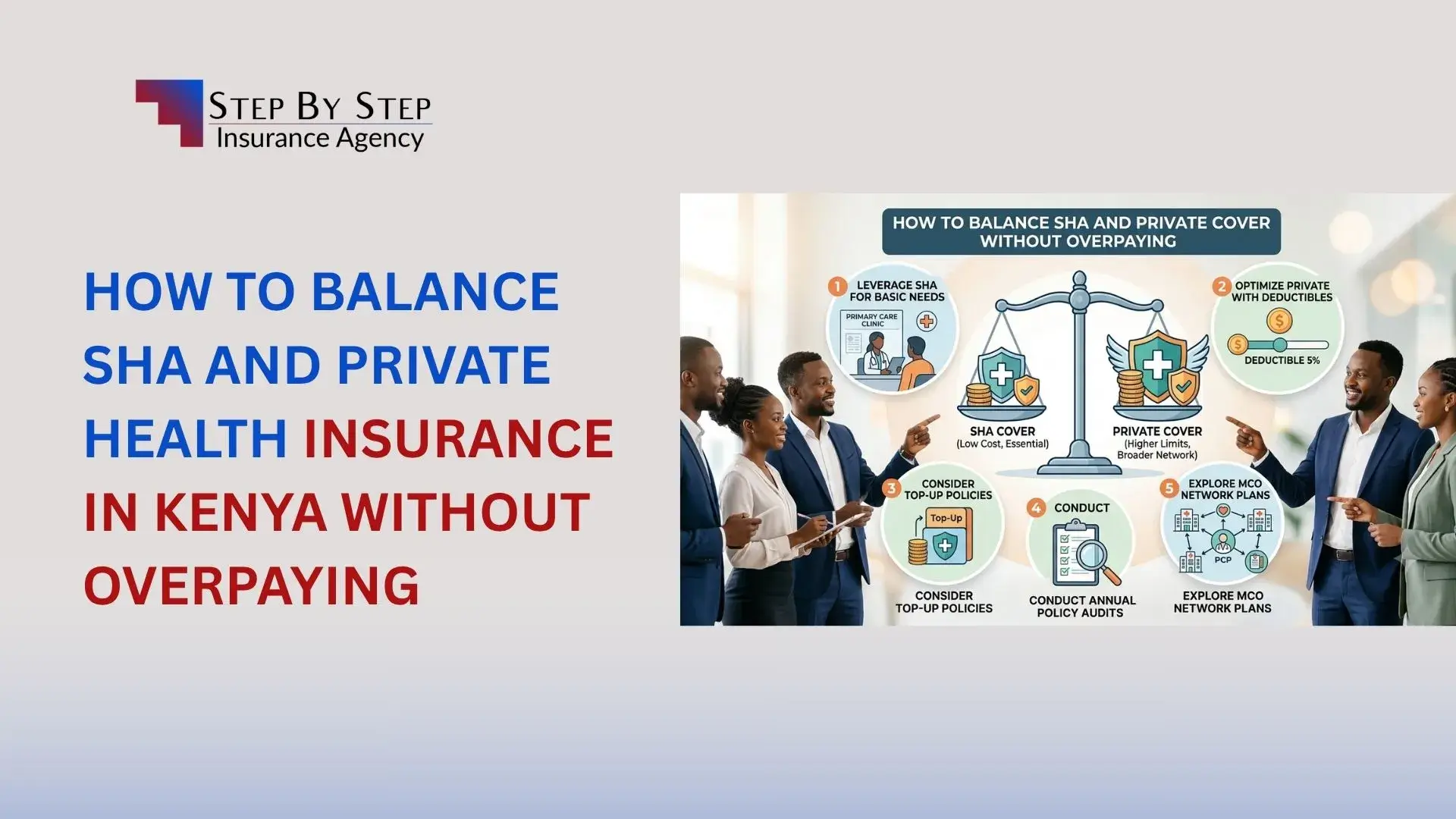
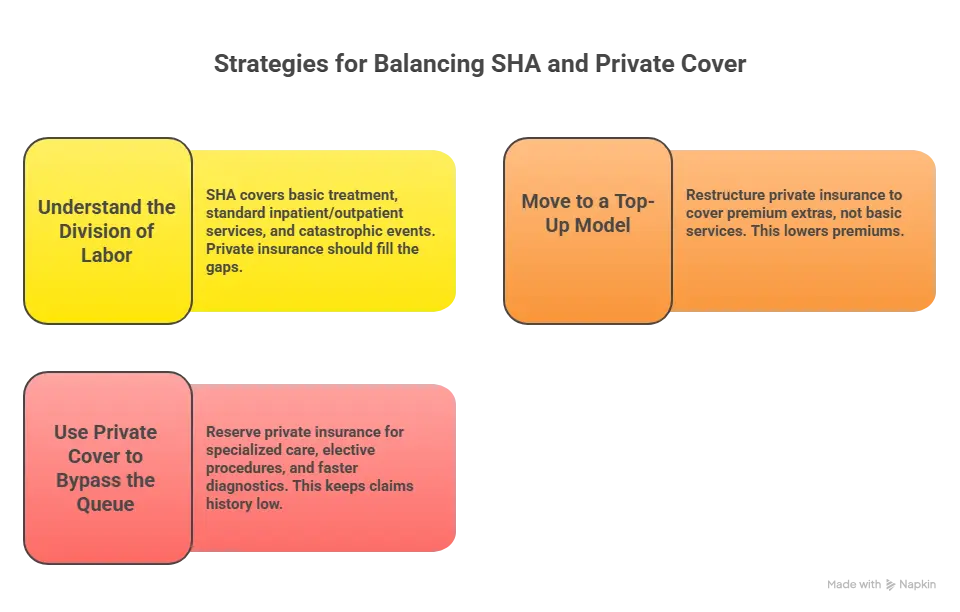
How to combine SHA with private medical insurance without overpaying.
The payment programme follows several structured steps to ensure accountability.
Figure 2: SHA Outstanding Claims Payment Process
Outstanding NHIF Claim
↓
SHA Verification
↓
Provider Confirmation
↓
Settlement Agreement Signed
↓
Payment Authorization
↓
Funds Released to Healthcare Facility
Figure 2: Overview of the SHA payment workflow for verified legacy claims.
Benefits for Healthcare Facilities
The release of these funds is expected to provide immediate financial relief for many hospitals and clinics. Healthcare facilities will benefit through:
Improved cash flow.
Payment of supplier debts.
Better stock of medicines.
Purchase of medical equipment.
Ability to retain healthcare workers.
Improved operational efficiency.
Greater confidence in government reimbursement systems.
Many facilities have experienced financial pressure during the NHIF-SHA transition, making these payments particularly important.
Benefits for Patients
Patients also stand to gain from stronger financial support for healthcare providers. Potential improvements include:
Better availability of medicines.
Reduced service interruptions.
Improved quality of care.
Shorter waiting times.
Increased participation of healthcare providers under SHA.
Greater confidence in Kenya’s Universal Health Coverage programme.
Table 3: Benefits to Providers vs Patients
Healthcare Providers
Patients
Improved cash flow
Better healthcare services
Ability to pay suppliers
Improved medicine availability
Increased financial stability
Reduced treatment delays
Better equipment maintenance
Higher quality care
Stronger confidence in SHA
Better patient experience
Challenges That Still Remain
Although the payment programme is a positive step, several challenges remain. These include:
Settlement of claims above KSh10 million.
Continuous verification of remaining historical claims.
Improving claims submission accuracy.
Reducing claim rejection rates.
Enhancing digital integration across healthcare facilities.
Strengthening provider education on SHA claims procedures.
Addressing these issues will help create a faster, more transparent reimbursement process in the future, particularly as SHA continues its move toward a fully digital claims system.
What This Means for Kenya’s Healthcare System
The payment of verified outstanding claims represents more than simply settling old debts. It signals the government’s commitment to building a stronger and more accountable healthcare financing system.
As SHA continues implementing digital healthcare solutions and streamlining reimbursement processes, healthcare providers can expect improved efficiency, while patients benefit from more reliable healthcare services.
The initiative also supports Kenya’s long-term goal of achieving Universal Health Coverage by ensuring that healthcare providers have the financial capacity to continue serving patients.
Frequently Asked Questions
Will every hospital receive payment?
No. Only healthcare facilities with verified claims that meet SHA’s eligibility requirements will receive payment during this phase.
What happens to claims above KSh10 million?
SHA has indicated that these claims will be settled after additional funding is allocated by the National Treasury, as confirmed in further clarification from SHA and the Digital Health Agency.
Why was verification necessary?
Verification helps eliminate duplicate or fraudulent claims and ensures public funds are paid only for legitimate healthcare services.
Will patients notice improvements?
Yes. Improved hospital cash flow is expected to enhance service delivery, medicine availability, staffing, and overall patient care.
How Step by Step Insurance Can Help
Kenya’s healthcare landscape continues to evolve, and understanding how public healthcare reforms affect your medical cover is becoming increasingly important.
At Step by Step Insurance, we help individuals, families, SMEs, and corporate organizations make informed decisions about their healthcare protection. Our experienced insurance advisors can help you:
Understand how SHA works alongside private medical insurance.
Compare medical insurance providers in Kenya.
Choose affordable health insurance plans.
Find family, individual, or corporate medical cover.
Complement your SHA benefits with additional private protection.
Whether you’re seeking comprehensive medical insurance or expert advice on navigating Kenya’s changing healthcare system, our team is here to guide you every step of the way. Get a free quote or request a consultation today.
The Social Health Authority’s decision to begin processing verified outstanding payments marks an important milestone in Kenya’s healthcare reforms.
By releasing KSh4 billion to settle verified NHIF legacy claims, the government is helping healthcare providers regain financial stability while reinforcing confidence in the Taifa Care programme.
Although additional work remains — particularly in settling larger claims and improving claims processing — the initiative is expected to strengthen healthcare delivery, improve provider confidence, and ultimately enhance patient care across the country.
As Kenya continues modernizing its healthcare financing system, staying informed about these changes is essential. Step by Step Insurance remains committed to helping individuals and businesses understand their healthcare options and make informed insurance decisions.
Kenya’s import and export industry has entered a new era.
From 1st July 2026, the Government of Kenya has intensified the enforcement of mandatory locally issued Marine Cargo Insurance (MCI) through the newly launched Digital Marine Cargo Insurance (DMCI) Platform. The initiative is designed to improve compliance, streamline customs clearance, reduce tax leakage, and strengthen Kenya’s insurance industry by ensuring marine cargo insurance is purchased from insurers licensed within the country.
If you’re an importer, exporter, clearing and forwarding agent, logistics company, or business that regularly ships goods internationally, understanding these new requirements is essential to avoid delays, additional costs, and compliance issues.
In this guide, we’ll explain what has changed, who is affected, and how your business can stay compliant.
📌 Key Takeaways
From 1st July 2026, all imported cargo destined for Kenya must be covered by Marine Cargo Insurance issued by a locally licensed insurer before customs clearance.
The new Digital Marine Cargo Insurance (DMCI) Platform links insurers, importers, agents, IRA, KRA, and eCitizen for electronic verification.
Non-compliance can lead to delayed customs clearance, demurrage charges, storage fees, and business disruption.
Compliance benefits include faster cargo clearance, improved transparency, and stronger protection through regulated local insurers.
Businesses should review shipping terms, work with licensed providers, and plan insurance early to avoid delays.
Step by Step Insurance can help businesses arrange compliant Marine Cargo Insurance and navigate the new rules.
Stay ahead in the world of insurance. Join our WhatsApp community for the latest insurance trends, tips, and news — straight to your phone.
The Government has reinforced the implementation of existing provisions under the Marine Insurance Act and the Insurance Act by requiring that all imported cargo destined for Kenya be covered by Marine Cargo Insurance issued by insurers licensed in Kenya before customs clearance. Enforcement is now supported by a fully digital verification process integrated with government systems.
To facilitate compliance, industry stakeholders launched the Digital Marine Cargo Insurance (DMCI) Platform, allowing importers and clearing agents to obtain and verify marine cargo insurance certificates electronically before cargo is released by customs. This mirrors a broader regional trend, as several East African economies have been tightening insurance regulatory oversight to keep premiums and risk within domestic markets.
Why Was the New Digital Platform Introduced?
For years, Kenya experienced several challenges in marine cargo insurance, including:
Cargo arriving with inadequate insurance cover.
Difficulties verifying insurance certificates.
Insurance premiums flowing to foreign insurers instead of supporting the local market.
Revenue leakage and tax compliance challenges.
Delays in customs verification processes.
The Digital Marine Cargo Insurance Platform addresses these issues by linking insurers, importers, clearing agents, the Insurance Regulatory Authority (IRA), the Kenya Revenue Authority (KRA), eCitizen, and payment systems into one digital ecosystem for faster verification and compliance.
Who Must Comply?
The new requirements affect virtually everyone involved in international trade, including:
Importers
Exporters
Clearing and forwarding agents
Freight forwarders
Manufacturers importing raw materials
Wholesalers and distributors
Retail businesses sourcing products overseas
E-commerce businesses importing inventory
Logistics companies
Whether you’re importing machinery, electronics, pharmaceuticals, textiles, building materials, or consumer goods, compliance is essential.
What Is Marine Cargo Insurance?
Marine Cargo Insurance protects goods while they are being transported internationally by:
Sea freight
Air freight
Rail (where applicable)
Multimodal transport involving international shipping
Depending on the policy, Marine Cargo Insurance can provide protection against risks such as:
Accidental damage
Theft
Fire
Storms
Vessel accidents
General average contributions
Loss during transit
Natural disasters affecting cargo
Without adequate cover, businesses may suffer significant financial losses if cargo is damaged or lost before reaching its destination. For a deeper look at how cover extends beyond the port, see our guide comparing Goods in Transit and Marine Cargo Insurance.
How the Digital Marine Cargo Insurance Platform Works
The new process has been designed to simplify compliance.
Step 1: Purchase Marine Cargo Insurance
Before your shipment arrives in Kenya, obtain Marine Cargo Insurance from a licensed Kenyan insurer or through an authorized insurance intermediary such as Step by Step Insurance.
Step 2: Digital Certificate Generation
A Digital Marine Cargo Insurance Certificate is generated electronically.
Step 3: System Integration
The certificate is automatically linked to government systems, including the KRA Integrated Customs Management System (ICMS), allowing customs officers to verify compliance digitally.
Step 4: Customs Clearance
Once verified, the customs clearance process becomes more efficient since insurance validation happens electronically.
Failure to comply with Kenya’s marine cargo insurance requirements can result in several costly consequences, including:
Delayed Customs Clearance
Goods may not be cleared until compliant marine cargo insurance has been obtained and verified.
Increased Storage Costs
Delays at ports or airports can lead to:
Demurrage charges
Storage fees
Port handling costs
Business Disruption
Delayed cargo can interrupt:
Manufacturing schedules
Retail inventory
Customer deliveries
Supply chain operations
Additional Administrative Costs
Businesses may need to urgently arrange compliant insurance, causing avoidable expenses and operational delays.
Benefits of the New Marine Cargo Insurance System
While compliance is mandatory, the reforms also bring several advantages.
Faster Cargo Clearance
Digital verification reduces paperwork and manual processing.
Improved Transparency
Electronic verification minimizes fraud and fake insurance certificates.
Better Risk Protection
Businesses receive proper insurance coverage from regulated insurers operating in Kenya, consistent with standards set out by bodies such as the Insurance Regulatory Authority.
Stronger Local Insurance Industry
Keeping premiums within Kenya supports the growth of local insurers and contributes to the country’s economy.
What Businesses Should Do Now
If your business imports goods, now is the time to prepare.
Review Your Shipping Arrangements
Confirm whether your suppliers are using shipping terms that align with Kenya’s current insurance requirements. Businesses relying on supplier-arranged insurance should assess whether changes are needed to avoid paying for duplicate cover.
Work With Licensed Insurance Providers
Always obtain Marine Cargo Insurance through insurers licensed by the Insurance Regulatory Authority (IRA) or an authorized insurance intermediary.
Plan Early
Arrange your insurance before cargo arrives to avoid unnecessary delays.
Keep Documentation Ready
Ensure all shipping documents are complete and accurate before customs processing begins. Cross-checking requirements against the Kenya Revenue Authority’s customs guidance can help avoid last-minute surprises.
Seek Professional Advice
Marine Cargo Insurance requirements can vary depending on the nature and value of your shipment. Professional guidance helps ensure your cover matches your business needs.
Why Choose Step by Step Insurance?
At Step by Step Insurance, we help businesses navigate changing insurance regulations with confidence.
Our experienced advisors can help you:
Arrange compliant Marine Cargo Insurance
Compare leading insurers in Kenya
Ensure your shipments meet regulatory requirements
Provide professional claims support
Offer risk management advice for importers and exporters
Whether you’re importing goods occasionally or managing large-scale international trade, we can help you secure the right protection while keeping your business compliant.
Frequently Asked Questions (FAQs)
Is Marine Cargo Insurance now mandatory in Kenya?
Yes. Imported cargo must be covered by Marine Cargo Insurance issued by a locally licensed insurer before customs clearance, with compliance supported through the Digital Marine Cargo Insurance system.
Who needs Marine Cargo Insurance?
Importers, exporters, freight forwarders, manufacturers, wholesalers, distributors, and businesses involved in international trade.
Does Marine Cargo Insurance replace Goods in Transit Insurance?
No. Marine Cargo Insurance protects goods during international transportation, while Goods in Transit Insurance generally covers domestic transportation within Kenya.
Can Step by Step Insurance help me arrange Marine Cargo Insurance?
Absolutely. We work with reputable insurers in Kenya to help businesses obtain compliant Marine Cargo Insurance tailored to their shipping needs.
Final Thoughts
Kenya’s Digital Marine Cargo Insurance Platform marks a significant step toward modernizing trade compliance and strengthening the country’s insurance sector. While the new requirements introduce additional compliance responsibilities, they also create a more transparent, efficient, and secure environment for international trade.
If your business imports or exports goods, preparing early is the best way to avoid costly delays and ensure uninterrupted operations.
Need Marine Cargo Insurance? Step by Step Insurance is here to help you navigate the new regulations with confidence. Contact our team today for expert advice, competitive quotations, and compliant Marine Cargo Insurance solutions tailored to your business.
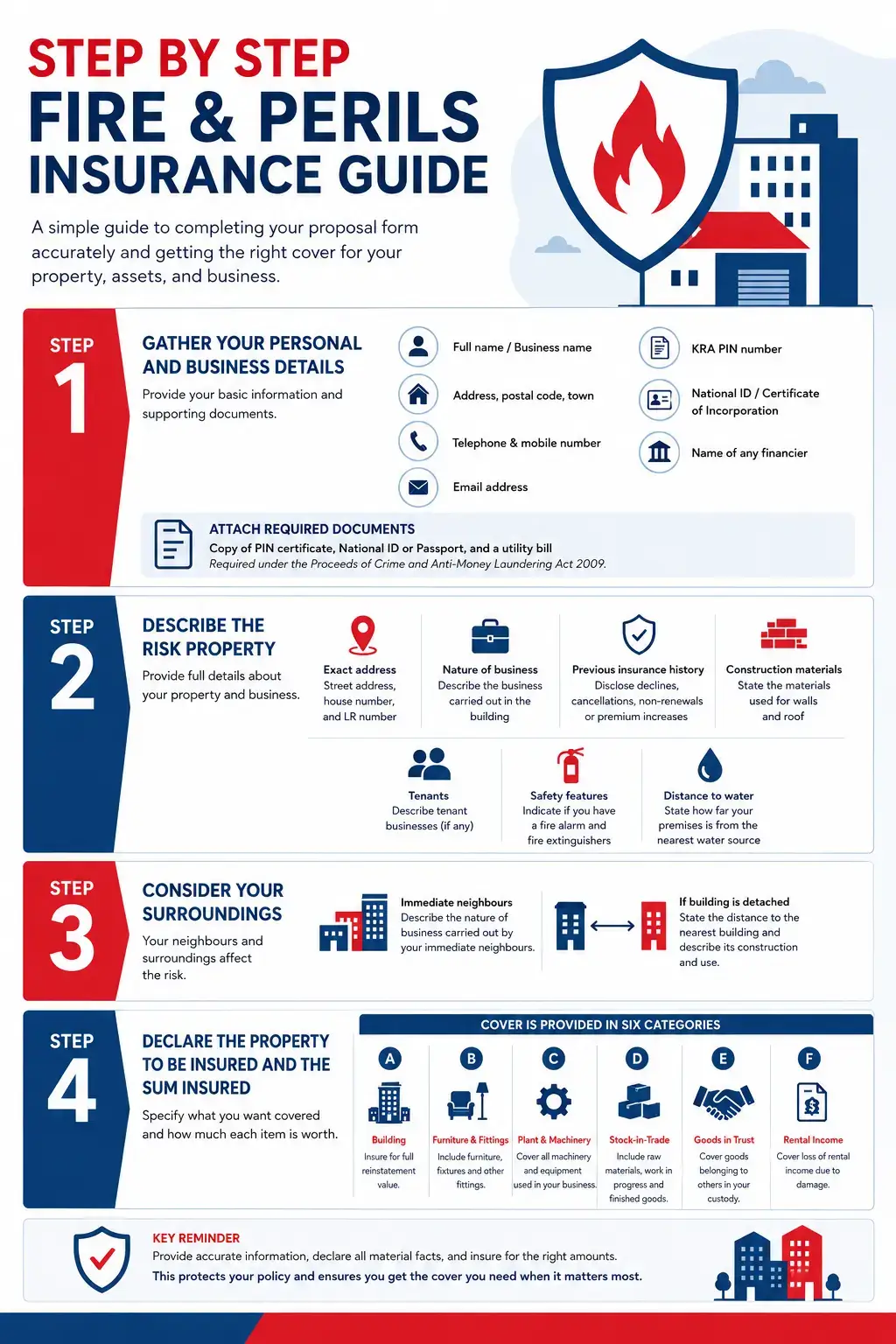
Fire & Perils Insurance Guide | Step by Step Insurance
Fire can strike without warning. Whether you own a commercial building, run a business, or hold valuable stock and equipment, a single incident can wipe out years of hard work in a matter of hours. Fire & Perils Insurance exists to protect exactly that — your property, your assets, and your livelihood.
This type of insurance covers physical loss or damage caused by fire and a range of associated perils, including lightning, explosion, and in many policies, flooding and storm damage. It can cover the structure of a building, furniture and fittings, machinery, stock-in-trade, goods held in trust, and even rental income.
Before a policy can be issued, your insurer needs to understand the full picture of what is being covered and the risks involved. That is where the proposal form comes in. This guide walks you through every section of a standard Fire & Perils proposal form — using the AAR Insurance Kenya form as a reference — so you can complete it accurately and confidently.
Who should read this?
Building owners seeking to insure their property
Business owners with stock, machinery, or equipment on their premises
Landlords with tenants occupying commercial or mixed-use buildings
Anyone renewing or switching their existing fire cover
Key takeaway: Completing a Fire & Perils proposal form accurately is the foundation of a valid claim. Underinsurance, missing disclosures, or incomplete details can jeopardize your cover. This guide ensures you get it right from the start.
The first section of the proposal form asks for your basic identifying information. This is straightforward, but it is important to have everything ready before you sit down to complete the form. Incomplete or incorrect details can delay the processing of your application.
What you will need
Your full legal name or, for a company, the registered business name
Your postal address, postal code, and town
A working telephone number and mobile number
Your email address
Your KRA PIN number
Your National ID number or, for companies, your Certificate of Incorporation
The name of any financier — for example, a bank holding a charge over the property
You will also need to attach supporting documents: a copy of your PIN certificate, National ID or Passport, and a utility bill. These are required under the Proceeds of Crime and Anti-Money Laundering Act 2009 as proof of identity. Do not skip this — missing documents are among the most common reasons for delays.
Step 2: Describe the Risk Property
This section is where the underwriter begins to assess the risk. Every detail you provide here helps the insurer determine both the likelihood of a claim and the appropriate premium for your cover. Answer every question fully — vague or incomplete answers can affect the validity of your policy at claim time.
Location of the premises
You will need to state the exact street address, house number, and the plot or land reference (LR) number of the property. This must be specific — a general area name is not sufficient.
Nature of business
Describe what business you carry out in the building. A hardware store, a school, a printing press, and a restaurant each carry very different risk profiles, and your insurer needs this information to price and structure your cover appropriately.
Previous insurance history
You will be asked to disclose whether any insurer has previously: declined your proposal, cancelled or refused to renew your policy, or increased your premium at renewal. If the answer to any of these is yes, provide full details. This is not a trick question — many legitimate policyholders have had insurers decline them for reasons unrelated to fraud. Honesty here protects the validity of your policy.
Construction materials
State the materials used to construct the walls and roof. A building with iron-sheet roofing and timber walls carries a very different fire risk than one built entirely from brick and concrete. This information directly influences your premium.
Tenants
If any part of the building is rented out, describe what businesses your tenants operate. A tenant running a welding shop creates a very different risk environment from one running an office. Your insurer needs to know both what you do and what your tenants do.
Safety features
Indicate whether your premises has a fire alarm and fire extinguishers. The presence of these features can reduce your premium and demonstrates that you take fire safety seriously.
Distance to nearest water body
State how far your premises is from the nearest water source. This is relevant to emergency response — how quickly a fire brigade can access water if your building catches fire.
Step 3: Consider Your Surroundings
Your building does not exist in isolation. The businesses next door, the distance to neighbouring structures, and whether your building stands alone all affect the risk of a fire spreading to your property — or from it.
You will be asked to describe the nature of business carried out by your immediate neighbours. A fuel station, a timber yard, or a chemical store adjacent to your property is a material fact your insurer must know about.
If your building is detached, state the distance to the nearest building and describe its construction and use. A standalone warehouse in an industrial park presents a very different risk picture from a shop in a densely packed row of businesses.
Step 4: Declare the Property to Be Insured and the Sum Insured
This is the heart of the proposal form. Here you specify exactly what you want covered and, critically, how much each item is worth. Getting the sum insured right is essential — underinsurance is one of the most common and costly mistakes policyholders make.
The form breaks cover into six categories:
A — Building: Only building owners should complete this section. If you are a tenant, leave it blank. State the number of storeys and insure the building for its full reinstatement value — what it would cost to rebuild it from scratch, not its market value. If you have more than one separate building, each must have its own sum insured.
B — Furniture, Fixtures and Fittings: Include all desks, chairs, shelving, counters, built-in fittings, and similar items. Take stock of what you have and estimate replacement values realistically.
C — Machinery and Plant: This covers equipment used in your operations — generators, industrial machines, compressors, printing presses, refrigeration units, and similar. List the replacement value of each significant item.
D — Stock-in-Trade: Describe the type of goods you hold and state their value. If your stock levels fluctuate significantly — for example, ahead of a peak trading season — consider insuring for your maximum likely stock level, not your average.
E — Goods Held in Trust: These are goods belonging to third parties that are temporarily in your care — for example, items left with you for repair, storage, or processing. You are responsible for them while they are on your premises, and they should be covered accordingly.
F — Rent Receivable: If your building is let out and you receive rental income, you can insure that income stream. State the annual rent receivable. If your building is damaged or destroyed, this cover compensates you for rental income lost while repairs take place.
Add up all sections to arrive at your total sum insured. Remember: if stock or equipment is kept in two or more separate buildings, the sum insured must be specified for each building individually.
Step 5: Answer the Specific Risk Questions Honestly
Beyond the standard details, every Fire & Perils proposal includes a set of targeted questions designed to uncover material risks. These must be answered fully and truthfully. Failure to disclose a material fact — even if not directly asked — can invalidate your policy at the point of a claim.
For all proposers
Who owns the building and who occupies it? These may be different people.
How is the building lit and heated? Electric lighting carries different risks from gas or kerosene lamps. A wood-burning stove carries different risks from electric heating.
Have you ever had a fire in these premises or elsewhere — whether alone or in partnership with others? If so, describe what happened and what was lost.
Have you ever been refused fire insurance by any company?
Have you ever been declared bankrupt, insolvent, or made a compromise arrangement with creditors?
Will the policy be held as collateral security by a creditor?
For non-residential buildings
Is there any stove or furnace on the premises (other than a standard cooking stove set in brick with a brick chimney)? If a pipe stove is used, you must specify what it is fixed on, whether the pipe leads into a brick flue, and whether it comes within nine inches of unprotected woodwork.
Is any manufacturing process carried on? If so, describe it in full.
Is steam, gas, oil, or electric power used in the building, and for what purpose?
Are hazardous goods stored on the premises? Is any oil, petrol, or petroleum kept, and if so, in what quantity?
These questions are not designed to catch you out. They help the insurer understand your actual risk so that you are neither overcharged nor underinsured.
Step 6: Select Your Cover Period
Specify the start and end dates for your policy. Most Fire & Perils policies run for one year, but shorter periods may be available. Confirm with your insurer or broker what options suit your situation.
An important note: your cover does not begin on the start date you choose. Liability does not commence until the proposal has been formally accepted by the insurer and the first premium has been paid in full. Do not assume you are covered until you have received written confirmation and paid your premium.
Step 7: Sign the Proposer Declaration
Before submitting your form, you must sign the Proposer Declaration. By signing, you are declaring that everything stated in the form is true and complete, and that the proposal and declaration will form the legal basis of your insurance contract.
If you are signing on behalf of a company or organisation, you should also affix your rubber stamp or company seal where indicated.
Do not sign a blank or incomplete form. Take the time to read through every section before you put your signature down. If something is unclear, ask your broker or the insurer to explain it before you sign.
Step 8: Work with a Licensed Agent or Broker
Every standard Fire & Perils proposal form includes a separate Agent or Broker Declaration, which your intermediary must complete alongside your own. By signing this section, your agent or broker confirms that they have fully explained the terms, exclusions, and conditions of the cover to you.
If you are completing this form without a broker, consider consulting one before you finalise your submission. A licensed broker can help you:
Accurately value your property and assets to avoid underinsurance
Identify covers you may have overlooked
Explain any exclusions that apply to your specific risk
Shop the market to find you competitive terms
Support you through the claims process if you need to make one
Conclusion: What Happens After You Submit
Once you submit your completed proposal form along with all required documents, your insurer will review it through an underwriting process. They may come back with questions or a request for additional information. Once the proposal is accepted, you will receive a premium quote.
Pay your first premium promptly. Only then does your cover come into effect. You will receive a policy document confirming the terms and a schedule summarising your cover details. Keep both documents in a safe place.
Quick checklist before you submit
Completed proposal form — every question answered
Copy of KRA PIN certificate
Copy of National ID, Passport, or Certificate of Incorporation
Utility bill as proof of address
Proposer Declaration signed (and stamped if applicable)
Agent or Broker Declaration completed and signed
Separate sums insured listed for each building if you have more than one
Common Mistakes to Avoid
Undervaluing your stock or assets — always insure for full replacement cost, not book value or market value.
Failing to declare what your tenants do — their activities are part of your risk.
Leaving safety-related questions unanswered — incomplete forms cause delays and may affect cover.
Not attaching required ID documents — your application cannot be processed without them.
Assuming cover starts on the date the form is submitted — it does not. Cover only begins once the proposal is accepted and the first premium paid.
How to Verify Car Insurance in Kenya | Step by Step Insurance
Imagine driving along the busy Mombasa Road or navigating the tight corners of the Nairobi Central Business District (CBD). Traffic is heavy, and suddenly, a police officer flags you down. You confidently point to the digital motor insurance sticker on your windscreen. The officer pulls out a smartphone, scans the code, and looks up at you with a grim face. “Your insurance is invalid,” they say.
The immediate panic that follows is a reality for thousands of Kenyan motorists every year. Many drivers assume that once they pay a premium and receive an electronic certificate via email, they are fully covered. Unfortunately, rogue agents, slow system updates by undercapitalized underwriters, and sophisticated fake certificate scams mean your windshield sticker might just be a worthless piece of paper.
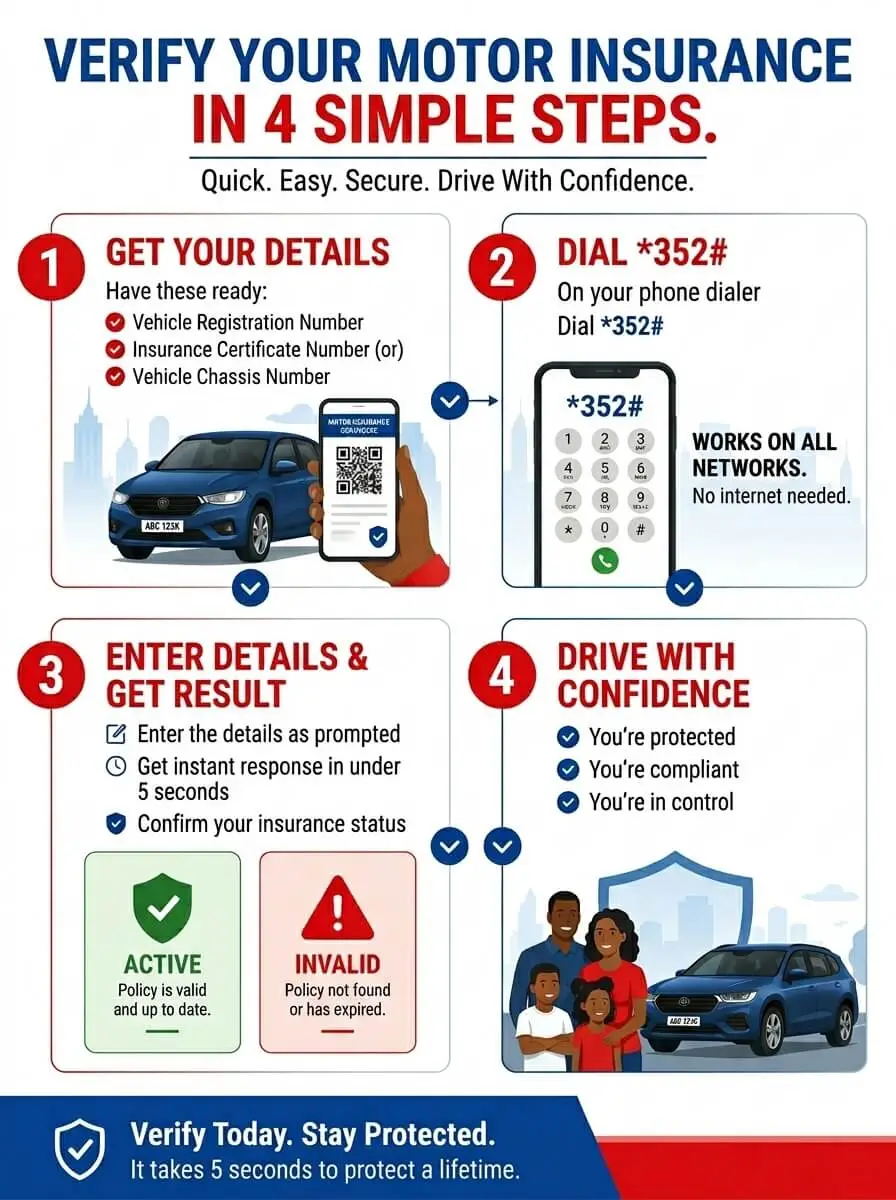
Verifying your motor insurance policy is no longer something you do after an accident or during a police crackdown. It is an essential routine checklist item for every responsible car owner in Kenya. Fortunately, the Association of Kenya Insurers (AKI) has created rapid digital systems that allow you to check your policy’s status in less than five seconds.
🔑 Key Takeaways
✅ Dial *352# on any Kenyan network to verify your motor insurance in under 5 seconds — no internet needed.
📱 The Bima Yangu App offers a visual alternative with QR code scanning and claim tracking.
⚠️ Driving with an invalid or fake certificate exposes you to criminal prosecution, vehicle impoundment, and unlimited personal liability.
📌 If your policy shows “Invalid,” stop driving immediately and contact your insurer directly — not your broker.
🔎 Report suspected insurance fraud to the AKI helpline: 0709 640000 or info@akinsure.com.
Join our free WhatsApp community — a growing group of Kenyans passionate about insurance news, regulatory updates, and industry trends. No spam. No sales pitches. Just timely, relevant information delivered straight to your phone.
⚠️ Why Validating Your Kenyan Car Insurance is Urgent Right Now
Driving a vehicle without valid insurance is a serious criminal offense under Kenyan law. According to Section 9 of the Insurance (Motor Vehicles Third Party Risks) Act, any person who uses a motor vehicle on a public road without a policy of insurance that covers third-party risks commits an offense. The legal consequences include hefty court fines, the immediate impounding of your vehicle, or punitive prison sentences.
To understand how these laws are enforced on the ground and see the official steps directly from the regulatory body, watch the short breakdown by the Association of Kenya Insurers on their official channels.
Beyond the legal threats, the financial exposure of driving with an invalid cover is catastrophic. If you are involved in a multi-car collision or hit a pedestrian, your comprehensive or third-party policy is your only shield against immense liability. If your cover is invalid or “not found” in the central database, you are personally liable for property destruction, medical bills, and legal fees. A single accident could easily wipe out your life savings. This is why understanding how motor insurance claims work in Kenya is every driver’s responsibility — not just the insurer’s.
🚫 Warning: The rise of digital insurance fraud makes the situation even more urgent. While the shift to virtual certificates in 2020 eliminated physical paper fraud, it gave birth to tech-savvy “briefcase” agents. These scammers generate realistic-looking PDF certificates using graphic design software, pocket your premium money, and never remit it to the actual insurance company. You only discover the fraud when it is already too late.
📱 Method 1: The AKI USSD Code — The Fastest 5-Second Way
The absolute fastest way to confirm whether your motor insurance is active is by using the official USSD verification system developed by the Association of Kenya Insurers (AKI). This feature works flawlessly on any mobile phone network in Kenya — including Safaricom, Airtel, and Equitel — and does not require an active internet bundle or a smartphone.
📋 Step-by-Step: How to Use *352#
Dial *352# on your mobile phone dialer.
Select the prompt that requires you to “Verify Motor Vehicle Certificate”.
Enter your Vehicle Registration Number (e.g., KBC 123X).
Enter your Insurance Certificate Number or your Vehicle Chassis Number.
Wait under 5 seconds for an instant flash message or SMS with your policy status.
💡 Note: According to AKI guidelines, you must enter at least two out of the three required details — Registration Number, Certificate Number, or Chassis Number — to get an accurate match from the system.
+————————————————————-+
| USSD RESPONSE DIALOG |
+————————————————————-+
| Policy Status: ACTIVE / GENUINE |
| Vehicle: KBC 123X |
| Insurer: Example Insurance Company Kenya |
| Expiry Date: 31/12/2026 |
+————————————————————-+
Saving the *352# shortcode in your phone contacts ensures you can instantly audit your policy during traffic stops, routine checks, or immediately after buying a cover from a new broker. It’s also wise to cross-check your vehicle’s digital registration details — the NTSA e-Logbook system is a complementary record-keeping tool that pairs well with insurance verification.
📲 Method 2: The TIRA / AKI Bima Yangu Mobile App
If you prefer a highly visual interface or want to manage multiple vehicles, the official Bima Yangu App on the Google Play Store is the perfect solution. Developed as a unified self-service portal for Kenyan insurance consumers, this app consolidates vehicle validation, claim reporting, and life insurance tracking into one hub.
To use the application, download Bima Yangu from your respective app store. Launch the app and point your phone’s camera at the QR code printed clearly on your digital motor insurance certificate. The app scans the code instantly and cross-references it with the central insurance database repository.
📌 The Four Policy Statuses Explained
✅ Genuine / ActiveYour policy is perfectly updated, fully paid, and legally compliant. You are safe to drive.
🚫 ExpiredThe policy window has passed, meaning you are currently driving completely uninsured. Renew immediately.
🕐 UpcomingA policy that has been fully paid for but is scheduled to take effect at a future date. Do not drive yet.
❌ InvalidThe certificate details do not match any legitimate record from a licensed insurer. Act immediately — see below.
📊 USSD vs. Bima Yangu — Quick Comparison
📋 Feature
📱 AKI USSD Code (*352#)
📲 Bima Yangu Mobile App
Internet Required
✔ No (Works offline)
✘ Yes (Requires cellular data)
Device Compatibility
All mobile phones
Android & iOS Smartphones
Input Method
Manual text typing
QR Code Scanning / Typing
Verification Speed
Under 5 Seconds
Under 5 Seconds
Extra Capabilities
Basic Status Check
Accident Claims & Full Tracking
Best For
Quick roadside checks
Full policy management
🚨 What to Do If Your Insurance Shows “Invalid” or “Not Found”
Discovering that your vehicle insurance reads “Invalid” is highly alarming, but your immediate actions can prevent a bad situation from escalating into a legal nightmare. First, do not panic — but immediately stop driving the vehicle on public roads. Park your car safely at home or in a secure parking lot to protect yourself from police impoundment or an uncovered road accident.
Next, bypass your insurance agent or broker and contact the primary underwriting insurance company directly. Call their official customer care lines found on their verified corporate website — not the phone numbers provided on a suspicious certificate. Give them your vehicle registration plate and ask them to verify if your premium payment was received and if your policy was correctly pushed to the AKI central portal. Sometimes, simple technical hitches or delays in batch uploads between the insurer and AKI can cause a temporary “not found” status.
🔎 Reporting Insurance Fraud in Kenya
If the underwriting company has no record of your payment, you have likely fallen victim to a fraudulent broker or a fake agent. You must immediately flag this fraud. Visit the Insurance Regulatory Authority (IRA) Portal to confirm if the agency or company that sold you the cover is actually licensed or suspended.
📞 AKI Helpline: To report fraud or resolve an uncooperative provider, escalate the matter directly by contacting the AKI helpline at 0709 640000 or via email at info@akinsure.com.
It is equally important to ensure your next policy is issued by a fully licensed insurer. Consider working with a verified broker — request a free consultation with a licensed insurance professional before your next renewal.
🚩 Ready to ensure your cover is 100% legitimate and up to date?
Validating your motor vehicle insurance takes less time than adjusting your side mirrors, yet it can shield you from catastrophic financial ruin and criminal prosecution. In the modern digital era of Kenyan transport, assuming you are covered just because you have an electronic sticker is a massive gamble you should never take.
Make it a point to audit your policy status regularly — especially right after renewal or when buying a used car. If you are ever uncertain about your vehicle documents or digital records, the NTSA e-Logbook guide is a great companion resource. And remember, understanding how motor insurance claims work before an accident happens puts you miles ahead of most Kenyan drivers.
📲 Don’t leave your safety to chance! Stop reading, take out your mobile phone, and dial *352# right now to check your car’s status. Did your vehicle show up as “Active” or did you run into issues? Drop a comment below and share this guide with fellow motorists on WhatsApp to keep our Kenyan roads safe!
NTSA Instant Fines Are Back: What Every Kenyan Motorist Needs to Know
The National Transport and Safety Authority (NTSA) has reintroduced the Instant Traffic Offences and Fines System, marking a significant shift in how minor traffic offences are handled in Kenya. Effective from 1st June 2026, motorists who commit certain traffic violations may no longer be required to appear in court immediately. Instead, they can settle prescribed fines through a streamlined notification and payment process.
Stay informed with the latest insurance news, industry trends, and regulatory updates in Kenya — straight to your phone. Join a growing community of people who care about staying protected and making smart insurance decisions.
Instant fines are monetary penalties issued for specific traffic offences. The system allows motorists to admit liability and pay a prescribed fine without undergoing lengthy court processes for minor offences.
The initiative aims to enhance road safety, improve compliance with traffic regulations, and reduce congestion in traffic courts. According to Business Daily Africa, motorists will still retain the option to contest fines through the court system should they dispute a charge.
📷 How Does the System Work?
Traffic offences may be detected through a variety of methods:
🚶 Detection Methods
Traffic police officers on patrol
Speed cameras and automated traffic monitoring systems
Other approved digital enforcement technologies
📩 How You Will Be Notified
Once an offence is detected, the motorist may receive a notification through:
SMS
Email
Personal service by a police officer
A notice affixed to the vehicle
Other approved electronic communication channels
📌 What the Notification Includes:
The nature of the offence
Date, time, and location of the offence
Supporting evidence where available
Amount payable and payment instructions
Deadline for response
As reported by Kenyans.co.ke, the system is designed specifically to handle minor offences efficiently, reducing the burden on both motorists and the courts.
⚖️ What Are Your Options?
Upon receiving a notification, a motorist can take one of two paths:
✅ Option 1: Pay the Fine
If the motorist accepts responsibility, they can pay the prescribed fine within the stipulated period through the designated payment channels. This resolves the matter without a court appearance.
⚖️ Option 2: Contest the Charge
If the motorist believes the offence was wrongly issued, they have the right to challenge it through the court system and request access to supporting evidence. It is important to act within the stated response window to protect this right.
💷 Examples of Common Traffic Fines
Below are some of the commonly publicized fines under the system. Motorists are advised to familiarize themselves with the complete published list from the relevant authorities:
⚠️ Offence
💷 Fine (KSh)
Failure to renew driving licence
1,000
Failure to carry driving licence
1,000
Driving without proper licence endorsement
3,000
Driving while unqualified
5,000
Using a mobile phone while driving
2,000
Missing or improper number plates
10,000
No valid vehicle inspection certificate
10,000
Speeding 6–10 km/h above the limit
500
Speeding 11–15 km/h above the limit
3,000
Speeding 16–20 km/h above the limit
10,000
🌟 Benefits of the New System
The government and NTSA expect the system to deliver tangible improvements in road safety and enforcement efficiency:
✅ Promote safer driving habits across Kenya
✅ Improve adherence to traffic laws
✅ Enhance transparency in enforcement processes
✅ Reduce case backlogs in traffic courts
✅ Leverage technology to improve road safety outcomes
🚘 What This Means for Motorists
With increased use of traffic cameras and digital monitoring, motorists should expect stricter and more consistent enforcement of traffic regulations. Compliance is no longer just about avoiding roadblocks — it is about ensuring your vehicle, documents, and driving habits meet legal requirements at all times.
Understanding the connection between traffic compliance and your insurance standing is equally important. Read our article on the 7 benefits of the NTSA e-Logbook for car insurance in Kenya to see how digital documentation now plays a central role in your overall compliance picture.
📋 Tips for Staying Compliant
Avoiding penalties under the new system comes down to consistent, proactive compliance. Here are the key actions every motorist should take:
📄 Ensure your driving licence is valid and renewed on time.
📄 Always carry your driving licence when driving.
🚗 Keep vehicle inspection certificates up to date.
🛡️ Verify that your motor insurance policy is active.
📵 Avoid using mobile phones while driving.
🚲 Observe all speed limits and traffic signs.
🚗 Ensure your vehicle registration plates comply with regulations.
For a deeper look at how NTSA’s digital systems interlink with your driving and insurance records, see our comprehensive NTSA e-Logbooks Kenya 2026 guide.
🛡️ The Role of Motor Insurance
While traffic fines cannot be covered by insurance, maintaining a valid motor insurance policy remains a legal requirement and an essential financial protection tool. Comprehensive motor insurance can protect you against:
Accidental damage to your vehicle
Theft and attempted theft
Third-party liabilities
Other unforeseen risks on the road
📌 Important Reminder: Driving without valid motor insurance is itself a traffic offence and can attract fines under the new system. Ensure your policy is always in force and your cover document is current.
At Step by Step Insurance Agency, we are committed to helping motorists stay protected through reliable and affordable motor insurance solutions. Whether you drive a private saloon, a commercial vehicle, or manage a fleet, we have the right cover for you.
🚗 Ensure Your Motor Cover Is Up to Date
Don’t let an expired or inadequate policy add to your compliance challenges. Get a quick, no-obligation motor insurance quote today.
The return of NTSA instant fines signals a new era of technology-driven traffic enforcement in Kenya. Whether you are a private motorist, commercial driver, or fleet owner, understanding the rules and staying compliant will help you avoid unnecessary penalties and contribute to safer roads for everyone.
For professional advice on motor insurance and risk management, contact Step by Step Insurance Agency today. Our team is ready to help you stay protected every mile of the journey.
Finance Bill 2026 Kenya: Bank Insurance Ban Saves You Money | StepByStep Insurance
Navigating Kenya’s Finance Bill 2026: Your Wallet, Your Choice, and the End of Forced Insurance — The financial landscape in Kenya is undergoing a massive shift. Between the high-stakes clauses of the Finance Bill 2026 and the groundbreaking new Draft Financial Consumer Protection Framework, the rules governing your money are changing fast. While the Finance Bill introduces new tax pressures that will affect your daily expenses, the new consumer protection framework hands you a powerful weapon to fight back against predatory financial bundling.
Here is everything you need to know about how these changes affect your wallet, how banks have been banned from forcing insurance on you, and why you must take advantage of this new economic freedom today.
📌 Key Takeaways
Forced insurance ban: Banks can no longer make loan approval conditional on buying their in-house insurance.
Right to choose: You can pick any independent provider – identical loan terms, no hidden penalties.
Finance Bill 2026: 16% VAT on mobile money fees, 25% smartphone duty, rental tax hike to 10% – protect your cash flow by cutting loan costs.
Savings opportunity: Shopping around for credit life or asset insurance drastically lowers total monthly repayments.
Legal power: Report any bank intimidation to CBK or IRA – the law is on your side.
📊 Part 1: How the Finance Bill 2026 Hits Your Daily Budget
The National Treasury’s latest tax proposals directly target digital services, mobile connectivity, and housing. While the government aims to expand the tax bracket, economists warn that these costs will inevitably trickle down to the everyday consumer.
The M-Pesa & Airtel Money Shock: The bill removes the VAT exemption on digital financial platform fees, slapped with a 16% VAT on top of the existing 20% excise tax. Telecommunications companies warn this will inflate overall mobile money transaction fees by up to 18.4%.
Pricey Smartphones: A 25% excise duty will be collected the moment a new smartphone is activated on a local network, immediately driving up the cost of digital access.
The Rental Reality Check: Landlords face a residential rental income tax hike from 7.5% back to 10%. Expect landlords to pass this 2.5% increase directly onto tenants in the form of higher rent.
The Silver Lining (Tax-Free Death Benefits): In a rare win for consumers, any death benefits paid out from registered pension funds or individual retirement schemes will now be completely exempt from income tax, safeguarding grieving families from KRA deductions.
⚡ Part 2: The Game Changer—Banks Banned from Forced Insurance Selling
For years, Kenyan consumers seeking loans, mortgages, or logbook financing faced a frustrating roadblock: bancassurance bullying. To get your loan approved, banks routinely forced you to buy an expensive insurance policy directly from their preferred, in-house insurance partner. The Draft Financial Consumer Protection Framework 2026—jointly released by the Central Bank of Kenya (CBK) and the Insurance Regulatory Authority (IRA)—has officially ended this predatory practice. Here are the strong regulatory pointers that protect you under the new law:
The Absolute Ban on Tying: Financial institutions are legally prohibited from making purchasing their own insurance policy a mandatory condition for loan approval.
The Right to Choose: Lenders must inform you in writing of your absolute right to select an independent insurance provider of your own choice.
Identical Loan Terms Mandatory: If you reject the bank’s internal insurance option, the bank cannot punish you. They are legally required to offer you the standalone loan product on identical terms, processing speeds, and interest rates.
Zero Hidden Mark-ups: Banks are explicitly banned from inflating insurance premium prices or tacking on hidden “management fees” for handling external policies.
🔐 Your right to choose independent coverage is now law.
This means when applying for a loan, always request a standalone quote and compare with external providers like StepByStep Insurance. You can request a quote online or speak to our experts.
✅ Part 3: How This Benefits Consumers
This regulatory crackdown represents a massive victory for consumer rights and financial freedom in Kenya.
1. Drastically Lowers the Total Cost of Credit When banks bundle their own insurance, they often charge premium rates well above the market average because they hold a monopoly over your loan approval. By breaking this monopoly, you can shop around for the most affordable credit life or asset insurance on the market, significantly reducing your total monthly loan repayment amounts.
2. Tailored, High-Quality Coverage Bank-mandated insurance policies are typically “one-size-fits-all” cookie-cutter products designed to protect the bank’s money, not your specific needs. Now, you can consult an independent broker to choose a policy that offers better terms, lower deductibles, and superior critical illness or asset coverage for your family.
3. Ends Predatory “Commission-Driven” Selling Bank tellers and credit officers have historically been incentivized by heavy internal commissions to aggressively push bundled insurance products onto unsuspecting borrowers. The new framework forces transparency, wiping out these conflicts of interest and ensuring you are treated fairly.
📋 Essential Internal Resources
Guide / Resource
Description
Access Link
NTSA e-logbooks Kenya 2026 Guide
Digital logbooks, asset registration & insurance compliance
🚀 Part 4: Why You Must Take Advantage of This Ban Right Now
With inflation and new taxes from the Finance Bill 2026 squeezing disposable income, you cannot afford to leave money on the table. Taking advantage of the forced-insurance ban is one of the easiest ways to actively protect your cash flow.
Flex Your Legal Muscle: The next time you apply for a personal loan, asset finance, or a mortgage, do not blindly sign the attached insurance paperwork. Demand your right to bring an external quote.
Force Institutional Competition: Use this law to make institutions compete for your business. Take the bank’s insurance quote, walk into independent insurance firms, and ask them to beat it. You will surprise yourself with how many thousands of shillings you save.
Report Violations: If a credit officer hints that your loan processing will delay, or that your interest rate will go up because you declined their insurance policy, they are breaking the law. Armed with this framework, you can confidently report them to the CBK or the IRA.
Central Bank of Kenya (CBK) — Draft Financial Consumer Protection Framework 2026 summary
Insurance Regulatory Authority (IRA) — Consumer rights guidelines on bancassurance
💡 THE BOTTOM LINE: The government may be changing the tax rules, but regulators have handed you the power to choose. Protect your wallet by exercising your right to shop around, rejecting forced financial bundles, and taking full control of your financial destiny in 2026.
📢 StepByStep Insurance — Independent advice for Kenyan consumers. Need a quote? Compare insurance plans today and save on loan protection.
How to Balance SHA and Private Health Insurance in Kenya | Step by Step Insurance
Let’s face it: navigating healthcare in Kenya right now feels like a balancing act. With the Social Health Authority (SHA) and its 2.75% mandatory deduction fully active, your monthly paycheck is already contributing to the government’s universal healthcare pool.
But if you already have a private health insurance policy — or your employer provides one — you might be asking yourself a critical question: “Am I paying twice for the exact same thing?”
The short answer is no. But you could be overpaying if you don’t know how to make them work together. Here is how to strategically balance SHA and your private cover so your family gets maximum protection without draining your wallet. For a broader look at the health insurance landscape, see our Kenya Insurance Q2 2026 industry update.
💡 Key Takeaways
SHA’s 2.75% mandatory deduction already covers baseline, emergency, and chronic illness costs — you don’t need to duplicate this in your private policy.
Restructuring your private insurance as a top-up or co-pay model can significantly reduce your monthly premiums.
Route routine and outpatient care through SHA to keep your private claims ratio low and control renewal costs.
Use private cover strategically for specialist access, private rooms, and faster diagnostics — not everyday care.
SHA and private insurance are partners, not competitors — understanding this distinction saves you money.
Get real-time updates, tips, and discussions on insurance trends and news in Kenya — straight to your phone. No spam, no sales pressure. Just a community of people who want to stay informed.
🏥 1. Understand the Division of Labor: Who Pays for What?
To avoid overpaying, you first need to stop looking at SHA as a competitor to private insurance — and start treating it as your first line of defense.
SHA is structured around three distinct funds, each designed to cover a different layer of healthcare need. Understanding how these SHA fund structures work is key to making smarter private insurance decisions:
SHA Fund
What It Covers
Facility Level
🏠 Primary Healthcare Fund
Free basic treatment — everyday walk-in care, general consultations
Catastrophic events — ICU care, major accidents, cancer treatment, kidney dialysis
All accredited facilities
💰 The money-saving insight: Because SHA already covers baseline treatments, minor outpatient visits, and a significant portion of emergency or chronic illness costs, you no longer need a massive, all-inclusive private policy that charges you high premiums for those exact same basic services. You are essentially doubling up on coverage you are already paying for through your salary deduction.
📊 2. Move Your Private Insurance to a Top-Up or Co-Pay Model
If you are buying private insurance for yourself, your family, or your business, it is time to review your policy limits and structure. Because SHA is mandatory and covers a baseline of inpatient costs, your private insurance should no longer be treated as the sole payer.
Instead, it should act as the premium layer that fills the gaps SHA does not cover. This is especially relevant for SMEs managing group medical cover — where restructuring can yield significant savings across an entire employee pool.
How the top-up model works in practice:
Step
Who Pays
What It Covers
1️⃣ First Layer
SHA (SHIF)
Hospital admission, bed charges, basic diagnostics
2️⃣ Second Layer
Private Insurance
Private room upgrades, high-end specialists, medication not on SHA essential list
🔑 How this saves you money: By restructuring your private policy as a secondary or top-up cover — and adjusting your deductibles accordingly — you can negotiate meaningfully lower monthly premiums with your insurance broker. You are paying for the coverage layer you actually need, not duplicating what SHA already provides.
This is one of the most underutilised strategies for Kenyan individuals and SMEs managing group medical covers right now. If you are unsure whether your current policy already reflects this structure, a quick consultation with our team can clarify exactly where your money is going.
⏱️ 3. Use Private Cover to Bypass the Queue
While SHA’s vision is universal and commendable, the reality of public health infrastructure means that access to certain facilities, specialists, and turnaround times can be limited — especially during high-demand periods.
This is exactly where your private insurance earns its keep.
The strategic split:
Use SHA For…
Use Private Insurance For…
Routine, predictable healthcare needs
Specialized or elective procedures
Managed chronic conditions
Faster diagnostic turnaround
Basic maternity care
Access to specific private hospitals not in SHA network
Standard lab tests at public facilities
Preferred specialist consultations
General outpatient visits at fully empaneled facilities
Premium accommodation upgrades
📉 Why this protects your wallet long-term: Every claim you make on your private policy contributes to your claims history. A high claims record drives up your renewal premiums the following year. By routing routine care through SHA and saving your private limits for when you genuinely need them, you keep your claims ratio low — and your premiums stable.
It’s also worth ensuring your vehicle documentation is in order if you’re managing a fleet or driving to medical facilities regularly — our 2026 NTSA e-Logbooks guide is a useful parallel read for comprehensive personal risk management.
🤝 The Bottom Line: SHA and Private Cover Are Partners, Not Competitors
The smartest approach to health insurance in Kenya today is not choosing between SHA and private cover. It is understanding how they complement each other — and structuring your private policy to fill the specific gaps that SHA does not address.
✅ Strategy Summary
Let SHA handle your baseline and emergency coverage as your mandatory first layer.
Restructure your private policy as a top-up cover to avoid paying twice for the same benefits.
Route routine care through SHA facilities to preserve your private limits and control your renewal premiums.
Done right, this approach can reduce your private insurance costs while actually improving the overall quality of cover your family has access to. For more context on how insurance sectors are evolving in Kenya, read our piece on why life insurance is overtaking general insurance in 2026.
🔍 Not sure how your current policy compares to what SHA already covers?
The team at Step by Step Insurance can review your existing cover, identify where you are duplicating benefits, and recommend a right-sized policy that works alongside SHA — not against it.
Step by Step Insurance is a licensed insurance intermediary in Kenya, helping individuals, families, and businesses navigate health cover with clarity and confidence. This article is for informational purposes only and does not constitute financial or legal advice. Please consult a qualified insurance professional for personalised guidance.