The Kenyan insurance industry is entering a new phase of growth and maturity. While recent news about insurers under statutory management has created short-term concern, the broader direction of the market is clear — a shift toward long-term, policyholder-focused solutions.
In Q2 2026, three powerful trends are reshaping the industry and influencing how individuals and businesses should approach insurance.
Key Takeaways
Life insurance is now a financial planning tool, not just protection — it has surpassed general insurance premiums for the first time in Kenya’s history.
The new 25% Kenya Re cession rule retains more premium income locally, strengthening the domestic insurance ecosystem.
Climate-related cover is becoming critical, not optional — Old Mutual alone paid KSh 200 million in flood claims in May 2026.
A handful of players control over 80% of life insurance premiums, but affordable entry-level products are growing.
Local reforms are strengthening the entire industry, making it more resilient and investor-friendly.
Join Our Insurance Community on WhatsAppConnect with fellow Kenyans interested in smarter insurance decisions. Get tips, news & expert advice.
1. Life Insurance Overtakes General Insurance (A Historic First)
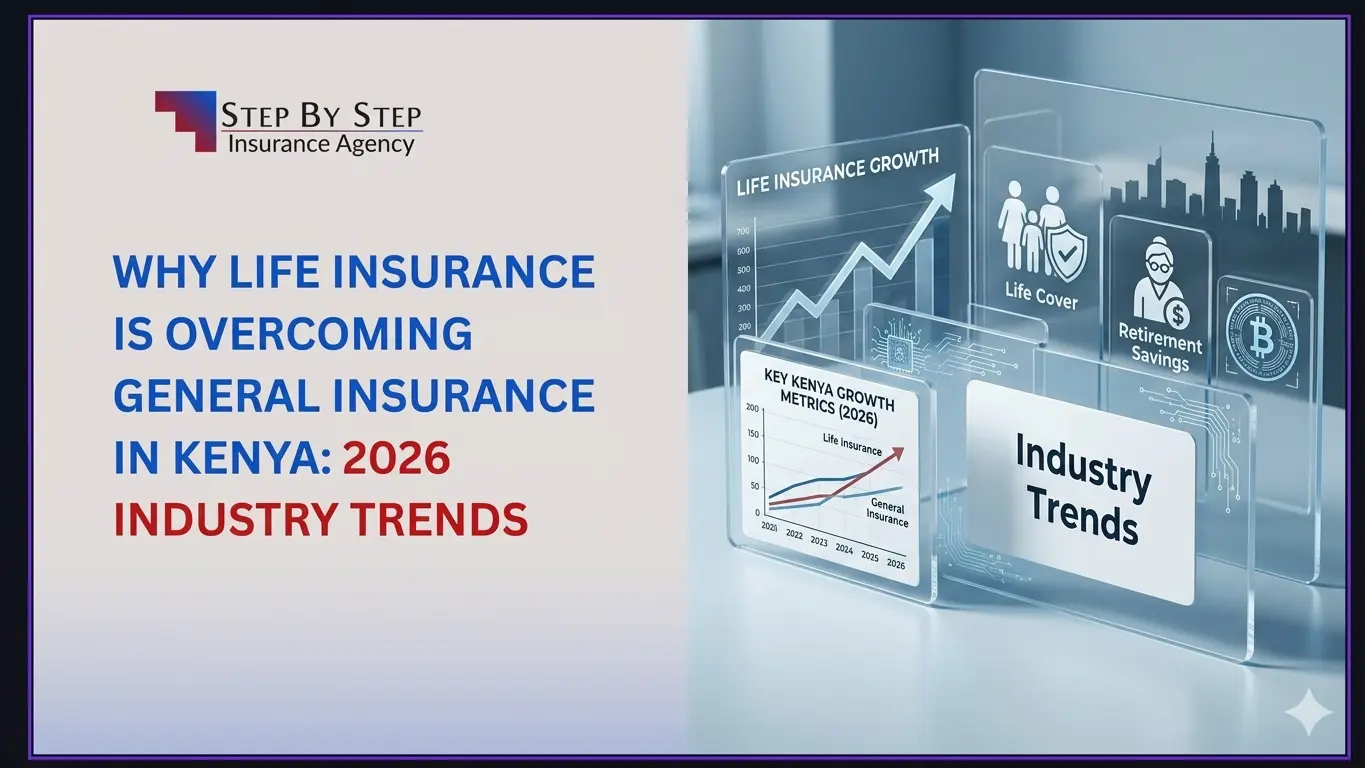
For the first time in Kenya’s history, Life Insurance premiums have surpassed General Insurance.
Industry Performance Snapshot
Segment
Gross Written Premiums (2026)
Life Insurance
KSh 235.39 Billion
General Insurance
KSh 227.17 Billion
What’s Driving This Growth?
Kenyans are increasingly prioritizing long-term financial security through:
Education savings plans
Retirement pensions
Endowment and investment-linked policies
This marks a shift away from short-term covers like motor and property insurance.
Why This Matters
Life insurance provides stable, long-term capital, allowing insurers to invest in:
Government securities
Infrastructure development
This strengthens both individual financial security and the national economy.
2. Smart Protectionism: The 25% Kenya Re Rule
As of January 1, 2026, a new regulation requires insurers to cede 25% of their risk to Kenya Reinsurance Corporation (up from 20%).
What This Means
Aspect
Impact
Local Economy
More premiums retained within Kenya
Forex Stability
Reduced reliance on foreign reinsurers
Insurance Sector
Stronger local balance sheets
Risk Management
Greater responsibility on Kenya Re
Why It Matters to You
This move strengthens the local insurance ecosystem, making it more resilient and less dependent on external markets. However, it also means local institutions must be highly efficient in managing large and complex risks.
3. Climate Risk Becomes a Core Insurance Priority
Climate change is now a real and measurable financial risk in Kenya.
Key Example: Old Mutual paid out KSh 200 million in flood-related claims in May 2026.
Emerging Climate Insurance Solutions
Flood Risk Pool (Proposed)
Detail
Description
Target Areas
Nairobi, Kiambu
Purpose
Protect property owners in flood-prone regions
Industry Driver
Kenya Reinsurance Corporation
The “10-Day Rule”
Feature
Benefit
Claims Type
Weather-indexed (rainfall/satellite data)
Payout Timeline
Within 10 days
Beneficiaries
Farmers, households, SMEs
Why This Matters
Faster payouts reduce financial shocks
Increased accessibility for vulnerable populations
Climate protection is becoming essential — not optional
Top Life Insurance Providers in Kenya (2026)
A few dominant players control over 80% of life insurance premiums.
Market Leaders Comparison
Company
Market Share
Core Strengths
Key Highlights
Britam Life Assurance
21.9%
Education plans, unit-linked investments
19× Life Insurer of the Year
ICEA LION Life
14.8%
Retirement & pensions
Strongest in deposit admin
Jubilee Life Insurance
14.2%
Education & medical-linked life
Diverse regional portfolio
Kenindia Assurance
7.3%
Traditional life, pensions
Highest total revenue insurer
CIC Life Assurance
6.6%
Micro-insurance, education
Affordable entry-level products
Best Life Insurance Products by Category
1. Education Savings Plans
Product
Provider
Key Benefit
Britam Super Education
Britam Life Assurance
Bonuses in final 6 years
Jubilee Career Life Plus
Jubilee Life Insurance
Education continuity guarantee
CIC Academia
CIC Life Assurance
Start from KSh 2,000/month
👉 Ideal for parents planning ahead for rising education costs.
2. Retirement & Pension Plans
Product
Provider
Key Benefit
ICEA LION Personal Pension
ICEA LION Life
8%–9.25% historical returns
👉 Best suited for long-term financial independence, especially for self-employed individuals.
3. Investment-Linked Plans
Product
Provider
Key Benefit
Old Mutual Elimika
Old Mutual
Combines insurance + investment growth
👉 Designed for individuals seeking both protection and wealth creation.
What This Means for You
The Kenyan insurance market is becoming:
More customer-focused
More resilient and regulated
More aligned with long-term financial goals
Key Takeaways
Life insurance is now a financial planning tool, not just protection
Climate-related cover is increasingly critical
Local reforms are strengthening the entire industry
Final Thought: Align Your Cover with the Future
Insurance in 2026 is no longer just about having a policy — it’s about having the right strategy.
Now is the time to review:
Your life insurance cover
Your education and retirement plans
Your exposure to climate-related risks
Working with a licensed broker like Step by Step Insurance can help you:
Compare the best providers
Understand policy details
Choose solutions tailored to your goals
Because the real question today isn’t whether you’re insured…
…it’s whether your insurance is built for the future.
The Kenyan insurance landscape shifted significantly on March 11, 2026, when the Insurance Regulatory Authority (IRA) placed three major players—KUSCCO Mutual Assurance Limited, Corporate Insurance Company Limited, and Trident Insurance Company Limited—under statutory management. This move, triggered by deteriorating financial health and a failure to meet solvency requirements, has left thousands of policyholders wondering about the safety of their investments and the validity of their claims.
If you are one of the 20,000+ affected claimants, this survival guide will walk you through the current moratorium, how the Policyholders Compensation Fund (PCF) works, and the exact steps you need to take today.
Key Takeaways
Three insurers — KUSCCO Mutual Assurance, Corporate Insurance, and Trident Insurance — were placed under PCF statutory management on March 11, 2026.
A six-month payment moratorium is in effect; no payouts until at least late 2026.
PCF compensation limit has been raised to KSh 500,000 per claim (up from KSh 250,000).
Trident’s Online Claims Portal opened on April 14, 2026; KUSCCO and Corporate policyholders should prepare documentation now.
You have a two-year window to file your claim from the public notice date.
Immediately seek alternative cover — do not remain uninsured during the freeze.
Immediately following the appointment of the PCF as the statutory manager, a six-month moratorium was declared, effective from March 2026.
What this means for you:
Payment Freeze: During this period, all payments to policyholders, claimants, and creditors are suspended.
No New Business: These three insurers are strictly prohibited from entering into any new insurance contracts.
Alternative Cover is Mandatory: The IRA has advised all existing policyholders to immediately seek alternative insurance cover from other licensed providers to avoid being uninsured during the freeze.
The moratorium is a “cooling-off” period that allows the PCF to assess the insurers’ liabilities and verify legitimate claims without further draining the companies’ remaining assets.
2. How the Policyholders Compensation Fund (PCF) Works
The PCF is a state corporation designed to act as a safety net when an insurer collapses. Think of it as the “insurance for your insurance.”
Compensation Limits
In a major move to protect consumers, the compensation limit was recently enhanced. You can now claim up to KSh 500,000 per single claim, up from the previous KSh 250,000.
Eligibility
To qualify for compensation, your policy must have been issued after January 1st, 2005, when the fund was established.
The Goal
The PCF’s primary mandate is to pay out unsettled claims to ensure that the failure of one company doesn’t lead to a total financial loss for the individual.
3. Step-by-Step: How to File Your Claim
For policyholders of Trident Insurance, the PCF has already opened its Online Claims Portal as of April 14, 2026. KUSCCO and Corporate policyholders should prepare their documentation now as the verification process scales up.
Follow these steps to secure your compensation:
Register on the Portal: Visit the official PCF Claims Portal and create an account.
Fill the Online Form: Complete the digital claim form accurately. Ensure you select the correct category for your claim (e.g., motor, life, or general).
Attach Supporting Documents: Upload digital copies of all required documentation (see checklist below).
Submit & Track: Submit your claim and note your reference number. Monitor the portal for updates.
Required Documents Checklist
Your original policy document
Proof of the claim (e.g., police abstracts, medical reports, or discharge vouchers)
Your KRA Pin and National ID
Evidence of any previous partial payments received from the insurer
⚠️ Submission Deadline: You generally have a two-year window from the date of the public notice to file your claim. Failing to meet this deadline means you may lose your right to compensation permanently.
4. What About Long-Term Policies (Life & Pension)?
For those with life insurance or pension schemes with KUSCCO Mutual or Corporate Insurance, the situation is slightly different. The PCF is currently assessing these long-term liabilities to determine if the portfolios can be transferred to a stable insurer or if they must be liquidated and compensated.
Action Item: Do not stop tracking your contributions. Ensure you have the latest statements and wait for a specific public notice from the PCF regarding the “Management of Long-Term Policies”.
Final Verdict for Policyholders
The statutory management of Trident, KUSCCO, and Corporate Insurance is a stressful event, but the PCF is legally mandated to protect you. While the six-month moratorium means you won’t see a payout until late 2026 at the earliest, filing your claim early on the portal puts you at the front of the queue once the verification is complete.
Protect yourself today: Stop paying premiums to these three entities, secure a new policy elsewhere, and begin gathering your paperwork for the PCF.
Life Insurance Surpasses General Insurance in Kenya | Step by Step Insurance
The Kenyan financial landscape has reached a historic turning point. For the first time, industry data reveals that Life Insurance (Long-term business) has surpassed General Insurance in total revenue. While Kenyans have traditionally prioritized insuring physical assets like cars and property, there is a visible shift toward insuring the person behind the asset.
With life insurance revenue hitting approximately KSh 235 billion against general insurance’s KSh 227 billion, the “safety net” culture in Kenya is undergoing a permanent transformation.
Key Takeaways
Life insurance now leads Kenya’s insurance market with ~KSh 235 billion in revenue, surpassing general insurance for the first time.
Endowment plans, education policies, and unit-linked products are the primary growth engines.
Mobile-money integration and “sachet” insurance (from as low as KSh 20/day) are making coverage inclusive.
Cultural fatigue with Harambee fundraisers is accelerating demand for structured insurance products.
Micro-insurance has more than doubled — from KSh 5.2 billion to KSh 12.8 billion — driven by M-Pesa.
The IRA projects insurance penetration to climb toward 3.0% of GDP by 2027.
Join Our Insurance Community on WhatsApp
Stay ahead of the curve. Get real-time updates on Kenyan insurance trends, policy tips, exclusive guides, and connect with thousands of like-minded Kenyans who are serious about their financial future. It’s free — and it’s where the conversation is happening.
The growth in the life sector isn’t just a marginal gain; it represents a fundamental change in consumer behavior. The adoption of IFRS-17 reporting standards has brought more transparency to these figures, highlighting where Kenyans are actually putting their money.
Insurance Category
2024 Revenue (Est.)
2026 Revenue (Current)
Growth Drivers
🛡️ Life Insurance
KSh 172 Billion
KSh 235 Billion
Education plans, Unit-linked investments
🚗 General Insurance
KSh 215 Billion
KSh 227 Billion
Mandatory Motor & Medical covers
📱 Micro-Insurance
KSh 5.2 Billion
KSh 12.8 Billion
Mobile-money (M-Pesa) integration
Key Trends Driving the Life Insurance Boom
1. The Move from “Death Cover” to “Living Benefits”
The biggest catalyst has been the rebranding of life insurance. It is no longer viewed solely as a “funeral policy.” Modern Kenyans are utilizing Endowment Plans—policies that pay out a lump sum after a set period (e.g., 10 or 15 years).
Education Policies: With the rising cost of private and international schooling in Kenya, parents are using insurance as a disciplined savings tool.
Unit-Linked Plans: These allow a portion of the premium to be invested in the Nairobi Securities Exchange (NSE) or government bonds, offering potentially higher returns than a standard savings account.
2. Digital Accessibility & “Sachet” Insurance
The barrier to entry has crumbled. Insurance is no longer a product sold only in high-rise offices in Upper Hill or Westlands.
Mobile-First Onboarding: Leading insurers have integrated with mobile money platforms, allowing users to register and pay premiums via USSD or apps.
Flexible Premiums: The “Sachet” model allows people in the informal sector to pay daily or weekly premiums as low as KSh 20, making life insurance inclusive for the first time.
3. The “Harambee” Fatigue
Culturally, Kenya is moving away from reactive fundraising.
Predictable Security: High-interest rates and inflation have made it harder for friends and family to contribute to emergency fundraisers (Harambees).
Dignity in Grief: Families are increasingly choosing life insurance to ensure that final rites and the transition period are handled with dignity, without the need for public financial appeals.
A Comparative Look: Life vs. General Insurance
While General Insurance remains vital, it faces different challenges compared to the surging Life sector.
General Insurance Constraints
High claim ratios in Motor and Medical insurance often eat into profits.
Intense price wars among companies lead to “premium undercutting.”
Often seen as a “grudge purchase” (something people only buy because the law or a bank requires it).
Life Insurance Advantages
Long-term Liquidity: Insurers can invest these funds over decades, providing more stability.
Emotional Connection: Life products are sold based on future dreams — education, retirement, legacy.
High Retention: Once a parent starts an education policy, they are statistically much more likely to keep paying until the policy matures compared to a motor cover.
Quick Links: Get Help & Explore More
Ready to take the next step? Use the links below to get in touch with our team, request a quote, or reach us directly.
Get a visual overview of how Kenya’s insurance landscape is evolving and what it means for your financial future.
Future Outlook: What’s Next for 2027?
As we move toward 2027, the Insurance Regulatory Authority (IRA) expects the penetration rate — currently at 2.3% of GDP — to climb toward 3.0%.
What to Watch For
Pension Integration: More life policies will likely merge with personal pension plans to address the growing “retirement gap.”
AI-Driven Underwriting: Faster claim processing using AI will continue to build trust in a sector that has historically struggled with a “slow-to-pay” reputation.
Green Insurance: Life insurers may begin offering “Wellness Discounts” for policyholders who maintain healthy lifestyles, verified through wearable tech.
Conclusion
The fact that life insurance is now the dominant force in the Kenyan market is a sign of a maturing economy. It signals that Kenyans are thinking beyond today’s risks and are actively building a foundation for tomorrow’s opportunities. For the modern household, a life policy is no longer just a piece of paper in a drawer — it is the most reliable partner in their financial journey.
Further Reading & External Resources
Expand your knowledge with these authoritative external sources on Kenya’s insurance industry:
The Kenyan insurance sector is witnessing a landmark recovery as Sanlam Allianz Holdings (Kenya) PLC reports its most successful financial year in over a decade. After a grueling five-year restructuring cycle marked by persistent losses between 2018 and 2023, the group has officially “turned the corner,” posting a KSh 1.35 billion pre-tax profit for the 2025 fiscal year. This performance marks a significant milestone in the company’s transition from Sanlam Kenya PLC to a central pillar of the SanlamAllianz continental joint venture.
Key Takeaways
Record profit turnaround: KSh 1.35bn pre-tax profit (2025) after five years of losses.
Underwriting surge: Insurance service result up 45.7% to KSh 951.5 million, disciplined cost management.
Balance sheet transformation: Borrowings slashed by 66.3%, equity soared +147.3% to KSh 4.75bn.
Digital innovation “Akiba Plus”: 14% net return, pension accessible from KSh 100.
Solvency strength: Life arm solvency ratio at 275% (double regulatory minimum).
The group’s financial health has seen a dramatic uplift, characterized by aggressive debt reduction and operational efficiency. Surging Underwriting Profit: The insurance service result jumped 45.7% to KSh 951.5 million, achieved through disciplined underwriting and a reduction in insurance service expenses by over KSh 320 million, even as general market revenues faced slight volatility. Balance Sheet Repair: A critical KSh 2.5 billion rights issue in mid-2025 allowed the group to retire major bank facilities, slashing total borrowings by 66.3%. Capital Strength: The group’s total equity surged by 147.3% to KSh 4.75 billion, while the solvency ratio for its life insurance arm closed at a robust 275%, nearly double the regulatory minimum.
Metric
2025 Performance
Change / Improvement
Pre-Tax Profit
KSh 1.35 billion
⬆️ Landmark turnaround
Insurance Service Result
KSh 951.5 million
+45.7%
Total Borrowings Reduction
Slash by 66.3%
KSh 2.5bn rights issue
Group Equity
KSh 4.75 billion
+147.3%
Life Solvency Ratio
275%
Almost 2x regulatory min
🎯 The Strategic Pivot: Life, Pensions, and Digital First
The core of this turnaround lies in a structural shift. On November 1, 2025, Sanlam Allianz completed the transfer of its general insurance portfolio to a separate entity, allowing the listed holding company to focus exclusively on Life Insurance, Pensions, and Investments.
1️⃣ The Digital Engine: Akiba Plus
The group’s brightest growth signal has been the launch of Akiba Plus, a mobile-first digital pension platform. Accessibility: Aimed at closing Kenya’s massive pension coverage gap, the platform allows users to start saving with as little as KSh 100. Performance: In 2025, members of the fund earned a stellar 14% net return, significantly outperforming traditional savings avenues. Integration: The platform offers a 360-degree view of savings, allowing users to consolidate old pensions and track growth in real-time via app or USSD (*723#).
2️⃣ Pension Fund Expansion
The broader pension business has shown immense resilience. The deposit administration fund expanded by 20.1%, reaching KSh 4.727 billion. By targeting SMEs and the informal sector through digital-led onboarding, Sanlam Allianz is positioning itself as a leader in long-term wealth preservation.
📞 Contact & Request Services
Service / Option
Details
Action / Link
Request Consultation
Talk to an insurance expert for personalized guidance
Despite the record profits, the board has opted to withhold dividend payments for the year. This conservative move is designed to preserve capital for further operational efficiency and to strengthen internal controls. As Sanlam Allianz Kenya integrates more deeply with its global parent—which operates across 26 African markets—the focus remains clear: leveraging the Allianz global expertise and Sanlam’s deep African roots to dominate the life and pension sectors through technology.
“This result confirms the group has turned the corner… pensions have emerged as the clearest growth signal for the future.” With a repaired balance sheet and a high-yield digital pension product, Sanlam Allianz is no longer just “surviving” the Kenyan market—it is setting the pace for its digital evolution.
Definitive Guide to the Best Senior Medical Insurance in Kenya | Step by Step Insurance
Navigating healthcare in later life demands specialized planning and comprehensive protection. The Best Senior Medical Insurance in Kenya must be a tailored solution that addresses the specific challenges of aging, ensuring both dignity and financial security for senior citizens.
This expert guide from Step by Step Insurance Agency provides the in-depth insights and practical advice necessary to select health coverage built for comfort—managing everything from chronic conditions to unexpected emergencies without financial stress.
Key Takeaways
Senior medical insurance requires specialized coverage for age-related health concerns
Lifetime renewability is a critical feature for long-term security
Pre-existing conditions coverage distinguishes senior plans from standard policies
High inpatient limits (up to KSh 10 million) provide essential financial protection
Professional guidance simplifies the complex process of selecting appropriate coverage
The Critical Need for Tailored Senior Health Coverage
For aging parents, retirees, and elderly couples, healthcare needs evolve significantly, demanding a robust financial safety net. Access and dignity should never be compromised.
Finding comprehensive health cover built for comfort in old age is not merely a convenience but a necessity. Specialized medical covers are vital for managing long-term conditions, ensuring prompt treatment, and covering high-cost procedures during retirement.
I. Introduction: The Importance of Specialized Senior Health Coverage
As individuals enter their golden years, the predictability of health often diminishes. Chronic conditions may develop, and the cost of quality medical intervention rises. This means generic health plans often fall short of providing the extensive support required.
The Best Senior Medical Insurance in Kenya is defined by its ability to provide flexible, extensive, and compassionate coverage that adapts to the realities of advanced age.
II. The Essential Criteria for Senior Medical Covers
Choosing the right plan starts with understanding the non-negotiable criteria that distinguish a truly senior-friendly policy from standard medical insurance.
A. Eligibility and Lifetime Assurance: Covering the Full Journey
The foundation of valuable senior coverage lies in the ability to join later in life and, critically, to keep the policy active indefinitely.
Joining Age: Top covers are specifically designed for senior citizens. Eligibility typically ranges from 60–80 years for principal members, or sometimes 65–85 years. Some schemes cover individuals aged 65–79.
Lifetime Renewability: This is arguably the most crucial feature. Once a member has joined, the policy offers lifetime renewability, allowing members to continue the cover for life without future age restrictions upon renewal.
Dependents: Eligibility typically extends to the principal member and one legal spouse. Child dependents are generally covered under separate family plans.
B. Financial Protection (Inpatient Limits and Scope)
The financial capacity of the plan must match the potential severity and cost of senior healthcare issues such as specialized surgery or chronic condition management.
Diverse Limits: Comprehensive plans offer flexibility, with inpatient cover ranging from KSh 300,000 to KSh 10 million, ensuring options for different budgets and healthcare needs.
Age-Banded Premiums: Premiums are typically calculated based on the age of the older member (either the principal or the spouse). Installment plans—often up to four—may be available, though the full premium must usually be paid before cover commences.
III. Step by Step Insurance: Your Trusted Partner in Senior Health
The process of securing the Best Senior Medical Insurance in Kenya can be complex. Differences in policy limits, exclusions, waiting periods, and network access make finding the optimal cover overwhelming.
Step by Step Insurance simplifies this landscape by providing clarity and personalized guidance, ensuring you understand exactly what you’re covered for. Customers value accessible, responsive, and simplified service.
Our Commitment to You
Personalized Solutions: We prioritize service that ensures members receive the support they deserve without compromising care quality.
Expert Matchmaking: We partner with Kenya’s top underwriters to provide solutions tailored to your needs.
Seamless Support: We offer efficient application and claims processes for a smooth experience.
Related Resources
Overcoming Challenges in Senior Medical Coverage
Learn how to navigate the 8 major challenges faced when seeking medical cover for seniors in Kenya.
The value of a good Senior Medical cover in Kenya lies in its inclusivity—especially for chronic care and specialized services.
A. Coverage for Existing and Chronic Conditions
Senior plans must address the reality of managing existing illnesses, often excluded from standard policies.
Pre-existing Conditions (PEC): Senior covers are often known as the “friendliest health plan for the elderly that welcomes pre-existing conditions.” Chronic, congenital, and pre-existing conditions are covered in most senior plans.
Specific Conditions: Includes coverage for HIV/AIDS, gynecological issues, and hernias.
Waiting Periods: Typically 12 months for chronic and pre-existing conditions.
Cancer Coverage: Newly diagnosed cancer is generally covered after a one- or two-year waiting period.
B. Comprehensive Inpatient and Outpatient Services
Radiotherapy, chemotherapy, major organ transplant, joint replacement
Rehabilitation
Inpatient physiotherapy, rehabilitation, and post-hospitalisation care
COVID-19
Testing provided across most coverage levels, subject to pre-authorization
C. Wellness, Preventative Care, and Ancillary Support
Modern senior plans emphasize proactive health maintenance and quality-of-life benefits.
Dental & Optical: Usually included by default.
Dental: fillings, extractions, root canals, and theatre costs.
Optical: treatment and frame replacements (e.g., up to KES 8,000 every two years).
Mental Wellness: Psychiatric care available after 10–12 months waiting period.
Preventative Care: Includes vaccinations (flu, pneumonia) and medically necessary supplements.
Value-Added Services:
Pharmacy-based teleconsultations.
Doorstep drug delivery.
Home nursing care (up to 30–60 days post-surgery).
Annual health checkups.
D. Emergency and Final Expense Coverage
Emergency Services: Local evacuation and road ambulance included. Air evacuation applies to higher-tier plans (KES 3M+).
Overseas Treatment: Some premium plans include overseas inpatient referral and airfare if treatment is unavailable locally.
Last Expense Cover: Often ranges KES 50,000–100,000, easing the financial burden for families.
V. Practical Steps for Enrollment and Understanding Policy Terms
A. Eligibility Requirements
To ensure comprehensive cover, applicants must meet specific criteria:
Documentation: Submit a signed application form, National ID/Passport, and KRA PIN.
Medical Report: Applicants aged 55+ must undergo a medical exam at their cost through an approved provider.
B. Navigating Waiting Periods
Condition or Treatment
Standard Waiting Period
Acute illness & outpatient services
30 days
Pre-existing & chronic conditions
1 year (12 months)
Gynaecological/Ophthalmologic/Dental surgery
1 year
Psychiatric care
10 months – 1 year
Newly diagnosed cancer
1–2 years
Organ transplant
3 years
Accidents/Emergencies
No waiting period
Waivers for Transfers: Members transferring from another insurer or corporate scheme may have waiting periods waived if done within 30 days, subject to documentation (renewal invite, claims statement) and approval.
C. Network Access and Administration
Widespread Network: Access to 900–1,000+ healthcare providers across Kenya and East Africa.
Payment Options: Premiums are age-banded and must usually be paid in full before cover starts. Up to 4 installments may be allowed.
Get Personalized Assistance
Our insurance experts are ready to help you find the perfect senior medical coverage for your needs.
VI. Conclusion: Choosing Peace of Mind with Step by Step Insurance
Investing in the Best Senior Medical Insurance in Kenya secures your loved ones’ health and dignity. By focusing on plans offering:
Lifetime renewability
Chronic condition coverage
High inpatient limits (up to KSh 10 million)
Ancillary benefits like home nursing and drug delivery
—you guarantee lasting quality care.
The complexity of comparing policy terms and benefits makes professional assistance invaluable. Step by Step Insurance Agency serves as your trusted guide, ensuring you select a tailored plan suited for the golden years.
Contact Step by Step Insurance Agency today to receive personalized guidance, compare comprehensive limits, and secure the peace of mind you deserve.
Tailored Individual Pension Plan in Kenya | Step by Step Insurance
For Kenyans seeking financial security, a personalized retirement savings plan is indispensable, offering crucial tax advantages and guaranteed capital growth to ensure a stress-free retirement. By choosing a tailored Individual Pension Plan in Kenya, you gain access to flexible contributions, compounded growth, and expert guidance necessary to secure a consistent income stream well into your golden years.
Key Takeaways
Tax Benefits: Save up to Ksh 20,000 monthly on taxes while building your retirement fund
Guaranteed Growth: Minimum 5% annual interest with potential for higher returns
Flexible Contributions: Contribute as little as Ksh 500 monthly with no upper limit
Financial Security: Protected capital with guaranteed returns and life insurance options
Portability: Your plan stays with you regardless of employment changes
I. The Imperative: Rethinking Your Retirement Timeline
It is easy to push retirement planning to the back burner, assuming the end of your working life is years away. However, financial experts agree that creating a retirement strategy is vitally important, and the process should begin as soon as you start earning income.
The simple truth is: the sooner you start, the more funds you will accumulate.
An Individual Pension Plan in Kenya (often referred to as a Personal Pension Plan or PPP) is not just a savings account—it is a specially designed mechanism enabling individuals to build up funds by making periodic contributions into a high-yielding retirement fund. This strategy is designed to provide retirement, savings, and investment benefits, ensuring you maintain your desired lifestyle long after your regular paycheck stops.
Step by Step Insurance Agency: Your Partner in Tailored Insurance Solutions
Navigating the complexities of retirement products requires expert guidance. At Step by Step Insurance Agency, we pride ourselves on positioning our content as expert and trustworthy, delivering tailored insurance solutions that meet your unique financial profile. We understand that a standardized approach simply does not work for long-term security.
The core difference is our commitment to personalized coverage: We partner with Kenya’s top underwriters to give you the best solutions according to your needs. This ensures that the product you select—whether it focuses on maximum lump sum payout or a guaranteed income stream for life—is the right fit for your future.
II. Decoding the Financial Power of Personal Pension Plans
The primary advantage of enrolling in an Individual Pension Plan in Kenya lies in the unique financial and regulatory benefits afforded to these schemes under the RBA Act. These plans offer a powerful combination of tax relief, guaranteed growth, and security for your principal investment.
A. Maximizing Tax Deductibility
One of the most compelling reasons to choose a pension plan is the significant tax relief it provides:
Contributions are tax deductible at the source. This means your contribution is deducted from your gross pay before Pay As You Earn (P.A.Y.E.) is computed.
Maximum tax-deductible contribution: Kshs. 20,000 per month (or Kshs. 240,000 annually) or one-third (⅓) of monthly income, whichever is lower. This allows you to legally reduce your taxable income while simultaneously investing in your future.
Tax-Exempt Investment Income: The interest earned on your pension savings is fully exempt from tax, ensuring that 100% of the growth benefits you directly.
B. Guaranteed Capital Growth and Security
Security is paramount when investing for the long term. Reputable pension schemes are required to prioritize safety and sustainable long-term returns.
Your savings grow exponentially over time due to the profound impact of compound interest. Contributions are prudently invested to ensure high returns, and both your capital and investment income are guaranteed against loss.
Many established plans offer a guaranteed minimum compounded interest rate of 5% per annum, though some may offer different guarantees (e.g., 4% minimum).
Credible Data Snapshot: Declared Interest Rates (Example)
Year
Declared Interest Rate (Example Provider)
2021
11%
2020
8%
2019
10%
2018
10%
2017
10%
Source: Example rates from a guaranteed plan. Minimum guaranteed interest is typically 5%.
III. Flexibility and Control: Building Your Fund Your Way
The modern Individual Pension Plan in Kenya is designed with flexibility in mind—ideal for entrepreneurs, freelancers, or anyone changing jobs frequently.
A. Contribution Flexibility
You have complete control over how and when you contribute:
Variety of Contributions: Fixed or variable; monthly, quarterly, semi-annually, or annually. Single lump-sum contributions are also accepted.
Minimum Investment: As low as Kshs 500 per month. There’s no upper limit, though only up to Kshs 20,000 monthly qualifies for tax relief.
Convenient Payment Modes: Payments can be made via M-PESA, cheques, bank standing orders, salary stop orders, bank transfers, or cash.
B. Portability and Pauses
Life changes should not derail your retirement savings. An Individual Pension Plan in Kenya is designed to remain active regardless of your employment situation.
Job Change Protection: Your plan continues seamlessly, unaffected by career changes.
Consolidation: You can transfer or consolidate funds from other schemes into a single policy.
Contribution Pause: You may stop contributing temporarily—your fund continues to earn interest without penalties.
IV. Retirement Payout Options: Pension vs. Provident Fund
One of the most crucial choices you’ll make is how you want your benefits disbursed at retirement. The normal retirement age is 60 years, though early retirement is permitted at 50 years. The choice between a Pension Fund and a Provident Fund determines how your accumulated savings are paid out.
Feature
Pension Fund Option
Provident Fund Option
Lump Sum Payment
Maximum of one-third (⅓) of the accumulated benefit.
100% of the total amount paid in one lump sum.
Remaining Balance
The remaining two-thirds (⅔) purchases an annuity, providing guaranteed regular income for life.
No mandatory annuity purchase; full funds accessed immediately.
Income Drawdown
Option to draw regular income (up to 15% per annum) while balance remains invested.
Full access allowed, though options like the Madison or Platinum Income Drawdown Plans can help manage post-retirement income.
Pre-Retirement Access and Special Circumstances
While primarily for retirement, regulated access is possible under specific conditions:
Early Withdrawal: Members leaving employment before age 50 may withdraw up to 50% of accrued benefits plus investment income.
Death Benefits: If a member passes away before retirement, the total accumulated fund is paid immediately to beneficiaries—tax-free.
Related Articles
Top 5 Pension Plans in Kenya 2025
Comprehensive guide to the best pension plans available in Kenya for securing your future.
V. Leveraging Your Pension for Major Financial Milestones
A well-structured Individual Pension Plan in Kenya can serve as a financial tool beyond retirement.
Pension-Backed Mortgages
Members can assign up to 60% of their accrued benefits as security for a mortgage from approved institutions. This allows you to leverage your pension savings to finance the purchase or construction of a home, turning your retirement capital into tangible wealth.
Comprehensive Protection and Security Riders
True financial security includes protection from unforeseen events. At Step by Step Insurance Agency, we guide clients to integrate protection options directly into their retirement plans.
Common riders include:
Life Assurance: Pays a lump sum to beneficiaries upon death.
Critical Illness Cover: Provides a payout upon diagnosis of a serious illness.
Last Expense Cover: Covers funeral and final expenses, reducing the burden on family.
These riders ensure your plan protects both your future income and your family’s immediate financial security.
VI. The Step by Step Commitment to Your Financial Health
At Step by Step Insurance Agency, we believe in a transparent, expert-driven approach that gives clients confidence in their financial future. We offer more than pension plans—we provide a complete financial roadmap:
Investment Options: Guidance on Money Market Funds, Fixed Income Funds, and Wealth Funds to grow your net worth.
Personal Protection: Access to Personal Accident, Motor Private, Domestic, and Travel Insurance.
Future Planning Products: Education savings plans and wealth accumulation options.
A Seamless Start to Your Retirement Journey
Starting your Individual Pension Plan in Kenya is simple:
Complete a proposal form.
Provide copies of your ID/Passport and KRA PIN.
Make your initial contribution or submit a transfer request if consolidating another scheme.
You’ll receive annual or on-demand statements showing contributions and interest earned—ensuring transparency and peace of mind.
Conclusion: Take the Step to Financial Freedom Today
Securing a decent standard of living in retirement is non-negotiable. By choosing a tailored Individual Pension Plan in Kenya, you invest in a future of freedom and stability—with tax relief up to Kshs 20,000 per month, guaranteed growth, and flexibility for life’s major goals.
Step by Step Insurance Agency stands ready to guide you through every decision, ensuring your retirement plan fits your personal vision of success.
The Complete Guide to Group Life Insurance in Kenya for HR Managers
In today’s competitive workplace, employee benefits are no longer just “extras” — they are a key factor in attracting, motivating, and retaining talent. Among these benefits, Group Life Insurance has become one of the most valuable protections employers can offer their teams.
But what exactly is Group Life Insurance? How does it work in Kenya? And what should HR managers, business owners, and decision-makers keep in mind when setting up a policy?
This guide breaks it all down — Step by Step.
Key Takeaways
Group Life Insurance provides financial security for employees’ families at cost-effective rates
It’s a powerful tool for talent attraction, retention, and employee satisfaction
Coverage typically ranges from 2-4x annual salary with tax-free payouts in Kenya
Working with experienced intermediaries ensures optimal coverage and smooth claims processing
Regular policy reviews and employee education maximize the program’s effectiveness
Connect with fellow HR professionals, business owners, and insurance enthusiasts! Get the latest trends, tips, and exclusive insights on employee benefits and insurance strategies in Kenya.
Group Life Insurance (GLI) is a life insurance policy arranged by an employer (or organization) to provide financial protection to employees’ families in case of death.
Instead of each employee buying individual life insurance, the employer negotiates one collective policy that covers everyone in the group.
💡 In simple terms: If an employee passes away while covered under the policy, their beneficiaries receive a lump-sum payout.
Why Group Life Insurance Matters in Kenya
In Kenya, families often rely heavily on breadwinners for daily expenses, school fees, and healthcare. When death strikes, the financial strain can be devastating.
This is where GLI comes in — it provides:
Peace of Mind
Employees know their families will be supported
Financial Security
Coverage for education, bills, rent, or business continuity
Employer Goodwill
Shows genuine care for staff welfare
As Faith Kimaru, Principal Officer at Step by Step Insurance, explains:
“Group Life Insurance is more than a compliance tool — it’s an investment in people. Companies that offer it not only protect families but also build stronger, more loyal teams.”
How Group Life Insurance Works in Kenya
Here’s a step-by-step breakdown for HR managers:
Employer Sets Up the Policy
The organization partners with an insurance intermediary (like Step by Step Insurance) to design a group cover.
Eligibility
Usually covers all permanent employees (sometimes including spouses and children).
Sum Assured (Coverage Level)
This is typically a multiple of the employee’s annual salary (e.g., 2x or 3x gross salary). For example:
Employee earning KES 1,200,000 annually → 2x salary = KES 2,400,000 payout
Premium Payment
Premiums are either:
Paid fully by the employer (most common)
Shared between employer and employees
Payouts
If an insured employee dies, the family receives the agreed lump sum (free of tax in Kenya).
Benefits of Group Life Insurance for Employers
Offering GLI provides more than financial coverage — it also strengthens HR strategy.
Talent Attraction & Retention
Employees are more likely to join and stay with organizations that prioritize their families’ welfare.
Cost-Effective
Group policies are usually cheaper per individual than standalone life insurance.
Boosts Productivity
Staff who feel secure about their family’s future are less stressed and more engaged.
Corporate Social Responsibility
Shows that the organization cares about its people, enhancing brand reputation.
What’s Covered Under Group Life Insurance in Kenya
Typical benefits include:
Coverage Type
Description
Death (natural or accidental)
Lump sum payout to beneficiaries
Funeral/Last Expense Cover
Immediate cash to help with burial expenses
Accidental Death & Dismemberment
Compensation in case of severe disability
Critical Illness Rider (optional)
Payout if diagnosed with a serious illness
👉 Note: The exact benefits depend on the insurer and plan design. That’s why working with a trusted intermediary is key.
Common Mistakes HR Managers Make (and How to Avoid Them)
❌ Choosing the cheapest option only
→ ✅ Always balance cost with actual benefits offered.
❌ Not educating employees about the cover
→ ✅ Hold HR briefings to explain how the policy works and who is covered.
❌ Failing to update employee data
→ ✅ Regularly update staff lists, salaries, and beneficiaries to avoid disputes.
❌ Overlooking additional riders
→ ✅ Adding funeral, critical illness, or disability riders makes policies more impactful.
💡 Example: A company with 50 employees, each earning an average salary of KES 800,000, could get a 2x salary cover (KES 1.6M per employee) at affordable annual premiums.
At Step by Step Insurance, we help employers compare quotes from multiple insurers to ensure cost efficiency and maximum protection. Learn more about our specialized plans for small and medium businesses.
Why Work With Step by Step Insurance?
As an independent insurance intermediary, Step by Step Insurance doesn’t just sell policies — we advise, negotiate, and support HR managers throughout the process.
Compare Options
We compare options from top insurers in Kenya (APA, Jubilee, ICEA Lion, Britam, GA, etc.)
Customize Plans
We customize group life plans based on your staff profile & budget
Claims Support
We assist with claims processing for quick, stress-free payouts
As Faith Kimaru puts it:
“Our job is to simplify insurance for HR managers — so you can focus on people, while we focus on protection.”
Final Thoughts
Group Life Insurance is not just another HR cost. It’s a strategic investment in your people — one that builds trust, loyalty, and resilience for both employees and employers.
For Kenyan HR managers, the question is no longer “Should we get Group Life Insurance?” — it’s “Can we afford not to?”
APA Afya Nafuu: Affordable Medical Insurance in Kenya 2025
Let’s face it—hospital bills in Kenya aren’t getting any cheaper. A sudden illness, an accident, or even a simple hospital admission can leave families scrambling to pull funds together. For many, healthcare costs come unannounced and hit hard. That’s why having a reliable and affordable medical insurance plan isn’t just smart—it’s essential. If you’re looking for a health cover that takes care of your family’s medical needs without draining your wallet, APA Afya Nafuu is worth a serious look. Designed with the average Kenyan in mind, this plan offers real value, flexible options, and solid protection when it matters most. In this article, we’ll break down what APA Afya Nafuu offers, how much it costs, and why it’s one of the top picks for families in Kenya today.
Key Takeaways
APA Afya Nafuu offers comprehensive inpatient coverage starting at just KES 5,500/year
Flexible add-ons for outpatient care and maternity benefits
Coverage available for seniors up to 75 years old
Immediate accident cover with no waiting period
Wide network of hospitals and clinics across Kenya
Afya Nafuu is a medical insurance product from APA Insurance, one of Kenya’s most trusted insurers. It aims to provide flexible, reliable, and affordable healthcare coverage—especially tailored for the average Kenyan household.
This plan is ideal for:
Families with children
Senior citizens up to 75 years
First-time insurance buyers
Anyone seeking affordable inpatient cover with optional outpatient and maternity benefits
Key Benefits of APA Afya Nafuu
APA Afya Nafuu stands out in the market due to its flexibility and affordability, offering a range of tiered plans designed to accommodate various financial capabilities and health needs.
Inpatient Coverage (Core Benefit)
All plans come with inpatient benefits, including:
APA Afya Nafuu offers a compelling balance of affordability, reliability, and flexibility—perfect for families who want peace of mind without breaking the bank. Whether you’re insuring your first child, protecting an aging parent, or covering your household, this plan delivers real value. And with Step by Step Insurance by your side, navigating the enrollment and claims process is easier than ever.
Complete Guide to Home Insurance in Kenya – Step by Step Insurance
Whether you rent or own a home in Kenya, protecting your living space and belongings is essential. Home insurance, also known as domestic package insurance, offers peace of mind by safeguarding you against unforeseen risks such as fire, theft, natural disasters, and liability claims. Yet, many Kenyans remain uncertain about what home insurance covers, why it matters, and how to choose the right policy.
This comprehensive guide breaks down everything tenants and homeowners need to know about home insurance in Kenya. We’ll also show how Step By Step Insurance plays a vital role in helping you find tailored, affordable coverage that fits your unique needs.
🔑Key Takeaways
Home insurance protects both renters and homeowners against fire, theft, natural disasters, and liability claims
Renters need separate insurance as landlord policies don’t cover personal belongings
Annual premiums typically range from KSh 5,000 to KSh 20,000 depending on coverage and property value
Step By Step Insurance connects you with top Kenyan insurers for personalized, competitive quotes
Proper documentation and immediate reporting are crucial for successful claim processing
Home insurance is a policy designed to protect your physical property and personal belongings from damage or loss caused by covered events. It also offers liability protection if someone is injured on your property or if you accidentally cause damage to others.
In Kenya, home insurance is often referred to as domestic package insurance and typically includes:
Coverage Type
Description
Who It Applies To
Dwelling Coverage
Protection for the physical structure of your home
Homeowners only
Contents Coverage
Protection for personal belongings inside the home
Both renters and owners
Liability Coverage
Protection against legal claims for injuries or property damage
Both renters and owners
Additional Living Expenses
Coverage for temporary accommodation if home becomes uninhabitable
Both renters and owners
⚠️Why Is Home Insurance Important in Kenya?
Kenya’s homes face a variety of risks, including:
Fire: A leading cause of property damage in urban and rural areas. Theft and burglary: Increasing incidents in many neighborhoods. Natural disasters: Floods, heavy rains, and landslides, especially in vulnerable regions. Accidental damage: From household mishaps or third-party negligence. Liability risks: Injuries to visitors or damage caused by you to others’ property.
Without insurance, these risks can lead to devastating financial losses. Home insurance provides a safety net that helps you recover quickly without bearing the full cost yourself. For those moving into areas like Kitengela, securing coverage before settling is particularly important.
🔄Homeowners vs. Renters: What’s the Difference?
🏡Homeowners Insurance
If you own your home, insurance typically covers: the structure of the house and permanent fixtures (walls, roof, plumbing), your personal belongings inside the home, liability protection for injuries or damages occurring on your property, and additional living expenses if you need to live elsewhere during repairs.
If you rent, your landlord’s insurance usually covers the building but not your personal belongings or liability. Renters insurance covers: your personal property inside the rented home or apartment, liability protection if someone is injured while visiting you, and sometimes additional living expenses if the rental becomes uninhabitable.
Renters insurance is affordable and essential for protecting your possessions and financial security.
🛡️What Does Home Insurance Cover in Kenya?
Home insurance policies in Kenya generally cover the following:
Domestic employee cover: Protection for injuries to household workers. Freezer contents: Compensation for spoiled food due to power outages. Golfers cover: Protection for golf equipment. Alternative accommodation: Covers costs of temporary housing if your home is uninhabitable.
Property value and location: Higher-value homes or those in high-risk areas cost more. Coverage limits and add-ons: More comprehensive policies have higher premiums. Security features: Burglar alarms, fire extinguishers, and gated communities may reduce premiums. Type of policy: Renters insurance is generally cheaper than homeowners insurance.
Typical premiums range from KSh 5,000 to KSh 20,000 annually for basic coverage, but can be higher depending on coverage and property value. The rising risks and expenses in Kenya’s insurance market make it important to secure coverage sooner rather than later.
✅How to Choose the Right Home Insurance Policy
Choosing the right policy involves:
Assessing your needs: Value your home and belongings accurately. Comparing coverage: Look beyond price to understand what risks are covered. Checking exclusions: Know what is not covered to avoid surprises. Understanding deductibles: The amount you pay before insurance kicks in. Reviewing claims process: Choose insurers with smooth, transparent claims handling. Considering add-ons: Customize your policy for specific needs like domestic workers or high-value items.
🤝How Step By Step Insurance Helps You Secure the Best Home Insurance
Navigating the insurance market can be overwhelming. Step By Step Insurance simplifies this by:
Acting as a trusted broker connecting you to top Kenyan insurers like Jubilee, Britam, APA, and CIC. Offering personalized consultations to understand your unique needs and budget. Providing competitive quotes and helping customize coverage options. Guiding you through the application and claims process for hassle-free experiences. Educating clients about policy benefits, exclusions, and claim tips to maximize value. Leveraging digital platforms for quick, convenient policy issuance and management.
With Step By Step Insurance, you gain expert support and peace of mind knowing your home and belongings are well protected.
📝Filing a Home Insurance Claim in Kenya: What You Need to Know
In case of loss or damage:
Step
Action Required
Timeline
1
Notify your insurer immediately
Within 24-48 hours
2
Document the damage: Take photos and gather evidence
As soon as safe to do so
3
File claim with required documents: Police reports, receipts, inventories
Within 7-14 days
4
Work with insurance adjuster for assessment
As scheduled
5
Receive compensation based on policy terms
After approval
Step By Step Insurance assists clients throughout this process to avoid delays and ensure fair settlements.
❓Frequently Asked Questions (FAQs)
Can renters insure their belongings?
Yes, renters insurance covers personal property and liability.
Are natural disasters covered?
Most policies cover floods, storms, and earthquakes, but check specifics.
How quickly can I get a policy?
Many insurers offer instant digital issuance upon application.
Can I customize my policy?
Yes, add-ons like domestic employee cover and jewelry insurance are common.
What if I don’t have home insurance?
You risk losing valuable assets and facing financial hardship after disasters.
🎯Conclusion
Whether you rent or own, home insurance in Kenya is a smart investment to protect your property, belongings, and financial security. Understanding the differences between renters and homeowners insurance, coverage options, and costs empowers you to make informed decisions.
Step By Step Insurance stands ready to guide you through the process, offering tailored solutions from trusted insurers and expert support from purchase to claims.
Don’t wait for the unexpected—secure your home and peace of mind today with Step By Step Insurance.
📚Additional Resources
Kenya Insurance Regulatory Authority (IRA), Capital Markets Authority (CMA), and Contact Step By Step Insurance for personalized quotes and advice.
This guide is based on current market trends and regulations as of 2025 and is intended for informational purposes.
In Kenya’s fast-evolving professional space, trust is currency. Whether you are an architect overseeing a multimillion construction project, a lawyer defending clients, or an IT consultant implementing sensitive systems, your reputation is your most valuable asset. Yet, one honest mistake, a missed clause, misadvice, or technical error, can lead to financial loss, lawsuits, and a damaged career.
Professional Indemnity Insurance is the invisible armour that every modern Kenyan professional should wear. While it is often seen as a legal or contractual necessity, Professional Indemnity Insurance is much more than a shield against liability, it is a strategic growth tool.
When clients know you’re insured, they’re more confident to work with you. When tenders and contracts demand proof of Professional Indemnity Insurance, you’re ready. When you want to scale into bigger markets, Professional Indemnity Insurance gives you the leverage to do so.
an adult handsome black businessman outside of corporation, using phone
At Step By Step Insurance Agency, we’ve seen firsthand how the right Professional Indemnity Insurance cover transforms professionals from risk-prone individuals into credible, growth-ready experts. This article unpacks how you can move from liability to leverage, with the right protection in place.
Key Takeaways
Professional Indemnity Insurance protects professionals from financial losses due to errors or negligence.
It is essential for winning tenders, boosting credibility, and gaining client trust.
Coverage must include legal fees, retroactive protection, and be profession-specific.
Additional options like cyber liability and run-off cover add long-term value.
Step By Step Insurance Agency provides expert guidance in securing the right PII for your profession.
Professional Indemnity Insurance is a cover designed to protect professionals against legal claims arising from errors, omissions, negligence, or breach of duty in the course of offering services. If a client suffers financial loss due to your mistake, Professional Indemnity Insurance steps in to cover:
Legal costs and expenses in defending a claim
Compensation payable to your client
It is particularly important for service-based industries where advice, consultancy, or expert recommendations are involved.
Unlike general liability insurance, which covers bodily injury or property damage, Professional Indemnity Insurance deals strictly with professional errors, such as giving wrong legal advice, designing a flawed architectural plan, or making a costly accounting oversight.
Why Kenyan Professionals Can’t Ignore It
In today’s dynamic and increasingly litigious business environment, professionalism alone is no longer enough. Whether you’re a lawyer advising clients, an engineer overseeing a site, a financial consultant managing assets, or a creative building brand, one misstep can turn your entire career upside down.
We’re the team with all the ideas.
Kenya’s professional landscape is changing rapidly. Clients are more informed. Regulations are tighter. Contracts are more demanding. And with the rise of digital platforms and public accountability, even a simple oversight can quickly escalate into a costly legal battle or public relations crisis.
What many professionals overlook is that while they may trust their expertise, clients are trusting outcomes and when those outcomes fail to meet expectations, responsibility falls squarely on the service provider.
That’s why Professional Indemnity Insurance is no longer optional for serious professionals. It’s the difference between a temporary setback and total financial ruin. It’s the quiet force that allows you to operate boldly, take on big projects, and build lasting trust in an increasingly high-stakes world.
Increasing Legal Awareness
Clients are becoming more aware of their rights and the legal recourse available when services don’t meet expectations.
Contractual Requirements
Many tenders, especially in government, NGO, and multinational sectors, require proof of Professional Indemnity Insurance before awarding work.
Risk of Reputation Damage
Even unfounded accusations can damage a career. Professional Indemnity Insurance gives professionals the financial power
to defend themselves while maintaining their brand.
Growing Competition
Having Professional Indemnity Insurance makes you more competitive. It shows clients that you’re serious, responsible, and prepared.
From Liability to Leverage: Business Growth Advantages
Professional Indemnity Insurance isn’t just a “nice-to-have”, it’s a competitive advantage. Here’s how it powers business growth:
1. Winning Bigger Clients
Large clients often require contractors and consultants to carry Professional Indemnity Insurance before signing any deals. Having it opens the door to more lucrative projects.
2. Enhancing Professional Credibility
In a world where clients are spoilt for choice, standing out as an insured professional boosts your trust factor.
3. Securing Repeat Business
Clients want to work with professionals who offer peace of mind. With Professional Indemnity Insurance in place, clients feel protected and are more likely to return.
4. Easier Tender Qualification
Most tenders (especially from county governments, parastatals, and international organizations) demand Professional Indemnity Insurance. Without it, your application could be rejected outright.
5. Risk Mitigation for Strategic Growth
With legal risks covered, professionals can confidently take on higher-risk, higher-reward projects which is where the real growth happens.
Common Professions That Need Professional Indemnity Insurance in Kenya
In Kenya’s vibrant economy, professionals are increasingly at the heart of decision-making, infrastructure development, legal justice, financial planning, and technological innovation.
From high-stakes courtrooms to digital boardrooms, these experts provide specialised advice, design, or services that significantly impact their clients’ financial well-being, reputations, and operations.
But with influence comes responsibility, and with responsibility comes risk. A single error, misjudgment, or omission can lead to costly lawsuits, lost income, and irreversible reputational damage.
A businesswoman presenting to colleagues in a modern office setting. She is holding a digital tablet showing graphs and data, while colleagues are engaged and attentive.
While many still view insurance as a corporate checkbox, the reality is that certain professions face heightened exposure to liability, especially when their guidance or service directly influences key outcomes for clients.
Whether you’re drafting contracts, designing buildings, handling confidential data, or offering medical diagnosis, the margin for error is narrow, and the consequences wide-reaching.
Below is a breakdown of the professions in Kenya where Professional Indemnity Insurance is not just advisable, but critical for survival and success.
Lawyers and Legal Consultants Risk of giving incorrect legal advice or missing court deadlines.
Architects and Engineers Design flaws or structural miscalculations can lead to major losses.
Doctors, Dentists and Medical Practitioners Misdiagnosis or treatment errors leading to malpractice claims.
IT Consultants and Software Developers Faulty systems or cyber failures resulting in client losses.
Accountants and Auditors
Financial misstatements or negligence in reporting.
Real Estate and Valuation Experts Errors in property valuations or advisory reports.
Professional Indemnity Insurance Must-Haves
Before you purchase a Professional Indemnity Insurance policy, ensure it includes these essentials:
1. Adequate Coverage Limit
Make sure the policy limit matches the potential financial risk of your projects. Bigger contracts need higher coverage.
2. Retroactive Cover
This covers work you did before the policy was purchased, crucial for professionals who’ve been in practice for years.
3. Legal Defence Costs
Confirm that the policy covers legal fees in addition to the compensation amount.
4. Clear Scope of Coverage
The policy should be specific to your profession and include relevant risks (e.g., design errors for architects, advisory errors for consultants).
5. Claims-Made Policy Clause
Most Professional Indemnity Insurance policies are claims-made, meaning you’re only covered if the claim is made while your policy is active. Always renew without gaps.
Professional Indemnity Insurance Should-Haves
These are not mandatory but can add strong value to your protection:
1. Worldwide Jurisdiction
If you work with clients outside Kenya (especially remotely), you may need global coverage.
2. Run-Off Cover
Protects you after retirement or business closure for work you did while active.
3. Cyber Liability Add-on
For IT professionals and digital consultants it covers data breaches and digital losses.
4. Loss of Documents
Useful for professionals who handle sensitive documents or client files physical or digital.
5. PR Crisis Support
Some insurers offer media crisis coverage to help protect your reputation during legal challenges.
Step By Step Insurance Agency: Your Partner in Protection and Growth
At Step By Step Insurance Agency, we specialize in connecting Kenyan professionals with the right Professional Indemnity Insurance tailored to their industry and stage of growth.
Our role goes beyond policy sales we educate, advise, and walk with you through every step:
Evaluating your risk exposure.
Recommending the right cover.
Ensuring compliance with contract/tender requirements.
Supporting during claims and policy reviews.
We’ve helped law firms, engineers, medics, creatives, and consultants access affordable and strategic Professional Indemnity Insurance from top underwriters in Kenya and we can help you too.
Whether you’re a startup lawyer, an experienced architect, or a growing tech firm, Step By Step is here to help you turn your risks into reputation and your cover into confidence.
Conclusion: Secure Your Craft, Amplify Your Impact
In today’s Kenya, being a professional means more than just delivering expertise; it means managing risk, building trust, and preparing for growth. Professional Indemnity Insurance is no longer optional for serious professionals; it’s the silent engine behind client confidence, business credibility, and long-term stability.
Think of it not as an expense, but an investment. One that protects your work, opens new doors, and lets you focus on what you do best, growing your business.
At Step By Step Insurance Agency, we believe every professional deserves to operate boldly, without fear of “what ifs.” With the right cover, you can move from surviving challenges to thriving beyond them.