Vince Oremo is a talented web designer and digital marketer from Kenya, who studied journalism at the Technical University of Kenya. With over six years of experience, he specializes in brand identity, graphic design, web development, SEO, and social media management. Oremo focuses on creating tailored solutions that reflect each client's unique story, enhancing their online presence and driving business growth. His collaborative approach ensures meaningful connections between brands and their audiences, resulting in increased engagement and visibility. You can explore his work at vinceoremo.com.
Medical Insurance Coverage Challenges for Public Sector Workers and Police in Kenya
Ongoing challenges surrounding medical insurance coverage for public sector workers and police in Kenya have sparked increasing concern among stakeholders. These issues highlight significant gaps in both the scope of coverage and the effective implementation of insurance policies for these critical groups.
🔑 Key Takeaways
Coverage Gaps: Public sector employees and police face difficulties accessing comprehensive medical benefits
Administrative Issues: Delayed reimbursements and bottlenecks hinder timely healthcare access
Urgent Reform Needed: Calls for improved management and transparency in insurance schemes
Stakeholder Collaboration: Government, insurers, and unions must work together for solutions
Stay updated with the latest insurance trends, news, and expert insights! Connect with fellow insurance enthusiasts and professionals in our exclusive WhatsApp group.
Public sector employees and police officers often face difficulties accessing comprehensive medical benefits, despite the vital roles they play in national governance and security. Reports indicate inconsistencies in coverage levels, delayed reimbursements, and administrative bottlenecks that hinder timely access to quality healthcare services.
Healthcare Access Barriers
The challenges have raised questions about the adequacy and management of existing medical insurance schemes designed to support these workers. Many are calling for urgent reforms to ensure that public servants and security personnel receive reliable, efficient, and equitable medical insurance assistance.
Coverage and Implementation Issues
Addressing these concerns is essential not only for the welfare of the workers themselves but also for maintaining morale, productivity, and public trust in government institutions.
Government agencies, insurance providers, and labor unions are urged to collaborate closely to resolve these issues, streamline processes, and enhance transparency in the administration of medical insurance for public sector staff and police.
The Path to Better Coverage
As discussions continue, improving the medical insurance landscape for these key workers remains a critical priority in strengthening Kenya’s public service delivery and social protection frameworks.
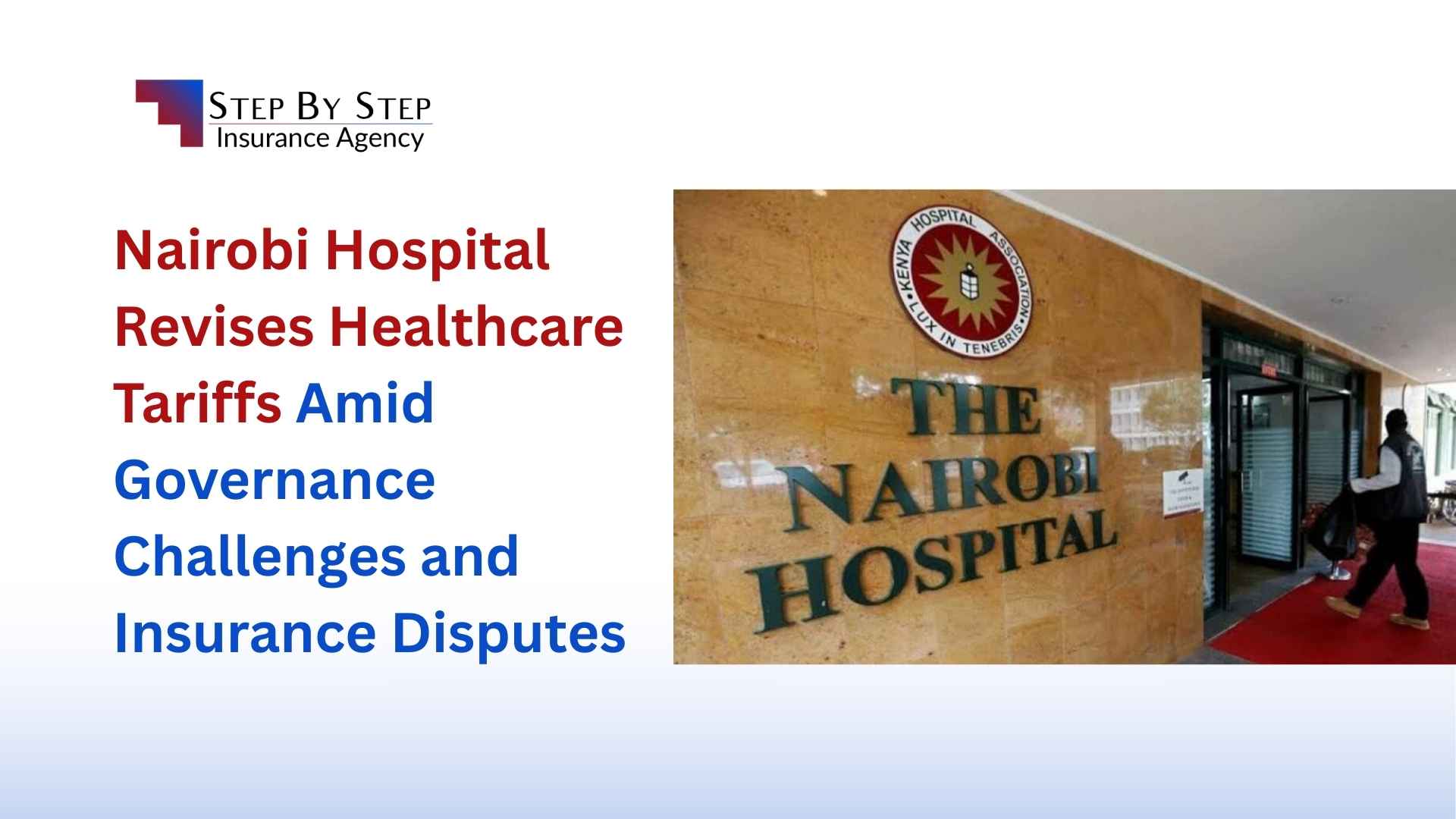
Nairobi Hospital Tariff Controversy: A Healthcare Insurance Standoff
Nairobi Hospital has recently found itself at the center of a contentious debate over healthcare tariffs and insurance coverage. Amid governance challenges and significant public outcry over rising insurance rates, the hospital implemented a marginal average tariff increase of 5%. This adjustment was intended to address operational costs while striving to sustain the high quality of medical care provided.
🔑Key Takeaways
Nairobi Hospital implemented a 5% tariff increase to address operational costs
Several insurance partners suspended services in response to the tariff hike
Hospital leadership rescinded the tariff adjustments to enable dialogue with insurers
The situation highlights broader complexities in Kenya’s healthcare-insurance relationship
Focus remains on balancing financial sustainability with patient care accessibility
Stay updated on the latest insurance trends, healthcare developments, and industry insights. Connect with like-minded individuals interested in insurance and healthcare topics.
However, the tariff hike sparked immediate pushback from several insurance partners, some of whom responded by suspending their services at the hospital. This escalating tension prompted Nairobi Hospital’s leadership to reconsider their stance and ultimately rescind the tariff adjustments to create space for constructive dialogue with insurers.
Hospital Leadership’s Decision
The hospital’s leadership has underscored the importance of maintaining quality care for patients while also engaging responsibly and transparently with insurance providers. Their approach signals a willingness to balance the financial sustainability of the hospital with the affordability and accessibility of healthcare for insured patients.
Broader Healthcare Implications
This unfolding situation highlights the broader complexities faced by healthcare providers and insurers in Kenya as they negotiate service costs, coverage levels, and patient care standards in a challenging economic environment.
Future Collaborative Approach
Going forward, Nairobi Hospital aims to foster a collaborative environment that supports patient welfare and financial viability, demonstrating a commitment to safeguarding both healthcare outcomes and fair insurance practices.
Stakeholders across the healthcare and insurance sectors will be closely monitoring developments to ensure solutions emerge that benefit patients, providers, and payers alike.
Liberty Kenya Earnings Drop 59% in H1 2025: Insurance Sector Faces Mounting Challenges
Liberty Kenya has revealed a significant drop in its financial performance for the first half of 2025, with earnings plunging by 59% to Ksh 260 million. This steep decline underscores the mounting challenges currently facing the insurance sector in Kenya.
Key Takeaways
Liberty Kenya’s earnings dropped by 59% to Ksh 260 million in H1 2025
The decline reflects industry-wide challenges including increased claims and competitive pressures
Insurance companies are struggling to balance premium rates, claim payouts, and operational costs
The sector is navigating economic uncertainties and regulatory changes
Innovation and enhanced risk management strategies are needed for recovery
The drop in earnings reflects a combination of adverse factors impacting the industry, including increased claims, competitive pressures, and changing market dynamics. Insurance companies like Liberty Kenya are grappling with the need to balance premium rates, claim payouts, and operational costs while striving to maintain profitability.
Changing Market Dynamics
This earnings decline comes at a time when the sector is also navigating broader economic uncertainties and regulatory changes that affect business operations and consumer confidence.
Economic and Regulatory Impact
The insurance sector is facing unprecedented challenges as economic uncertainties continue to affect business operations. Regulatory changes have also created additional compliance costs and operational adjustments that companies must navigate carefully.
Market Performance Indicator
Liberty Kenya’s performance serves as a barometer for the health of the Kenyan insurance market, highlighting the need for innovation, enhanced risk management, and customer-centric strategies to adapt to evolving challenges.
The company and the wider industry face a critical period of adjustment as they seek to overcome these hurdles and rebuild growth momentum in the second half of the year.
Strategic Adaptations Required
Insurance companies must focus on digital transformation, improved customer experience, and innovative product offerings to remain competitive in this challenging environment.
Stakeholder Response
Stakeholders will be closely watching how Liberty Kenya and its peers respond to these pressures while continuing to provide vital insurance products to individuals and businesses across Kenya.
Market Expectations
The market expects insurance companies to implement robust recovery strategies that address both short-term challenges and long-term sustainability goals.
Sector Resilience Questions
This earnings update raises important questions about the resilience of the insurance sector and the measures needed to foster sustainability and long-term success in a competitive landscape.
Path Forward
The insurance industry must embrace innovation, strengthen risk management practices, and develop customer-centric approaches to navigate the current challenges and build a more resilient future.
Last Expense Cover vs Life Insurance in Kenya: Complete Guide 2025
In Kenya, families often rely heavily on a single breadwinner. When that person passes away, the emotional loss is heartbreaking — but the financial strain can be just as devastating. That’s where insurance comes in.
Two common solutions are Last Expense Cover and Life Insurance. While the terms are often used interchangeably, they are actually very different — both in purpose and in how they protect families.
If you’ve ever wondered “Do I need last expense cover or life insurance?” this guide breaks it all down, Step by Step.
Key Takeaways
Last Expense Cover is designed specifically for funeral and burial costs (KES 100,000 – 1M)
Life Insurance provides broader financial protection for dependents (KES 1M – 20M+)
Both serve different purposes and the smartest families often combine both
Last Expense Cover is more affordable and provides faster payouts
Life Insurance offers long-term financial security for families
Connect with thousands of Kenyans learning about insurance trends, tips, and news. Get expert advice, ask questions, and stay updated on the latest insurance products and offers.
Last Expense Cover is a type of insurance specifically designed to cover funeral and burial costs when someone passes away.
In Kenya, funerals can cost anywhere from KES 100,000 to KES 1 million depending on family traditions, transport, and community contributions. Without a plan, families often face debt or must rely on fundraising “harambees.” Learn more about understanding funeral costs in Kenya.
How it works:
✅ The insurer pays a lump sum (last expense benefit) immediately after death.
✅ Beneficiaries can use the funds for burial, transport, coffin, hospital bills, or related costs.
✅ Payouts are usually fast (within a few days), since the aim is to ease immediate financial burden.
Example: If a parent passes away, a last expense cover of KES 200,000 ensures the funeral is taken care of without the family scrambling for funds.
What is Life Insurance in Kenya?
Life Insurance is broader. It provides a financial safety net for dependents by paying out a larger lump sum when the insured person passes away.
Instead of just covering funeral costs, life insurance is designed to help families:
Replace lost income
Pay school fees
Cover rent or mortgage
Continue running businesses
How it works:
✅ The payout (sum assured) is usually much higher than last expense — often KES 1 million to 20 million+.
✅ It’s typically calculated as a multiple of annual salary or chosen based on family needs.
✅ The money is not tied to funeral costs — the family can use it however they need.
Example: If a breadwinner earning KES 1.2M per year has a life insurance cover of KES 6M, their children’s education and family bills are secured even after death.
Key Differences Between Last Expense Cover and Life Insurance
Here’s a clear side-by-side comparison:
Feature
Last Expense Cover
Life Insurance
Purpose
Covers funeral & burial expenses
Provides long-term financial support for family
Payout Amount
Usually KES 100,000 – 500,000 (sometimes up to 1M)
Usually KES 1M – 20M+ depending on plan
Payout Speed
Fast (within days)
May take longer (weeks to months, depending on claim process)
Cost of Premiums
Very affordable (as low as KES 300/month)
Higher premiums (based on cover amount, age, and health)
Flexibility of Funds
Mainly used for funeral-related expenses
Can be used for anything: school fees, debt, housing, business
Target Audience
Families who want funeral costs sorted
Breadwinners who want dependents financially secure long-term
Scroll horizontally to see all columns
Which One Do Kenyan Families Need More?
The truth is: both play important roles.
Last Expense Cover ensures families don’t face the embarrassment and financial stress of not being able to afford a decent send-off. Discover more about group last expense cover options.
Life Insurance ensures dependents don’t struggle with school fees, bills, or poverty after losing a breadwinner.
Common Mistakes Kenyans Make
Many people in Kenya make these mistakes:
❌ Believing Last Expense is the same as Life Insurance
❌ Choosing only the cheapest option without considering family needs
❌ Not reviewing their cover regularly as their income and dependents grow
❌ Relying on “harambees” instead of planning ahead
Avoid these mistakes by working with a trusted insurance intermediary who can guide you.
Life Insurance: Varies widely — a young parent may pay KES 2,000–5,000 per month for several million shillings of coverage
At Step by Step Insurance, we help families compare different insurers (APA, Jubilee, Britam, GA, ICEA Lion, Old Mutual, etc.) and choose plans that fit both budget and family needs.
Cultural traditions fueling economic transformations and insurance opportunities
Final Verdict: Which Should You Choose?
If you can only start with one, begin with Last Expense Cover — it’s affordable and solves the most urgent financial stress.
But if you’re the main breadwinner, Life Insurance is essential to protect your family’s future.
The best approach? Combine both. Last Expense takes care of immediate funeral costs, while Life Insurance secures your children’s education, housing, and long-term financial well-being.
Next Step: Protect Your Family Today
At Step by Step Insurance, we simplify insurance for Kenyan families. Whether you need Last Expense Cover, Life Insurance, or both, we’ll help you compare and choose the right plan.
Get Expert Guidance Today
Our insurance experts are ready to help you choose the perfect coverage for your family’s needs.
Boda Riders Super Cover – Revolutionary Insurance for Kenya’s Motorcycle Operators
In a landmark initiative aimed at addressing the unique risks faced by boda boda riders and owners in Kenya, Old Mutual, in partnership with the Kenya Bodaboda Association (KBA) and other collaborators, has launched an innovative insurance product known as the “Boda Riders Super Cover.” This specialized insurance solution is designed to offer critical hospitalisation and last expense support tailored specifically for boda boda operators, one of Kenya’s most vulnerable and underserved groups on the road.
🔑 Key Takeaways
Revolutionary Coverage: First specialized insurance product designed specifically for Kenya’s boda boda riders
Daily Support: KES 1,000 per night hospitalization benefit from the third night up to 50 nights annually
Family Protection: KES 100,000 last expense benefit for families in case of rider’s death
Addressing Critical Gap: Motorcycle users account for 35% of road fatalities in Kenya (2023 statistics)
Strategic Partnership: Collaboration between Old Mutual and Kenya Bodaboda Association
The purpose of the Boda Riders Super Cover is to provide much-needed financial relief and security for boda boda riders who are exposed to high risks of accidents and injuries as part of their daily livelihoods. According to recent road safety statistics, motorcycle users accounted for approximately 35% of road fatalities in Kenya in 2023, underscoring the urgency of targeted interventions for this sector.
Key Features of the Super Cover
The insurance cover is uniquely structured to cater to the medical and emergency needs of boda boda riders in the event of accidents or hospital stays:
Benefit Type
Coverage Details
Maximum Limit
Hospitalisation Benefit
KES 1,000 per night (starting from 3rd night)
Up to 50 nights per year
Last Expense Benefit
KES 100,000 payout to next of kin
Full amount upon death
Hospitalisation Benefit
The cover pays KES 1,000 for each night spent in hospital, starting from the third night of hospitalisation. This benefit is payable for up to 50 nights per year, providing essential daily financial support to riders who are incapacitated and unable to work due to injuries.
Last Expense Benefit
In the tragic event of a boda boda rider’s death, the policy provides a KES 100,000 payout as a last expense benefit to the nominated next of kin. This financial assistance is intended to help families cope with funeral costs and immediate expenses following the loss of their loved one.
Important Note: This insurance product specifically targets the unique vulnerabilities of boda boda operators, providing a safety net that has been largely absent in Kenya’s informal transport sector.
Addressing Vulnerabilities and Securing Livelihoods
Boda boda riders often operate without adequate social or medical insurance coverage, leaving them financially exposed when accidents occur. The launch of this super cover represents a strategic effort to mitigate these vulnerabilities by providing riders with a safety net that supports them during hospital stays and offers monetary support to their families in times of bereavement.
This initiative aligns with broader efforts to improve road safety outcomes and enhance social protection for the informal transport sector, which plays a crucial role in Kenya’s economy by providing affordable and accessible mobility.
Stakeholder Collaboration and Impact
The partnership between Old Mutual, KBA, and other involved entities reflects a shared commitment to the welfare of boda boda riders. By leveraging insurance expertise and community networks, the coalition aims to increase enrolment and awareness among riders about the importance and benefits of insurance.
As motorcycle incidents continue to pose significant risks, the Boda Riders Super Cover stands as a critical intervention that not only offers economic security but also promotes a culture of safety and preparedness among Kenya’s boda boda community.
Conclusion
The introduction of the Boda Riders Super Cover marks a positive step forward in protecting the health and financial stability of boda boda riders in Kenya. With hospitalisation support and a last expense benefit designed specifically for their needs, this insurance product seeks to reduce the financial shocks experienced by riders and their families following emergencies and accidents. It is a timely initiative that supports one of Kenya’s most vital yet vulnerable transport communities, contributing to safer, more resilient livelihoods on the country’s roads.
This pioneering insurance solution promises to make a meaningful difference in the lives of boda boda riders, helping safeguard their futures and those of their loved ones amid the inherent dangers of their profession.
The Complete Guide to Group Life Insurance in Kenya for HR Managers
In today’s competitive workplace, employee benefits are no longer just “extras” — they are a key factor in attracting, motivating, and retaining talent. Among these benefits, Group Life Insurance has become one of the most valuable protections employers can offer their teams.
But what exactly is Group Life Insurance? How does it work in Kenya? And what should HR managers, business owners, and decision-makers keep in mind when setting up a policy?
This guide breaks it all down — Step by Step.
Key Takeaways
Group Life Insurance provides financial security for employees’ families at cost-effective rates
It’s a powerful tool for talent attraction, retention, and employee satisfaction
Coverage typically ranges from 2-4x annual salary with tax-free payouts in Kenya
Working with experienced intermediaries ensures optimal coverage and smooth claims processing
Regular policy reviews and employee education maximize the program’s effectiveness
Connect with fellow HR professionals, business owners, and insurance enthusiasts! Get the latest trends, tips, and exclusive insights on employee benefits and insurance strategies in Kenya.
Group Life Insurance (GLI) is a life insurance policy arranged by an employer (or organization) to provide financial protection to employees’ families in case of death.
Instead of each employee buying individual life insurance, the employer negotiates one collective policy that covers everyone in the group.
💡 In simple terms: If an employee passes away while covered under the policy, their beneficiaries receive a lump-sum payout.
Why Group Life Insurance Matters in Kenya
In Kenya, families often rely heavily on breadwinners for daily expenses, school fees, and healthcare. When death strikes, the financial strain can be devastating.
This is where GLI comes in — it provides:
Peace of Mind
Employees know their families will be supported
Financial Security
Coverage for education, bills, rent, or business continuity
Employer Goodwill
Shows genuine care for staff welfare
As Faith Kimaru, Principal Officer at Step by Step Insurance, explains:
“Group Life Insurance is more than a compliance tool — it’s an investment in people. Companies that offer it not only protect families but also build stronger, more loyal teams.”
How Group Life Insurance Works in Kenya
Here’s a step-by-step breakdown for HR managers:
Employer Sets Up the Policy
The organization partners with an insurance intermediary (like Step by Step Insurance) to design a group cover.
Eligibility
Usually covers all permanent employees (sometimes including spouses and children).
Sum Assured (Coverage Level)
This is typically a multiple of the employee’s annual salary (e.g., 2x or 3x gross salary). For example:
Employee earning KES 1,200,000 annually → 2x salary = KES 2,400,000 payout
Premium Payment
Premiums are either:
Paid fully by the employer (most common)
Shared between employer and employees
Payouts
If an insured employee dies, the family receives the agreed lump sum (free of tax in Kenya).
Benefits of Group Life Insurance for Employers
Offering GLI provides more than financial coverage — it also strengthens HR strategy.
Talent Attraction & Retention
Employees are more likely to join and stay with organizations that prioritize their families’ welfare.
Cost-Effective
Group policies are usually cheaper per individual than standalone life insurance.
Boosts Productivity
Staff who feel secure about their family’s future are less stressed and more engaged.
Corporate Social Responsibility
Shows that the organization cares about its people, enhancing brand reputation.
What’s Covered Under Group Life Insurance in Kenya
Typical benefits include:
Coverage Type
Description
Death (natural or accidental)
Lump sum payout to beneficiaries
Funeral/Last Expense Cover
Immediate cash to help with burial expenses
Accidental Death & Dismemberment
Compensation in case of severe disability
Critical Illness Rider (optional)
Payout if diagnosed with a serious illness
👉 Note: The exact benefits depend on the insurer and plan design. That’s why working with a trusted intermediary is key.
Common Mistakes HR Managers Make (and How to Avoid Them)
❌ Choosing the cheapest option only
→ ✅ Always balance cost with actual benefits offered.
❌ Not educating employees about the cover
→ ✅ Hold HR briefings to explain how the policy works and who is covered.
❌ Failing to update employee data
→ ✅ Regularly update staff lists, salaries, and beneficiaries to avoid disputes.
❌ Overlooking additional riders
→ ✅ Adding funeral, critical illness, or disability riders makes policies more impactful.
💡 Example: A company with 50 employees, each earning an average salary of KES 800,000, could get a 2x salary cover (KES 1.6M per employee) at affordable annual premiums.
At Step by Step Insurance, we help employers compare quotes from multiple insurers to ensure cost efficiency and maximum protection. Learn more about our specialized plans for small and medium businesses.
Why Work With Step by Step Insurance?
As an independent insurance intermediary, Step by Step Insurance doesn’t just sell policies — we advise, negotiate, and support HR managers throughout the process.
Compare Options
We compare options from top insurers in Kenya (APA, Jubilee, ICEA Lion, Britam, GA, etc.)
Customize Plans
We customize group life plans based on your staff profile & budget
Claims Support
We assist with claims processing for quick, stress-free payouts
As Faith Kimaru puts it:
“Our job is to simplify insurance for HR managers — so you can focus on people, while we focus on protection.”
Final Thoughts
Group Life Insurance is not just another HR cost. It’s a strategic investment in your people — one that builds trust, loyalty, and resilience for both employees and employers.
For Kenyan HR managers, the question is no longer “Should we get Group Life Insurance?” — it’s “Can we afford not to?”
Ministry of Health and Insurers Unite Against Medical Insurance Fraud in Kenya
In a decisive move to safeguard the integrity of Kenya’s healthcare system, the Ministry of Health and health insurers have reached a landmark agreement to intensify efforts against fraud in medical insurance claims. This collaboration marks a significant stride towards enhancing transparency, accelerating claims processing, and ultimately supporting the government’s ambitious Universal Health Coverage (UHC) agenda.
Key Takeaways
Ministry of Health and insurers forge landmark anti-fraud partnership
Biometric verification system to eliminate identity fraud
Real-time claims processing integrated with SHA platform
Joint audits and shared fraud database for enhanced accountability
Initiative directly supports Kenya’s Universal Health Coverage goals
Stay updated with the latest insurance trends, news, and insights! Connect with fellow insurance professionals and enthusiasts in our exclusive WhatsApp group.
Medical insurance fraud has long posed a serious challenge within Kenya’s healthcare sector. Fraudulent claims not only strain financial resources but also undermine the quality and accessibility of healthcare services. Such malpractices, ranging from inflated billing to phantom claims and collusion between providers and dishonest claimants, erode public trust and slow down the realization of universal health goals.
Key Components of the Joint Anti-Fraud Initiative
To tackle these challenges head-on, the Ministry of Health and insurance providers have agreed on a multi-pronged strategy centered on technological integration, data sharing, and enhanced verification. The main pillars of this initiative include:
← Scroll horizontally to view all details →
Component
Description
Expected Impact
Implementation Timeline
🔒 Biometric Verification
Authentication using fingerprints and facial recognition at service points and claim submissions
Eliminates impersonation and duplicate claims
Q2 2025
🔍 Joint Audits
Regular audits by Ministry and insurer representatives to scrutinize suspicious claims
Identifies fraudulent patterns and deters violations
Ongoing
🗃️ Shared Fraud Database
Centralized database accessible to all stakeholders for tracking fraudulent providers
Quick identification and blacklisting of bad actors
Q1 2025
⚡ Real-Time Verification
Integration with SHA claims platform for instantaneous claim verification
Faster processing and reduced errors
Q3 2025
Biometric Verification:
The introduction of biometric authentication at the point of service and claim submission will ensure that beneficiaries’ identities are thoroughly validated. By linking claims to biometric data such as fingerprints or facial recognition, this measure aims to eliminate impersonation and multiple claims by the same individual.
Joint Audits:
Regular joint audits conducted by teams composed of representatives from both the Ministry and insurers will provide rigorous scrutiny of suspicious claims. These audits will help identify fraudulent patterns, hold providers and claimants accountable, and deter future violations.
Shared Database of Fraudulent Providers:
Establishing a centralized database accessible to all stakeholders will facilitate the quick identification and blacklisting of providers involved in fraudulent activities. This shared repository will also promote accountability and reduce repeat offenses by flagging providers who violate claims protocols.
Real-Time Verification Linked to SHA Claims Platform:
Insurers will be integrated with the Social Health Authority’s claims platform, enabling instantaneous verification of claims as they are submitted. This real-time linkage will reduce processing times, minimize errors, and expedite legitimate reimbursements, greatly improving service delivery for insured patients.
Anticipated Impact on Transparency and Public Trust
By leveraging technology and fostering cooperation, this joint effort is expected to bring unprecedented transparency to the medical insurance claims process. Patients, providers, and insurers alike will benefit from a system that swiftly identifies and addresses fraud, thereby restoring confidence in the healthcare system’s fairness and efficiency.
Transparency will be further strengthened by routine public reporting on anti-fraud actions and outcomes, encouraging accountability and reinforcing the integrity of healthcare financing.
Supporting Kenya’s Universal Health Coverage Ambitions
This initiative aligns closely with Kenya’s Universal Health Coverage strategy, which seeks to ensure that all citizens have access to essential health services without financial hardship. Reducing fraud-related losses will free up vital resources that can be redirected toward expanding coverage, improving quality, and reaching underserved populations.
Moreover, the streamlined real-time claims processing will encourage more providers and insurers to actively participate in the UHC scheme, knowing that the system supports efficiency and fairness.
Conclusion
The joint anti-fraud action agreement between the Ministry of Health and insurers represents a transformative step in strengthening Kenya’s healthcare financing system. With biometric verification, joint audits, a shared fraud database, and seamless integration with the Social Health Authority’s claims platform, the partnership promises to curb malpractice, improve transparency, and accelerate claims handling.
As these measures come into force, they will play a critical role in restoring public trust and underpinning the success of Kenya’s Universal Health Coverage efforts, ushering in a more equitable and sustainable healthcare future for all Kenyans.
Our team of insurance professionals is ready to help you navigate Kenya’s evolving healthcare landscape. Contact us for personalized consultation and comprehensive insurance solutions.
Livestock vs Crop Insurance in Kenya: Which Do Farmers Need More?
Agriculture is the backbone of Kenya’s economy — employing nearly 70% of rural households. Yet, farming in Kenya is also one of the riskiest livelihoods. From unpredictable weather patterns to disease outbreaks and market volatility, farmers constantly face threats that can wipe out years of hard work in just a few days.
To cushion farmers, agricultural insurance has become one of the most reliable safety nets. The two most common types are:
Livestock Insurance
Crop Insurance
But the big question remains: Which one do Kenyan farmers need more? Let’s break it down.
🔑Key Takeaways
Livestock insurance protects pastoralists and dairy farmers from animal deaths due to drought, disease, and disasters
Crop insurance covers farmers against weather-related crop failures, pests, and diseases
ASAL region farmers need livestock insurance more, while high-rainfall area farmers require crop insurance
Mixed farmers benefit from combining both insurance types for comprehensive protection
Government programs like KLIP and private insurers offer tailored solutions for different farming needs
Livestock insurance is designed to protect farmers from the financial losses that occur when animals die due to drought, disease, accidents, predation, or natural disasters.
✅What It Covers:
Death of cattle, goats, sheep, camels, or poultry
Losses due to drought, disease outbreaks, and floods
In some policies, theft and accidents
🐄Who Needs It Most?
Pastoralists in arid and semi-arid lands (ASALs) such as Turkana, Kajiado, Marsabit, and Garissa
Smallholder dairy farmers in Central and Rift Valley
Commercial livestock producers
💡Example: A herder in Turkana who loses half his herd to drought can be compensated under livestock insurance, helping him restock instead of starting from scratch.
For comprehensive livestock protection, consider exploring Madison Livestock Insurance options that specifically cater to protecting valuable animals across different farming operations.
🌾What is Crop Insurance?
Crop insurance provides compensation to farmers when crops fail due to drought, floods, pests, or diseases.
Horticultural farmers producing vegetables and fruits
💡Example: A maize farmer in Uasin Gishu who loses their entire harvest due to fall armyworm infestation can recover losses through crop insurance.
Agribusiness owners can benefit from comprehensive coverage through specialized programs like Farm Protector Insurance, which offers tailored protection for diverse agricultural operations.
⚖️Key Differences Between Livestock & Crop Insurance
👉 The answer depends on where you farm and what you depend on for income:
If you live in ASAL counties, where drought often kills thousands of animals, Livestock Insurance is critical.
If you are in high rainfall areas and depend on crops for both food and income, then Crop Insurance is a must-have.
Many mixed farmers (who keep both crops and animals) actually need a combination of both for complete protection.
🏛️Government and Private Sector Support
In Kenya, both government-backed programs and private insurers are working to make agricultural insurance more accessible:
The Kenya Livestock Insurance Programme (KLIP), supported by the government and donors, targets pastoralists in ASAL counties.
Insurance companies like APA, Jubilee, and UAP Old Mutual offer both livestock and crop insurance tailored to farmers.
Some covers are bundled with loans from microfinance institutions, making them affordable to smallholder farmers.
Recent developments show significant progress in agricultural insurance adoption. The World Bank’s Sh1.4 billion disbursement to Kenyan farmers demonstrates the growing impact and reach of livestock insurance programs in protecting rural livelihoods.
🎯Final Word: Which Should You Choose?
If you’re a farmer in Kenya, the type of insurance you need depends on your main source of income:
🐄 Livestock farmers → Go for livestock insurance.
🌾 Crop farmers → Crop insurance is essential.
🐄🌾 Mixed farmers → Consider both to fully safeguard your livelihood.
At Step by Step Insurance, we help farmers find affordable, practical solutions for both crop and livestock risks.
✅Get Protected Today
Ready to secure your farming investment? Our experts are here to help you choose the right insurance coverage.
5 Common WIBA Insurance Mistakes Kenyan Employers Make | Step by Step Insurance
In Kenya, the Work Injury Benefits Act (WIBA) of 2007 requires every employer to provide compensation to employees who suffer injuries, diseases, or even death while in the course of their employment. To comply with this law and protect workers, employers are expected to take out WIBA Insurance.
However, many companies either treat WIBA cover as just a box-ticking exercise or fail to understand what it really covers — leaving themselves exposed to legal penalties and hefty financial losses when accidents happen.
Here are the 5 most common mistakes Kenyan employers make with WIBA Insurance — and how to avoid them.
🎯Key Takeaways
WIBA insurance is a legal requirement under Kenyan law, not optional
Accurate employee reporting is crucial for proper claims settlement
WIBA covers more than just workplace accidents – including occupational diseases
Prompt reporting of incidents is essential to avoid claim invalidation
WIBA should be complemented with additional coverage for comprehensive protection
Connect with fellow business owners and stay updated on the latest insurance trends, WIBA updates, and compliance tips. Get expert advice and share experiences with our community of insurance-conscious employers.
Understand the real financial impact of not having WIBA insurance
❌1. Failing to Take WIBA Insurance Altogether
Believe it or not, some employers in Kenya still operate without WIBA insurance. They assume that because accidents are rare in their sector, the cover isn’t necessary. Others confuse it with Group Personal Accident (GPA) insurance, assuming the two are interchangeable.
Why this is a mistake:
WIBA is a legal requirement under Kenyan law. Failure to provide it can lead to fines, lawsuits, or even closure of your business.
GPA is optional and offers different benefits. Only WIBA ensures full compliance.
How to avoid it:
Work with a licensed intermediary like Step by Step Insurance to ensure you purchase a compliant WIBA policy that matches your workforce needs.
❌2. Underreporting the Number of Employees or Salaries
Some employers under-declare the number of staff or report lower salaries when taking WIBA to reduce premiums.
Why this is a mistake:
Compensation under WIBA is based on an employee’s salary. If you under-declare, your employees (or their families) could receive less compensation than they deserve.
Worse, insurers may reject claims if they find inconsistencies in declarations.
How to avoid it:
Always provide accurate employee records, including updated payroll details. This ensures claims are settled fairly and quickly.
❌3. Not Understanding What WIBA Actually Covers
Many employers believe WIBA only covers injuries that occur in the workplace. The truth is broader.
Occupational diseases (caused by exposure at work)
Death while on duty
Permanent or temporary disability due to work injuries
Medical expenses related to workplace accidents
Why this is a mistake:
Without understanding the scope, some employers fail to guide employees correctly — leading to confusion, mistrust, and disputes during claims.
How to avoid it:
Request a clear explanation of policy terms from your insurer or intermediary. At Step by Step Insurance, we simplify WIBA policies for HR teams and managers so you know exactly what’s covered.
❌4. Delaying or Ignoring Claims Reporting
Accidents should be reported to insurers and the Directorate of Occupational Safety and Health Services (DOSHS) promptly. Unfortunately, many employers delay claims — sometimes to “protect the company’s image.”
Why this is a mistake:
Delays can invalidate claims, leaving the employer to shoulder the financial burden.
Employees may lose trust and even sue the employer.
How to avoid it:
Establish a clear internal policy: report all work-related accidents to your insurer within 24–48 hours and file the required DOSHS reports.
❌5. Treating WIBA as a Standalone Solution
Some employers assume that once they’ve purchased WIBA, they don’t need any other cover.
Why this is a mistake:
WIBA strictly covers work-related accidents and diseases.
It does not cover accidents outside work hours (e.g., weekends, commuting, or off-duty activities).
It also doesn’t cover life-threatening illnesses unrelated to the workplace.
How to avoid it:
Pair WIBA with Group Personal Accident (GPA) or Group Life Insurance to provide well-rounded protection for employees.
🏢Why Step by Step Insurance?
Navigating WIBA requirements can be tricky. At Step by Step Insurance, we specialize in helping employers across Kenya:
Stay compliant with the Work Injury Benefits Act
Find affordable WIBA packages tailored to their workforce
Simplify claims processing and documentation
Bundle WIBA with GPA or Group Life cover for comprehensive protection
💬“Too often, employers come to us after facing penalties or disputes that could have been avoided with the right WIBA cover. Our mission is to help you get it right the first time.” — Faith Kimaru, Principal Officer, Step by Step Insurance
✨Final Word
WIBA insurance isn’t just about compliance — it’s about protecting your people and your business. Avoiding these five common mistakes ensures that your employees are taken care of and that your company avoids unnecessary financial and legal risks.
First Assurance Company Limited Vehicle Auction – August 2025
First Assurance Company Limited, a leading Kenyan insurer with over 80 years of history, has announced an upcoming online auction of ten vehicles including a Honda Fit among other makes, giving the public a chance to purchase accident-damaged vehicles at competitive prices.
🔑 Key Takeaways
Auction Date: Tuesday, August 19, 2025 (11:00 AM – 1:00 PM)
Refundable Deposit Required: KSh 100,000
10 Vehicles Available including Honda Fit and Range Rover Evoque
Vehicles sold “as is” in accident-damaged condition
Stay updated with the latest insurance trends, auction news, and exclusive opportunities. Connect with like-minded individuals interested in insurance and vehicle auctions.
The auction will be held on Tuesday, August 19, 2025, from 11:00 am to 1:00 pm, and will be conducted by Dalali Traders Auctioneers. Interested bidders are required to pay a refundable deposit of KSh 100,000 to participate in the bidding. No bids will be accepted without this deposit.
Vehicles Available for Auction
The auction features a diverse selection of vehicles from different manufacturers, each located at specific facilities across the region:
🚗 Honda Fit
Registration: KCM 231K
📍 Located at JEB Motors
🚙 Mitsubishi
Registration: KDJ 642R
📍 Located at Westkam Yard
🚐 Renault Kangoo
Registration: KCM 043Y
📍 Located at Assessment Centre
🚗 Mitsubishi F1
Registration: KCY 269K
📍 Located at Golden Auto Body
🚛 Benz Prime Mover
Registration: KDP 661Q
📍 Located at Insured’s Yard
🏍️ Suzuki Motorbike
Registration: KMDD 111Z
📍 Located at Insured’s Yard
🚗 Honda Insight
Registration: KCP 058J
📍 Located at Assessment Centre
🚚 Hyundai Truck
Registration: KDD 185L
📍 Located at Murray Storage
🚗 Toyota Sai
Registration: KDC 858T
📍 Located at Assessment Centre
🚙 Range Rover Evoque
Registration: KCW 400L
📍 Located at Extreme Auto
Bidding Conditions & Requirements
Bidders must adhere to specific conditions to ensure a smooth and transparent auction process:
Cash transactions are prohibited on auction day; payments will be made to First Assurance Ltd.
Winners must pay the remaining purchase price within seven days or forfeit the deposit.
Vehicles are sold “as is” in their current accident-damaged condition.
Buyers will be responsible for transfer payments and re-registration per National Transport and Safety Authority (NTSA) regulations.
Dalali Traders Auctioneers can be contacted via phone or email for inquiries and viewing appointments.
Contact Information
For more information about insurance services, consultations, or quotes, please use the contact details below:
This auction presents an opportunity for buyers seeking quality vehicles at affordable prices while allowing First Assurance to efficiently manage and dispose of repossessed and insured salvage assets. The variety of vehicles available, from compact cars like the Honda Fit to luxury SUVs like the Range Rover Evoque, caters to different buyer preferences and budgets.
Investment Potential
Vehicle auctions of this nature often provide excellent value for money, particularly for buyers with mechanical expertise or those seeking vehicles for parts. The accident-damaged condition of these vehicles means they require assessment and potential repair work, but this also translates to significantly lower purchase prices compared to market rates for similar vehicles in good condition.
Important Considerations
Prospective bidders should carefully consider the terms and conditions, particularly the seven-day payment deadline and the “as is” condition of the vehicles. It’s advisable to inspect vehicles beforehand through Dalali Traders Auctioneers to make informed bidding decisions. The refundable deposit system ensures serious bidders while protecting the auction process integrity.