
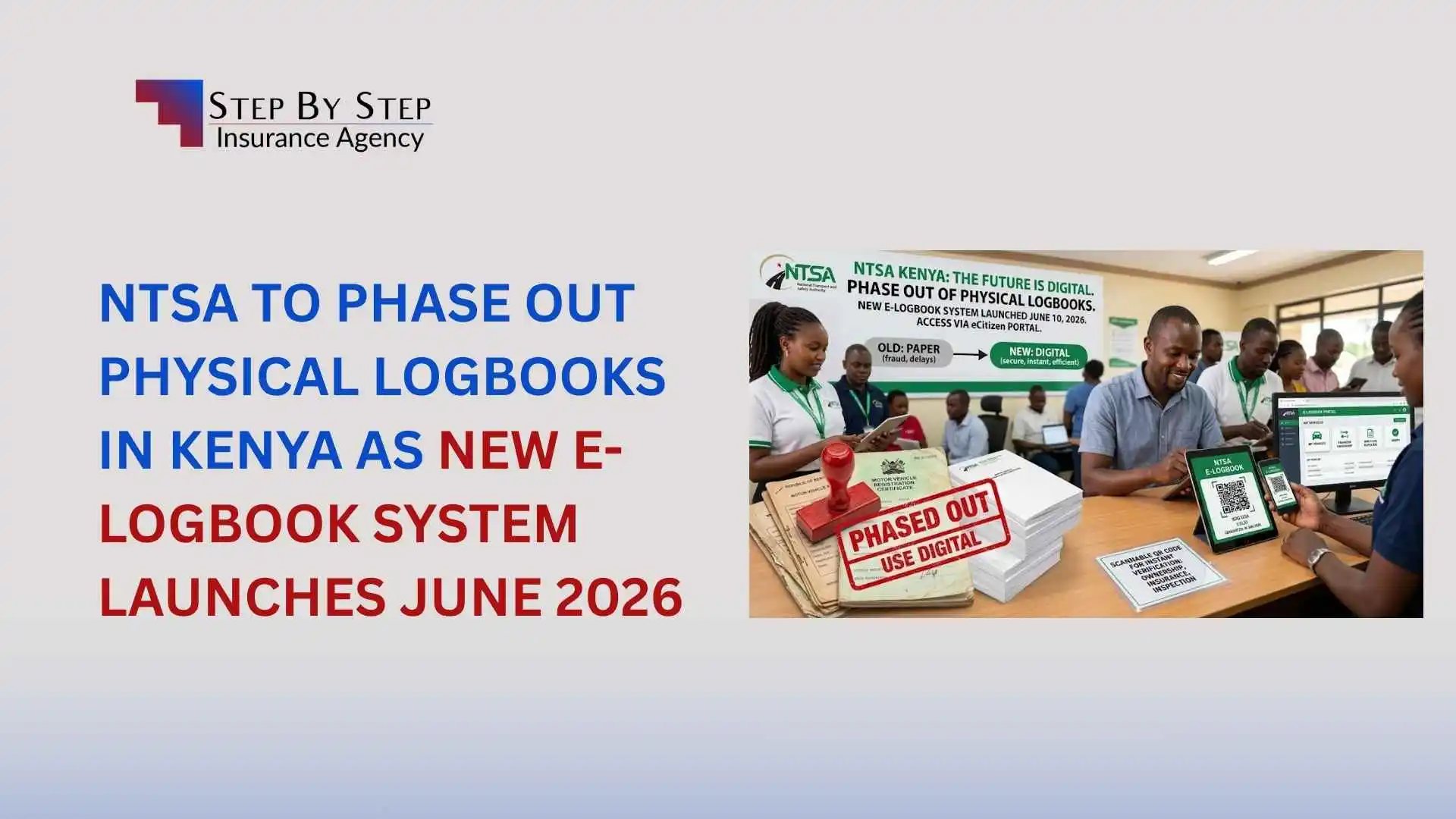
NTSA to Phase Out Physical Logbooks in Kenya as New E-Logbook System Launches June 2026

Kenya is officially entering a new era of digital vehicle ownership after the National Transport and Safety Authority (NTSA) announced the rollout of electronic logbooks, commonly known as e-logbooks. The move is expected to transform how vehicle ownership, transfers, financing, and verification are handled across the country. (Citizen Digital )
For many Kenyans, the announcement has raised several questions: Are physical logbooks still valid? How do e-logbooks work? Will vehicle transfers now happen online? What does this mean for motor insurance and car financing?
In this guide, we break down everything Kenyan motorists need to know about NTSA’s new digital logbook system and what it means for vehicle ownership in 2026.
Key Takeaways
- Physical logbooks remain valid during the transition — no need to panic or rush.
- E-logbooks will be issued through the NTSA/eCitizen platform digitally.
- Vehicle transfers, ownership verification, and insurance checks will move online.
- The system uses QR codes and digital encryption for secure verification.
- The change could significantly reduce vehicle fraud and speed up motor insurance processing.
- Vehicle owners should only use official NTSA and eCitizen channels to avoid scams.
Table of Contents
Join Our Insurance Community on WhatsApp
Stay informed with the latest insurance trends, industry news, and expert tips — shared directly to your phone. No spam, just value for people who care about staying covered and informed.
| Related Guides | Topic | Tag |
|---|---|---|
| Comprehensive Motor Insurance Guide Kenya 2026 | Motor Insurance | Guide |
| New Valuation Rules for Used Car Imports — Impact on Insurance | Underwriting | News |
| Get a Motor Insurance Quote | Quotes | Action |
| Contact / Request a Consultation | Support | Contact |
What Is an NTSA E-Logbook?
An e-logbook is a digital version of the traditional vehicle logbook issued by NTSA through the eCitizen platform. Instead of relying on a physical paper document, vehicle ownership details will now be stored digitally within NTSA’s system. The new platform is designed to allow real-time verification of vehicle ownership and improve the efficiency of vehicle-related services in Kenya.
According to NTSA, the system aims to:
- Reduce fraud and fake logbooks
- Improve transparency across the board
- Speed up ownership transfers significantly
- Improve verification processes for all parties
- Digitize motor vehicle records in Kenya
The rollout marks one of Kenya’s biggest transport digitization reforms in recent years and is expected to have wide-reaching effects on vehicle ownership, financing, and the motor insurance sector.
Are Physical Logbooks Still Valid in Kenya?
Yes. Existing physical logbooks are still valid.
NTSA clarified that motorists who already possess physical logbooks should continue using them during the transition period. This means vehicle owners should not panic or rush to replace their current logbooks immediately.
- Physical and digital logbooks will coexist temporarily
- Vehicle owners should safely keep their current logbooks
- Migration to e-logbooks may happen progressively
This clarification came after confusion among motorists who feared physical logbooks would instantly become invalid.
How the New NTSA E-Logbook System Works
The e-logbook system will be integrated into NTSA’s systems and the eCitizen platform. Vehicle ownership information will be stored digitally and can be verified electronically in real time.
The system is expected to include:
- Digital encryption for data security
- QR code verification for instant authenticity checks
- Secure ownership validation protocols
- Real-time updates across all connected systems
This will make it easier for buyers, sellers, insurance companies, banks, SACCOs, and law enforcement agencies to confirm vehicle ownership instantly — reducing the room for fraud or manipulation.
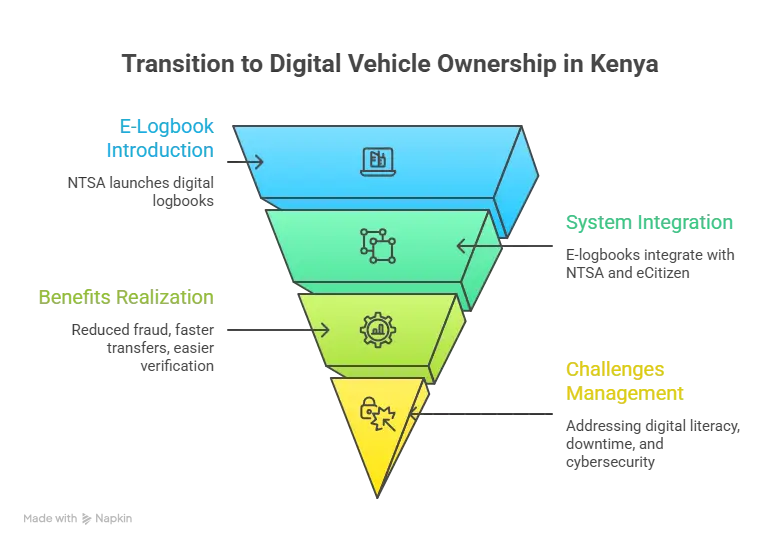
Kenya’s transition to digital vehicle ownership — NTSA E-Logbook rollout 2026
Benefits of NTSA E-Logbooks in Kenya
Reduced Vehicle Fraud
Secure QR verification and digital validation make it significantly harder for fraudsters to manipulate vehicle ownership documents or create fake logbooks.
Faster Vehicle Transfers
Transfers may happen entirely online, cutting processing time from days to hours — with no physical paperwork required in many cases.
Easier Insurance Verification
Insurers can verify vehicle ownership, financing status, and registration records in real time — improving policy processing and reducing fraudulent claims.
Better Security for Buyers
Second-hand vehicle buyers can verify ownership, undisclosed loans, and stolen vehicle status before completing any transaction — increasing market trust.
Bank & SACCO Integration
Financial institutions benefit from faster ownership verification, easier lien registration, and better tracking of financed vehicles in their portfolios.
At Step By Step Insurance, we believe digital verification systems could meaningfully improve the overall customer experience when purchasing or renewing motor insurance policies in Kenya.
What Challenges Could Come With the New E-Logbook System?
While the transition offers many advantages, there are still some concerns that vehicle owners and stakeholders should be aware of.
Digital Literacy
Some Kenyans may struggle with online systems, eCitizen navigation, and digital verification — particularly users in areas with limited digital access.
System Downtime
NTSA platforms occasionally experience delays. Heavy reliance on digital systems means service interruptions could temporarily affect transfers or verifications.
Cybersecurity Risks
As ownership records move online, users must avoid fake NTSA websites, use only official platforms, and protect login credentials against scammers.
Warning: Only use official NTSA channels or the eCitizen platform. Scammers may create fake websites to exploit the transition period. Always verify URLs carefully before submitting personal information.
What This Means for Motor Insurance in Kenya
The e-logbook system could significantly reshape Kenya’s insurance industry in several important ways. The digitization of vehicle records aligns well with how modern underwriting practices are evolving in the Kenyan market.
Faster Insurance Processing
Insurance agencies may process motor insurance applications, renewals, and ownership confirmations more efficiently through digital verification — without requiring the physical presentation of documents.
Reduced Fraudulent Claims
Fraudulent ownership claims and fake vehicle records may reduce significantly due to improved verification systems. This could positively impact claims processing, risk assessment, and policy pricing accuracy across the board.
Easier Ownership Confirmation
Motor insurance providers often require proof of ownership before issuing comprehensive cover. The e-logbook system may simplify this verification step considerably.
Important Tips for Vehicle Owners During the Transition
As Kenya transitions to e-logbooks, motorists should take the following steps to stay protected and informed.
-
Keep Your Physical Logbook Safe
Your current logbook is still valid unless NTSA officially replaces it. Store it securely just as you would any important ownership document. -
Use Official Platforms Only
Always use official NTSA channels and the official eCitizen platform. Avoid third-party intermediaries or unofficial apps that claim to process e-logbooks. -
Verify Vehicle Ownership Carefully When Buying
If purchasing a used vehicle, confirm ownership, verify records, and conduct proper due diligence before making any payment. -
Ensure Your Motor Insurance Is Up to Date
Digital verification systems may make compliance checks easier. Ensure your insurance policy is active, ownership records are accurate, and vehicle details match NTSA records.
Further Reading: Explore our Comprehensive Motor Insurance Guide in Kenya for detailed guidance on choosing the right cover, understanding policy types, and what documents you need for claims.
Frequently Asked Questions (FAQs)
Final Thoughts
NTSA’s transition to e-logbooks represents a major milestone in Kenya’s digital transformation journey. The new system could improve transparency, reduce fraud, speed up transfers, simplify verification, and enhance efficiency across both the insurance and transport sectors.
However, vehicle owners should remain cautious during the transition and continue using official NTSA channels only. As digital vehicle ownership becomes more common in Kenya, having proper and updated motor insurance will remain essential for protecting yourself financially on the road.
At Step By Step Insurance Agency, we continue helping Kenyan motorists choose affordable, reliable, and personalized motor insurance solutions tailored to their needs. Read our full motor insurance guide or get a free quote today.