Kenya’s insurance sector has once again been shaken after the Insurance Regulatory Authority (IRA) stepped in and took over three struggling insurance companies. For many policyholders, this raises urgent questions: Is my insurance safe? What happens if my insurer collapses? In this article, we break it all down in simple terms — and show you how to protect yourself.
The affected firms are:
🏢
Trident Insurance Company Ltd
🏛️
KUSCCO Mutual Assurance Ltd
🏦
Corporate Insurance Company Ltd
🔑 Key Takeaways
The IRA placed three insurers under statutory management in March 2026 due to financial instability.
Policyholders of affected firms may face claim delays or reduced compensation.
The Policyholders Compensation Fund (PCF) may step in, but payouts are capped — you may not recover full value.
This is part of a growing trend of smaller insurers in Kenya facing financial collapse.
Choosing a financially stable insurer is just as important as having insurance itself.
Working with a trusted insurance advisor can shield you from risky providers.
In March 2026, the IRA placed the three insurers under statutory management due to financial instability.
This means:
They can no longer sell new insurance policies
Their operations are now controlled by appointed managers
Their finances are under review and restructuring
⚠️ In simple terms: These companies are no longer operating normally — and may face closure if recovery fails.
💰 Why Were They Taken Over?
The main issue comes down to money problems. These insurers were unable to meet key financial requirements, including:
1. ❌ Failure to Meet Solvency Margins
Insurance companies must have enough funds to pay claims. These firms didn’t meet that threshold.
2. 📉 Continuous Financial Losses
They were losing money over time, weakening their stability and their ability to honour commitments to policyholders.
3. 🚫 Inability to Pay Claims Reliably
This creates significant risk for customers — and is the biggest red flag in insurance.
👥 What This Means for Policyholders
If you had a policy with any of these companies, here’s what you need to know:
🔴 1. Your Cover May Be at Risk
Even if you paid your premiums fully, your claims may face delays or complications during the statutory management period.
🟡 2. Compensation Is Limited
The Policyholders Compensation Fund (PCF) may step in — but payments are capped, and you may not recover the full value of your policy.
🔵 3. You May Need New Insurance Immediately
Customers are being strongly advised to seek alternative coverage as soon as possible to avoid gaps in protection.
📉 A Growing Trend in Kenya’s Insurance Industry
This is not the first time this has happened. Other insurers in Kenya have faced similar issues:
🏢 Insurer
📌 Status
⚠️ Key Issue
Blue Shield Insurance
Liquidated
Insolvency & claim defaults
Resolution Insurance
Statutory Management
Financial distress
Xplico Insurance
Statutory Management
Inability to pay claims
Invesco Assurance
Statutory Management
Solvency issues
Trident Insurance
Statutory Management (2026)
Financial instability
KUSCCO Mutual Assurance
Statutory Management (2026)
Financial instability
Corporate Insurance Co.
Statutory Management (2026)
Financial instability
👉 This signals a deeper issue in the market: Smaller insurers are struggling to survive amid increased pressure from claims, competition, and weak financial management.
🛡️ How to Protect Yourself as a Policyholder
This situation highlights one critical truth: Not all insurance companies are equal.
✅ 1. Choose Financially Stable Insurers
Look for companies with:
Strong market reputation
Good claim settlement history
Solid capital base and regulatory compliance
✅ 2. Don’t Just Go for the Cheapest Option
Cheap premiums can come with hidden risks.
👉 If it sounds too good to be true — it usually is.
✅ 3. Work with a Trusted Insurance Advisor
A professional can help you:
Compare insurers objectively
Understand your policy terms fully
Avoid risky or financially unstable providers
📞 Contact Us & Get a Quote
Need help switching from a risky insurer or getting a new policy? Reach out to our team today:
At Step by Step Insurance, we help you make smart, safe, and informed insurance decisions. Here’s how we support you:
Recommend reliable and vetted insurance companies
Help you switch from risky insurers safely
Guide you through claims and compensation processes
Provide personalized advice based on your specific needs
👉 Our goal is simple: Make sure your insurance actually works when you need it most.
📌 Final Thoughts: Insurance Is About Trust
Insurance is not just about paying premiums — it’s about peace of mind. The collapse or takeover of insurers is a powerful reminder that choosing the right insurer matters just as much as having insurance itself.
👉 Don’t wait for a crisis to find out your insurer can’t deliver. Act now — review your current policies and ensure you’re covered by a financially sound, reputable company.
💬 Let’s Hear From You
Do you think insurance companies in Kenya are doing enough to protect customers? Have you ever experienced delays or issues with claims?
Protests’ Economic Impact & Insurance Solutions for Kenyan MSMEs
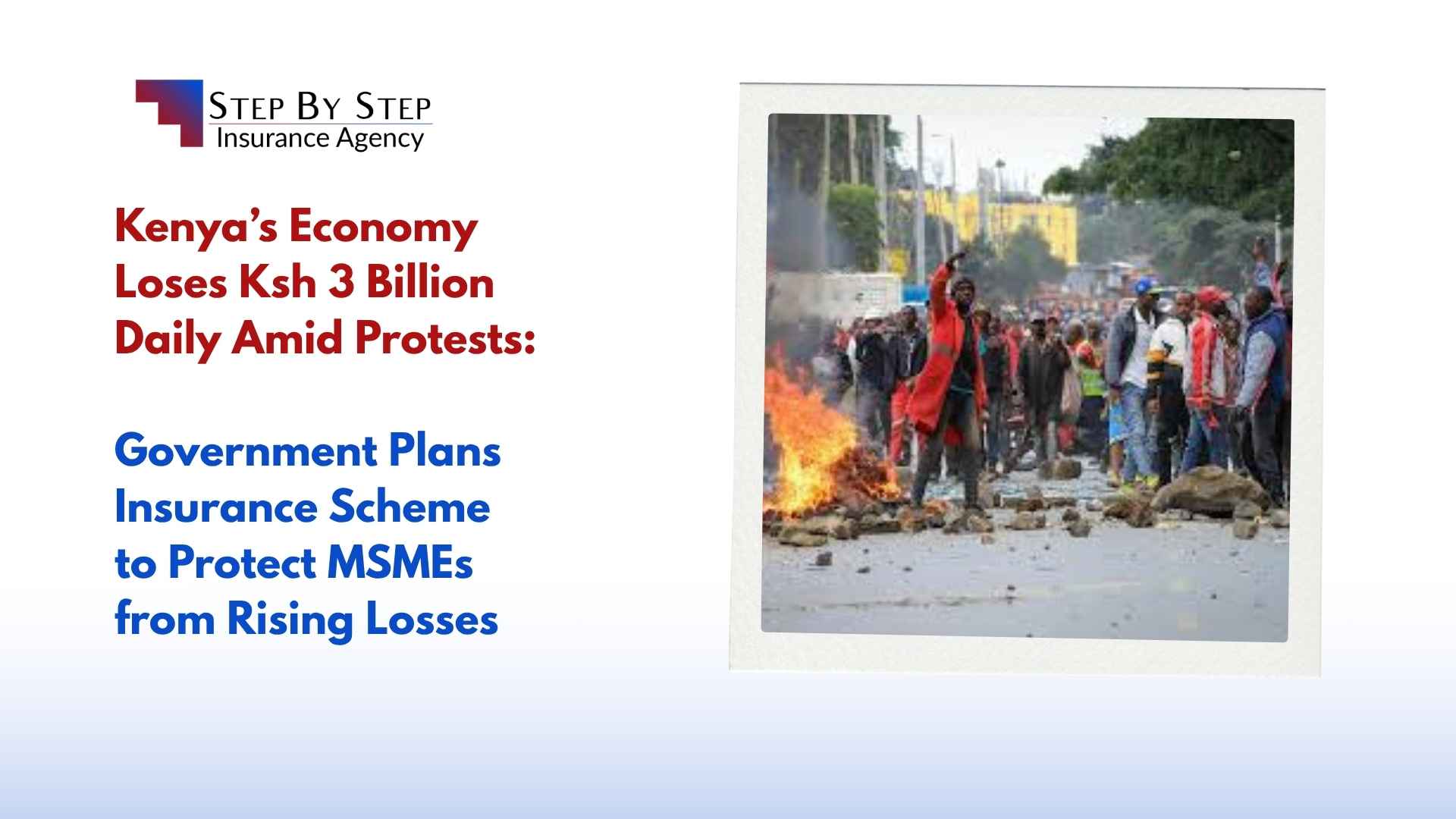
Kenya’s insurance sector and broader economy are currently navigating turbulent waters. The recent wave of anti-government protests, which marked the one-year anniversary of last year’s unrest, has inflicted severe economic damage. The government estimates that these violent protests are costing the country a staggering Ksh 3 billion every day, with Micro, Small, and Medium Enterprises (MSMEs) bearing the brunt of the losses. In response, the government is exploring collaborative insurance solutions tailored to protect MSMEs from such shocks.
In this blog post, we will unpack the full impact of these protests on Kenya’s economy and insurance industry, detail the government’s proposed interventions, and explore how Step By Step Insurance can play a crucial role in helping MSMEs safeguard their businesses.
Key Takeaways
Daily economic loss of Ksh 3 billion due to protests, with MSMEs most affected
Over 60% of MSMEs remain uninsured, leaving them vulnerable to losses
Government developing dedicated insurance scheme for MSME protection
Protests disrupt supply chains, business operations, and investor confidence
Insurance is a strategic investment for business resilience, not just a cost
Connect with other business owners and insurance experts to discuss trends, challenges, and solutions for protecting your enterprise in Kenya’s evolving economic landscape.
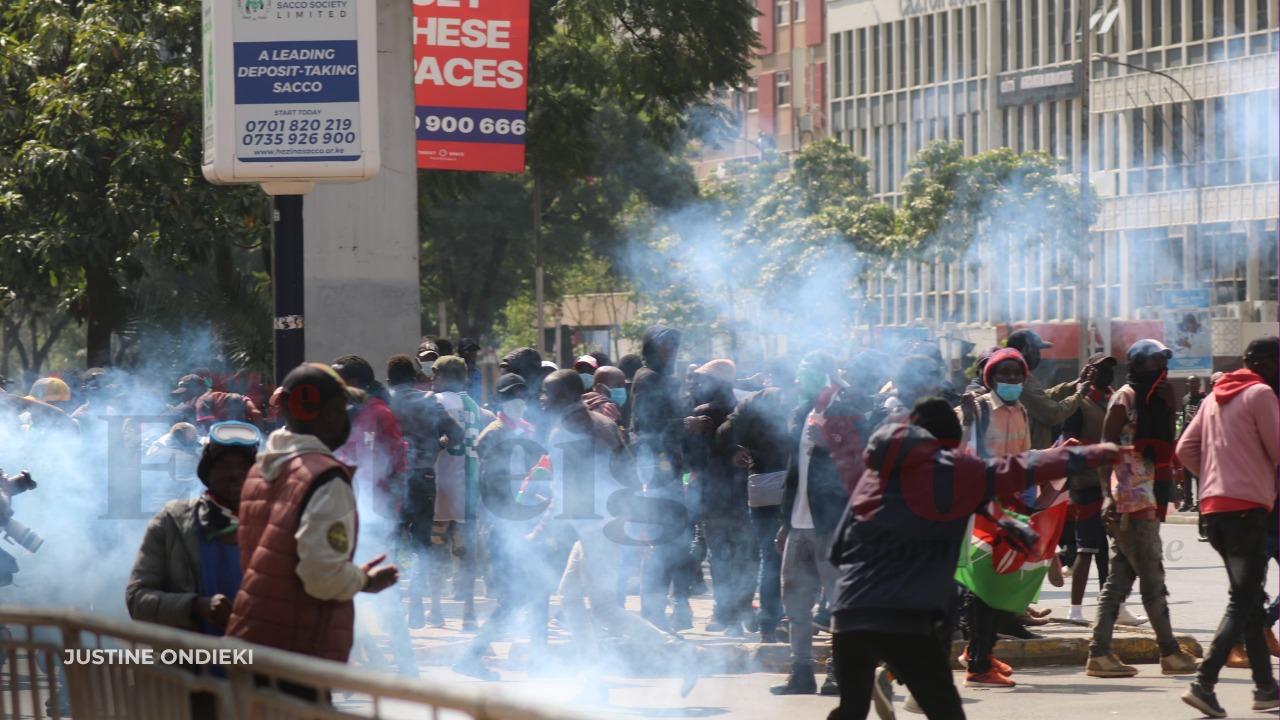
On June 25th, 2025, thousands of Kenyans took to the streets to commemorate the anniversary of the 2024 anti-tax protests that shook the nation. While initially peaceful, these demonstrations escalated into widespread vandalism and disruptions affecting at least 25 counties nationwide. The aftermath left rows of businesses damaged or shuttered, with MSMEs—already vulnerable due to limited resources and insurance coverage—suffering the most.
The government’s estimate of a daily loss of Ksh 3 billion underscores the scale of the economic disruption. This figure reflects not only direct damages to property and inventory but also lost income, halted operations, and a chilling effect on investor confidence. As the backbone of Kenya’s economy, MSMEs’ struggles ripple through communities and the broader market, threatening jobs and livelihoods.
Economic and Social Impact of the Protests
The protests’ impact extends beyond immediate physical damage. The unrest disrupted supply chains, blocked transportation routes, and caused widespread business closures. In Nairobi’s central business district and other urban centers, many shops, banks, and service providers closed their doors for safety, compounding economic losses.
Socially, the protests have deepened political tensions and exacerbated grievances among Kenya’s youth, who cite high unemployment, the high cost of living, and perceived government corruption as core issues. Tragically, the protests have also resulted in fatalities and injuries, with at least sixteen deaths reported during the 2025 demonstrations alone.
The economic fallout is evident in rising nonperforming loans as affected businesses struggle to repay debts. The construction and real estate sectors have seen declines, while agricultural output suffered due to transport disruptions. Investor confidence has wavered, with the Nairobi Securities Exchange experiencing volatility and foreign investors growing cautious.
Challenges Facing the Insurance Sector
The insurance industry in Kenya now faces a dual challenge: a surge in claims related to protest damages and the difficulty of managing risk in an environment marked by political instability. MSMEs, which account for a significant portion of the economy, are particularly exposed because over 60% remain uninsured. This low insurance penetration leaves many businesses vulnerable to total loss in times of crisis.
For insurers, pricing and underwriting risks tied to civil unrest is complex and costly. The unpredictability of protests and the scale of damages make it difficult to set premiums that are both affordable for MSMEs and sustainable for insurers. Additionally, the rise in claims increases the risk of disputes and fraudulent claims, further straining the sector.
Government Response and Proposed MSME Insurance Plan
Recognizing the severe economic damage and the vulnerability of MSMEs, the Kenyan government is actively exploring interventions to cushion private sector players from losses due to violent protests. A key proposal is the development of a dedicated insurance scheme tailored specifically for MSMEs.
The government plans to facilitate the registration of MSMEs to improve coordination and data collection, which are essential for effective risk assessment and insurance coverage. This initiative aims to overcome one of the biggest hurdles: the lack of reliable data on MSMEs, which complicates underwriting and policy design.
However, the government and insurers face challenges in encouraging uptake, given the historically low insurance awareness and affordability issues among MSMEs. The success of this plan will depend on designing accessible, affordable products and effective outreach.
Potential Features of the Government’s MSME Insurance Plan
The envisioned MSME insurance scheme is expected to cover losses from property damage, business interruption, and risks related to civil unrest and vandalism. To make this viable, a public-private partnership model is likely, where the government facilitates and supports insurers who underwrite the risks.
Key Features of Proposed MSME Insurance Plan
Affordable Premiums
Subsidies or risk-sharing mechanisms to keep costs manageable for MSMEs
Simplified Claims
Streamlined procedures tailored to the limited administrative capacity of small businesses
Technology Integration
Digital platforms for registration, premium payments, and claims to enhance accessibility
Risk Management
Education and advisory services to help MSMEs reduce risks and prevent losses
Comprehensive Coverage
Protection against property damage, business interruption, and civil unrest
Such a scheme would not only protect MSMEs but also contribute to economic resilience by stabilizing a vital sector during periods of unrest.
How Step By Step Insurance Can Help MSMEs
(Image Courtesy of Eastleigh Voice)
Step By Step Insurance Agency stands out as a key player in supporting MSMEs to navigate the insurance landscape, especially in these challenging times. With deep expertise in microinsurance and SME-focused products, Step By Step offers tailored solutions that address the unique risks faced by small businesses in Kenya.
Affordable and Tailored Insurance Products
Step By Step provides a range of budget-friendly insurance products designed to cover essential risks such as fire, theft, liability, and business interruption—risks that MSMEs are particularly exposed to during protests and civil unrest. Recognizing that cost is a major barrier, their products are structured to be accessible even to the smallest enterprises.
Specialized Cyber Insurance
As more MSMEs adopt digital tools, cyber risks have become a growing concern. Step By Step offers specialized cyber insurance products that protect against data breaches, cyberattacks, and online fraud—threats that can cripple small businesses without adequate protection.
Personalized Advisory and Risk Management
Beyond selling policies, Step By Step provides personalized advisory services. They help MSMEs understand their specific risks, select appropriate coverage, and implement risk mitigation strategies. This hands-on approach empowers businesses to not only insure but also manage risks proactively.
Leveraging Technology for Accessibility
Step By Step uses digital platforms to simplify insurance processes—from registration to claims filing—making it easier for MSMEs to access and manage their insurance. This reduces administrative burdens and speeds up response times when claims arise.
Commitment to Inclusivity
Step By Step is committed to ensuring no MSME is left unprotected due to cost or complexity. Their focus on education and outreach helps raise insurance awareness, fostering a culture of risk protection among Kenya’s small business community.
Broader Implications for Kenya’s Economy and Insurance Industry
The protests and their aftermath highlight the critical need to strengthen Kenya’s insurance sector as a pillar of economic resilience. Political unrest and social tensions remain elevated risks, with fiscal consolidation efforts and upcoming elections likely to sustain protest activity.
Increasing insurance penetration among MSMEs is vital not only to protect individual businesses but also to stabilize the broader economy. A robust insurance market can help absorb shocks, maintain investor confidence, and support sustainable growth.
Regulatory reforms, technological innovation, and public-private collaboration will be key to expanding access to insurance. The government’s MSME insurance plan, combined with the expertise of agencies like Step By Step, represents a promising path forward.
Conclusion
Kenya’s recent protests have underscored the fragility of its economic and social fabric, particularly the vulnerability of MSMEs. With daily losses estimated at Ksh 3 billion, the urgency to protect small businesses from such shocks has never been greater. The government’s initiative to develop a dedicated MSME insurance scheme is a critical step toward cushioning the private sector from future unrest.
Step By Step Insurance Agency’s role in providing affordable, tailored insurance solutions and risk management support positions it as a vital partner for MSMEs navigating these uncertain times. By embracing insurance, MSMEs can build resilience, safeguard livelihoods, and contribute to Kenya’s broader economic stability.
For MSMEs, the message is clear: insurance is not just a cost but a strategic investment in the future. With the right support and products, Kenya’s small businesses can weather the storms of civil unrest and emerge stronger.
This comprehensive look at Kenya’s current challenges and solutions in the insurance space highlights the importance of collaboration, innovation, and inclusivity. As the nation moves forward, protecting MSMEs through effective insurance will be key to securing a stable and prosperous economic future.