Vince Oremo is a talented web designer and digital marketer from Kenya, who studied journalism at the Technical University of Kenya. With over six years of experience, he specializes in brand identity, graphic design, web development, SEO, and social media management. Oremo focuses on creating tailored solutions that reflect each client's unique story, enhancing their online presence and driving business growth. His collaborative approach ensures meaningful connections between brands and their audiences, resulting in increased engagement and visibility. You can explore his work at vinceoremo.com.
Kenya’s general insurance sector is set for a strong expansion in 2025, with forecasts predicting growth of 9.9%. This surge is largely attributed to the growing adoption of microinsurance and enhanced market access through digital innovation and regulatory progress.
🔑 Key Takeaways
Kenya’s insurance sector projected to grow by 9.9% in 2025
Microinsurance driving financial inclusion
Mobile technology revolutionizing distribution
Insurtech improving efficiency and personalization
Microinsurance products are becoming increasingly popular across Kenya, particularly among low-income groups and workers in the informal sector. These affordable, accessible insurance solutions cover risks such as health emergencies, crop and livestock losses, and small business liabilities. Since a significant proportion of the population works in agriculture or informal employment with limited access to conventional insurance, microinsurance provides vital protection and fosters financial inclusion.
Microinsurance Type
Coverage
Target Group
Health Microinsurance
Emergency medical coverage
Low-income families
Agricultural Insurance
Crop/livestock protection
Smallholder farmers
Business Microinsurance
Liability and asset protection
Informal sector workers
The Role of Mobile Technology in Insurance Growth
Mobile platforms like M-Pesa have revolutionized insurance distribution in Kenya by enabling digital payments and policy purchases. This technology has helped insurers reach underserved rural populations, transforming insurance from a luxury to a practical tool and significantly broadening market penetration beyond urban areas.
Mobile Insurance Penetration Stats
Platform
Users (millions)
Insurance Products
M-Pesa
30+
Health, life, crop insurance
Airtel Money
5+
Micro-life insurance
T-Kash
3+
Asset protection
Digital Innovation and Insurtech Enhancing Efficiency
Insurtech advancements are streamlining policy administration, claims processing, and customer engagement. These digital tools improve operational efficiency, reduce costs, and enable insurers to offer personalized insurance products. Greater accessibility and innovation contribute directly to market growth.
Key Insurtech Solutions
AI-powered claims processing
Blockchain for fraud prevention
Telematics for usage-based insurance
Chatbots for customer service
Data analytics for personalized pricing
Regulatory Support Strengthening the Insurance Ecosystem
The Insurance Regulatory Authority (IRA) has introduced reforms to enhance transparency, consumer protection, and market stability. Licensing updates and frameworks supporting digital insurance products help build trust and encourage investment, fostering a conducive environment for industry growth.
Market Size and Sector Composition
Kenya’s insurance market is projected to reach approximately US$8.32 billion in gross written premiums by 2025, with general insurance comprising over half of this total. Key insurance lines include motor, medical, property, and commercial insurance, reflecting the evolving needs of Kenya’s growing economy.
Insurance Line
Market Share
Growth Rate
Motor Insurance
32%
8.5%
Medical Insurance
28%
11.2%
Property Insurance
18%
7.8%
Commercial Insurance
22%
10.1%
Challenges and Future Opportunities
While insurance penetration remains low at about 2.4%, constrained by issues such as limited awareness and cultural perceptions, Kenya’s youthful population, urbanization, and rising financial literacy offer significant long-term growth potential. Continued efforts in consumer education and innovation will be essential to sustain expansion.
Growth Opportunities
Youth Market
Tailored products for tech-savvy young population
SME Sector
Insurance solutions for growing small businesses
Climate Insurance
Products addressing climate-related risks
Conclusion
The forecasted 9.9% growth in Kenya’s general insurance industry reflects a dynamic sector benefiting from microinsurance adoption, digital transformation, and regulatory progress. This growth is set to enhance financial protection for more Kenyans while contributing to the country’s economic development. Sustained innovation and regulatory support will be critical to unlocking the sector’s full potential in the years ahead.
Ready to Protect What Matters Most?
Get a personalized insurance quote today and join thousands of Kenyans securing their future.
For many Kenyan families, pets are more than just animals — they’re companions, protectors, and beloved members of the household.
But when unexpected illness, accidents, or even theft happen, veterinary care can be expensive — especially in growing urban areas like Nairobi, Kitengela, Mombasa, and Kisumu.
That’s where pet insurance comes in.
Whether you’re raising a loyal dog, an affectionate cat, or even a rabbit, pet insurance helps you protect what matters without draining your pocket. In this 2025 guide, we break down the top pet insurance options available in Kenya — starting with the most flexible and family-friendly provider.
🔑 Key Takeaways
Pet insurance in Kenya covers accidents, illness, theft, and veterinary expenses
Step by Step Insurance offers the most customizable and family-friendly options
APA Insurance provides straightforward coverage for companion animals
ICEA LION specializes in high-value dogs with comprehensive liability protection
Most policies require pets to be under 10 years old and fully vaccinated
Optional medical cover is available for treatment costs across most providers
🥇 Step by Step Insurance – Tailored Pet Cover That Puts Your Pet First
At Step by Step Insurance, we understand that no two pets — or pet owners — are alike. That’s why we work with trusted insurers to offer custom pet insurance packages built around your specific needs and budget.
Whether you’re looking to insure your family dog, your guard dog, or your cat, we help you secure protection against:
Veterinary-advised euthanasia to prevent suffering
Theft or straying
Optional: Medical cover for treatment costs
“We help you compare, quote, and choose the right cover — no guesswork. We also provide vet network support and claim assistance, so you’re never alone,” says Faith Kimaru, Principal Officer at Step by Step Insurance.
🥈 APA Insurance – Straightforward Pet Cover for Companion Animals
APA Insurance offers a clear and practical pet insurance solution for pets that are not kept for commercial gain, but rather for comfort, security, or companionship — such as dogs, cats, and rabbits.
Their basic plan covers:
Accidental death (lightning, injury, snake bite, windstorm, flood)
Illness or disease
Epidemics or widespread disease outbreaks
Vet-advised euthanasia to prevent suffering
Theft or straying
📌 Optional medical cover is available for vet treatment due to accident or illness.
APA is a solid choice for families who want basic, dependable protection — especially those with home pets or guard dogs that hold emotional and protective value.
🥉 GA Insurance – Pet Cover for the Responsible, Detail-Oriented Owner
GA Insurance provides coverage for companion animals such as dogs and cats, focusing on personal comfort pets, not livestock or income animals.
They require:
A completed application form
Proof of premium payment
Current vet medical & valuation report
Vaccination certificates
Pet photo and identification (ear tag, tattoo, microchip)
Pet must be under 10 years old
While the onboarding process is detailed, GA’s service delivery and flexibility make it a good choice for pet owners who want complete transparency and accountability in their coverage.
🐕 ICEA LION – Feature-Rich Cover for Dogs with High Value
ICEA LION offers a specialized Dog Insurance policy, divided into four distinct sections:
🔹 Section 1: Death from Accident or Illness (Mandatory)
Covers death from injury or illness, including war/terrorism-related incidents. Pets must be vaccinated, well-maintained, and between 6 months and 10 years old.
🔹 Section 2: Medical Expenses (Optional)
Reimburses veterinary treatment costs for injury or illness. Once your limit is reached, you can reinstate the policy with an additional premium.
🔹 Section 3: Theft or Straying
Pays the agreed or market value of the dog if stolen or lost and not recovered.
🔹 Section 4: Third-Party/Public Liability
Covers you if your dog injures someone or damages property. Up to Ksh 2,000,000 liability limit.
📌 Important notes:
No cover for roaming mongrels
Dogs must be valued at Ksh 20,000 or more
Premiums vary by dog value — from Ksh 7,574 to over Ksh 22,000
Dogs worth over Ksh 200,000 require a custom quote
ICEA LION is ideal for pet owners with pedigree, high-value dogs who want premium protection and liability cover.
🎥 Learn More About Pet Insurance
💡 What’s Typically Covered by Pet Insurance in Kenya?
The health insurance landscape in Kenya is rapidly evolving, and 2024 was no exception. According to the latest data from the Insurance Regulatory Authority (IRA), the health insurance sector generated a total Gross Written Premium (GWP) of Ksh 76.31 billion, with a few key players dominating the market.
Whether you’re an individual, family, or business looking to invest in reliable medical cover, understanding who the top underwriters are — and what they offer — is essential.
Here’s a breakdown of the Top 10 Health Underwriters in Kenya (2024) and expert insight from Step by Step Insurance, your trusted local agency in Hurlingham and Kitengela as well across the country.
🔍 Key Takeaways
Total health insurance market worth Ksh 76.31 billion in 2024
Top 10 insurers control 92.9% of the market
Jubilee Health leads with 18.26% market share
Old Mutual and AAR follow closely in second and third place
Total Gross Written Premium (GWP): Ksh 76.31 billion
Top 10 Insurers Control: ~92.9% of the market
Other underwriters combined: Ksh 5.42 billion (7.1% market share)
🏆 Top 10 Health Insurance Underwriters in Kenya (2024)
Rank
Insurer
GWP (Ksh Bn)
Market Share
1
Jubilee Health Insurance
13.94
18.26%
2
Old Mutual General Insurance
11.88
15.57%
3
AAR Insurance Kenya
10.77
14.12%
4
CIC General Insurance
8.00
10.49%
5
APA Insurance Limited
7.84
10.28%
6
Britam General Insurance
5.14
6.73%
7
GA Insurance Company
4.77
6.25%
8
The Heritage Insurance Company
3.38
4.42%
9
First Assurance Company
2.85
3.73%
10
Madison Insurance Company
2.33
3.05%
🔍 Key Takeaways from the 2024 Rankings
1. Jubilee Health Insurance Leads the Market
With Ksh 13.94 billion in premiums and 18.26% market share, Jubilee Health Insurance maintained its stronghold as Kenya’s No.1 health underwriter in 2024. Their wide hospital network, competitive pricing, and dependable claims processing remain major draws for employers and individuals alike.
2. Old Mutual and AAR Close Behind
Old Mutual (15.57%) and AAR (14.12%) are not far behind, proving that the top three underwriters are competing closely in pricing, customer experience, and innovation.
3. Strong Mid-Tier Competition
APA, CIC, and Britam remain trusted choices for SMEs, SACCOs, and individuals who need custom packages without the premium costs of top-tier plans. For more on APA’s offerings, see our APA Afya Nafuu Health Insurance Guide.
🗣️ Expert Insight from Step by Step Insurance
“At Step by Step Insurance, we work with many of these top underwriters — including Jubilee, Britam, Old Mutual, and AAR — to match our clients with the best-fit health insurance solutions,” says Faith Kimaru, Principle Officer at Step by Step Insurance.
“What matters most isn’t just brand name, but how well the policy fits your needs, budget, and access to care — especially in areas like Kitengela, where we help clients compare plans that work both locally and nationally.”
The Kenyan health insurance industry is growing — but choosing the right partner requires more than checking a ranking. Let trusted brokers like Step by Step Insurance help you navigate your options and secure a plan that gives you peace of mind.
Kenya’s General Insurance Sector Growth Forecast 2025
Kenya’s general insurance sector is on the cusp of a significant expansion in 2025, with industry analysts forecasting a growth rate of 9.9%. This promising outlook is driven by a dynamic mix of evolving regulatory frameworks, strategic joint ventures such as Sanlam-Allianz, and a strong emphasis on microinsurance to deepen market penetration among underserved communities.
This article explores the underlying factors fueling this growth, the challenges the sector faces, and the opportunities ahead. Whether you are an industry insider, investor, or policy maker, this in-depth analysis will illuminate the key trends shaping Kenya’s general insurance landscape.
Key Takeaways
Kenya’s general insurance sector is projected to grow by 9.9% in 2025
Microinsurance expansion is driving financial inclusion for underserved communities
Strategic partnerships like Sanlam-Allianz are transforming service delivery
Enhanced regulatory frameworks including IFRS 17 implementation strengthen market confidence
Digital transformation and mobile platforms are accelerating insurance adoption
Insurance penetration remains low at 2.4%, indicating significant growth potential
Introduction: The Importance of Kenya’s Insurance Growth
Kenya’s insurance market plays a crucial role in financing economic development and fostering financial inclusion. Despite historically low insurance penetration at around 2.4%, the sector is gaining momentum due to technological innovation, regulatory improvements, and increasing consumer awareness.
The projected 9.9% growth in general insurance for 2025 reflects optimism surrounding structural reforms and market dynamics that promise better service delivery and wider product accessibility.
Growth Drivers Shaping Kenya’s General Insurance Industry
Regulatory Frameworks Accelerating Stability and Compliance
Effective regulation remains foundational to sector growth. The Insurance Regulatory Authority (IRA) has been instrumental in instituting risk-based supervision and enhancing compliance measures to strengthen insurers’ solvency and market conduct.
Recent regulatory initiatives include:
Faster digital licensing and authorization processes
Enforcement against unlicensed brokers
Full implementation of IFRS 17 for transparent financial reporting
Introduction of a Policyholders Compensation Fund to protect consumers against insurer insolvency
These measures increase market confidence and encourage sustainable growth.
A robust regulatory environment is key to building consumer trust and attracting new entrants into the insurance market – John Mwangi, IRA Compliance Director
Joint Ventures and Strategic Partnerships
Collaborations such as the Sanlam-Allianz partnership exemplify how joint ventures are transforming service offerings. These alliances leverage international expertise, capital strength, and technological innovations to:
Expand product range across life, health, and general insurance lines
Increase geographic footprint beyond urban areas
Foster innovation in risk assessment and claims management
The Sanlam-Allianz alliance, in particular, has been deploying digital tools for customer onboarding and claims processing, considerably improving customer experience.
Microinsurance Boosting Financial Inclusion
Microinsurance products are rapidly gaining traction as an inclusive solution for Kenya’s large informal and rural populations. These low-cost, accessible policies cover risks related to health, agriculture, and property for low-income households who traditionally have been uninsured.
Over 344 million people globally benefit from microinsurance, with Kenya as a key growth market
Digital channels such as mobile money (M-PESA) have streamlined premium collection and claims payment
Partnerships with NGOs and government agencies boost outreach and credibility
This segment is pivotal for bridging the insurance gap and stimulating sector expansion.
Market Segmentation: Target Areas of Growth and Innovation
Kenya’s insurers are increasingly tailoring products to meet the specific needs of diverse market segments:
Market Segment
Insurance Focus
Key Drivers
Agriculture
Crop, livestock, weather-indexed insurance
Climate risk, food security
Health
Micro health policies, medical insurance
Rising health awareness
Small and Medium Enterprises (SMEs)
Business interruption, liability, property insurance
SME sector growth, risk management
Urban Middle Class
Motor, home, life, and retirement insurance
Urbanization, disposable income
Rural Communities
Microinsurance for livelihood protection
Financial inclusion efforts
Insurers are also leveraging data analytics and mobile technologies to deepen penetration and customize offerings, helping overcome historical hurdles around affordability and trust.
Challenges Constraining Growth
Despite optimistic forecasts, Kenya’s general insurance sector is not without challenges:
Low Penetration Rate: At 2.4%, insurance uptake remains below the African average (~3.7%), indicating significant room for expansion
Customer Perception: Negative views about insurance as non-essential persist, due to past claims denial and misunderstandings about products
Affordability: Limited disposable income in rural areas restricts premium affordability
Policy and Tax Uncertainty: Although the Finance Bill 2024’s proposed extra taxes were rejected, ongoing fiscal debates create operating uncertainty
Key Data & Industry Performance
In FY 2024, Kenya’s insurance industry showed resilience despite macroeconomic headwinds. Here are some key figures:
Indicator
FY 2023
FY 2024
% Change
Gross Premiums (KES billion)
361.4
395.3
+9.4%
General Insurance Premiums (KES bn)
191.3
204.1
+6.7%
Life Insurance Premiums (KES bn)
170.0
191.2
+12.5%
Claims Paid (KES billion)
94.0
105.7
+12.5%
Inflation Rate
7.7%
4.5%
-3.2 percentage pts
This performance was supported by:
Economic stability with inflation easing and Kenyan Shilling appreciating by 17.4% against USD
Focused product innovation and better client service
Opportunities: Digital Transformation & Innovation
The pandemic accelerated digital adoption in Kenya’s insurance sector, a trend expected to continue powering growth in 2025.
Key opportunities include:
Mobile Insurance Platforms: Leveraging Kenya’s high mobile penetration for premium payments, claims processing, and customer engagement
Data Analytics & AI: For personalized risk profiling, detecting fraud, and improving underwriting accuracy
Parametric Insurance: Innovation in climate-risk indexed insurance products to protect farmers and vulnerable populations
Integration with Financial Services: Expanded bundling with banking and savings products
Such innovations not only improve efficiency but also attract younger tech-savvy customers.
Case Study: Sanlam-Allianz Joint Venture
The Sanlam-Allianz partnership serves as a model for success:
Leveraged Allianz’s global expertise in risk management and Sanlam’s regional presence
Launched mobile-first insurance products targeting both urban and rural clients
Instituted faster claims processing with AI-based assessment tools
Achieved a market share increase of approximately 3% in Kenya’s general insurance segment within two years
Our collaboration exemplifies how strategic partnerships can bridge gaps in insurance accessibility while delivering value through innovation – CEO James Mwangi, 2025
Industry Outlook and Conclusion
The Kenyan general insurance sector is poised for steady growth exceeding 9% in 2025, supported by strengthened regulations, innovative partnerships, and an emphasis on inclusive microinsurance. However, sustained sector development demands overcoming challenges around penetration, affordability, and consumer trust.
The continued push for digital transformation, combined with strategic collaboration across stakeholders, is likely to unlock more opportunities for insurers and consumers alike.
Summary Table: Key Drivers & Challenges for Kenya’s Insurance Sector in 2025
Aspect
Drivers
Challenges
Regulatory Environment
Enhanced compliance, IFRS 17 rollout
Policy uncertainty, taxation risks
Market Expansion
Microinsurance, urban middle class
Low insurance awareness
Technology
Mobile platforms, AI, analytics
Digital literacy gaps
Partnerships
Joint ventures, insurer-NGO linkages
Coordination barriers
Economic Factors
Inflation easing, currency stability
Economic growth slowdown risks
This evolving landscape positions Kenya’s general insurance sector not only as a growth engine but also as a critical enabler of financial security and resilience for millions of Kenyans.
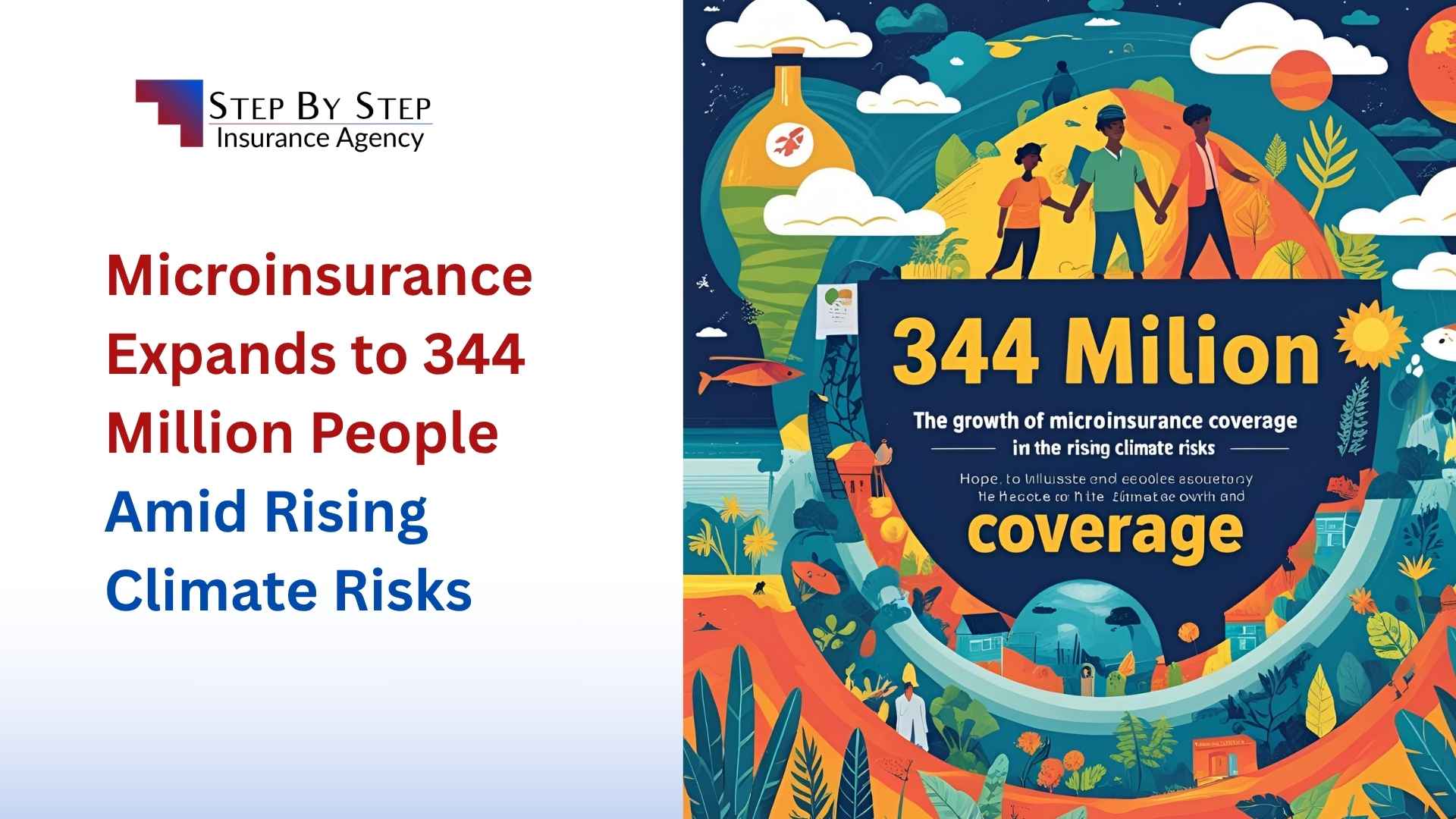
Microinsurance is making remarkable strides, now providing inclusive insurance coverage to approximately 344 million people worldwide—a 70% increase over the past three years. This growth underscores microinsurance’s vital role in helping low- and middle-income populations gain affordable financial protection against everyday risks and systemic shocks.
Key Takeaways
Microinsurance now covers 344 million people globally, representing a 70% growth in three years
Market value projected to grow from $74 billion in 2025 to over $137 billion by 2029
Climate disasters pose increasing challenges to the sector’s sustainability
Reinsurance and parametric insurance emerge as key solutions for risk management
Digital platforms and mobile money integration drive market expansion
However, the sector faces mounting challenges due to increasing climate disasters and market volatility. Extreme weather events such as floods, droughts, and storms are becoming more frequent and severe, disproportionately impacting vulnerable communities that rely on microinsurance for resilience. These climate risks threaten the sustainability of providers who must pay out larger claims amid unpredictable conditions.
Climate Impact: The frequency and severity of extreme weather events have increased significantly, with climate-related disasters affecting millions of microinsurance beneficiaries worldwide. This trend poses unprecedented challenges for risk assessment and premium pricing in the microinsurance sector.
Climate Risk Type
Frequency Increase (%)
People Affected (Millions)
Average Claim Impact
Floods
45%
120
High
Droughts
35%
85
Medium-High
Storms
40%
95
Very High
Heat Waves
60%
65
Medium
Reinsurance Solutions
To tackle these challenges, reinsurance has emerged as a key risk management tool. By transferring portions of these growing risks to reinsurers, microinsurance providers can safeguard their financial health and ensure timely claims payments. Innovative solutions like parametric insurance—which triggers payouts based on predefined climate events such as rainfall or wind speed—are revolutionizing coverage efficiency and transparency.
Innovation in Coverage
Parametric insurance represents a breakthrough in microinsurance delivery, offering several advantages over traditional indemnity-based coverage. This innovative approach eliminates lengthy claims assessment processes by automatically triggering payouts when specific measurable parameters are met, such as rainfall levels below a certain threshold or wind speeds exceeding predetermined limits.
Global Market Growth
The global microinsurance market is robustly growing, valued at about $74 billion in 2025 with projections to reach over $137 billion by 2029. Growth drivers include the expansion of digital platforms, mobile money integration, supportive government policies, and rising awareness in emerging markets across Asia-Pacific, Africa, and Latin America.
Region
2025 Market Size ($B)
2029 Projected ($B)
Growth Rate
Digital Adoption
Asia-Pacific
$35.5
$68.5
17.8%
High
Africa
$22.2
$41.1
16.6%
Very High
Latin America
$12.8
$22.4
15.2%
Medium-High
Others
$3.5
$5.0
9.4%
Medium
Future Outlook
Microinsurance thus stands as a powerful tool for financial inclusion and climate resilience, yet its success hinges on continued innovation and expanded reinsurance partnerships to mitigate escalating climate risks. The sector’s ability to adapt and evolve will determine its capacity to serve the growing needs of vulnerable populations worldwide while maintaining financial sustainability in an increasingly unpredictable climate environment.
Success Factors: The future of microinsurance depends on strategic partnerships between insurers, reinsurers, technology providers, and governments to create resilient, scalable solutions that can withstand climate volatility while remaining accessible to low-income populations.
🏢
Prudential Financial is set to release its Q2 2025 earnings on July 30, 2025, after market close, followed by a conference call on July 31 at 11:00 a.m. ET. Analysts expect a modest decline in both revenue and earnings per share, with consensus estimates projecting revenue around $13.4 billion and an EPS near $3.21, marking a year-over-year dip of about 2-5%.
🎯Key Takeaways
Earnings Release: Q2 2025 results expected July 30, 2025, after market close
Revenue Forecast: Analysts project approximately $13.4 billion in revenue
EPS Projection: Expected earnings per share near $3.21, down 2-5% year-over-year
Conference Call: Scheduled for July 31 at 11:00 a.m. ET with live broadcast availability
The financial community is closely monitoring Prudential Financial’s upcoming quarterly results, with analysts maintaining cautious optimism despite projecting a modest decline in key metrics. The consensus revenue forecast of $13.4 billion represents a strategic inflection point for the company as it navigates challenging market conditions while maintaining operational excellence across its diversified business portfolio.
Metric
Q2 2025 Forecast
Year-over-Year Change
Analyst Range
Revenue
$13.4 billion
-2% to -5%
$13.1B – $13.7B
Earnings Per Share
$3.21
-2% to -5%
$3.10 – $3.35
Net Income
$1.2 billion (est.)
-3% to -6%
$1.1B – $1.3B
🏗️Business Segment Performance
🇺🇸U.S. Operations Analysis
The U.S. operations are anticipated to benefit from improved investment spreads and underwriting results, especially in Retirement Strategies, Group Insurance, and Individual Life segments. These improvements reflect Prudential’s strategic focus on optimizing its domestic portfolio while leveraging favorable interest rate environments and enhanced risk management practices.
Business Segment
Expected Performance
Key Drivers
Challenges
Retirement Strategies
Positive
Improved investment spreads
Market volatility
Group Insurance
Strong
Better underwriting results
Higher operating expenses
Individual Life
Stable
Enhanced risk management
Competitive pricing pressure
International Business
Mixed
Regional growth opportunities
Foreign exchange headwinds
⚠️Operational Challenges
However, these gains might be offset by higher expenses, lower net fee income, and foreign exchange challenges impacting international businesses. The company continues to focus on operational efficiency while managing the complexities of a global financial services operation in an increasingly volatile economic environment.
Critical Note: Foreign exchange fluctuations are expected to create headwinds for international segments, potentially dampening overall performance despite strong domestic operations.
💼PGIM Asset Management Analysis
Prudential’s asset management arm, PGIM, is expected to see robust fee growth fueled by market appreciation and net inflows. This segment represents a crucial growth driver for the company, benefiting from increased investor confidence and strategic portfolio management capabilities that have positioned PGIM as a leading global asset manager.
📈PGIM Performance Metrics
The asset management division’s performance will be closely scrutinized by investors as a key indicator of Prudential’s ability to diversify revenue streams and capitalize on growing demand for sophisticated investment solutions across institutional and retail markets.
👥Investor Focus Areas
Investors will be closely watching management’s commentary during the conference call for insights on navigating market volatility, interest rate impacts, and strategic initiatives such as share buybacks and dividend policies. These strategic decisions will provide valuable insight into management’s confidence in the company’s long-term prospects and commitment to shareholder value creation.
🎯Strategic Initiatives
Key areas of investor focus include the company’s approach to capital allocation, digital transformation initiatives, and expansion strategies in high-growth markets. Management’s guidance on these topics will significantly influence market perception and stock performance in the coming quarters.
📅Key Dates & Timeline
Event
Date
Time
Details
Q2 2025 Earnings Release
July 30, 2025
After market close
Financial results announcement
Earnings Conference Call
July 31, 2025
11:00 a.m. ET
Management discussion & Q&A
Live Broadcast
July 31, 2025
11:00 a.m. ET
Available on Investor Relations website
Replay Availability
Through mid-August
On-demand
Archive access for investors
📞Conference Call Details
The call will be broadcast live on Prudential’s Investor Relations website, with replay availability through mid-August. This accessibility ensures that all stakeholders can access critical information and management insights regardless of their ability to participate in the live session.
🌐Market Outlook & Challenges
This earnings announcement is a critical moment for Prudential Financial as it faces mixed economic conditions, balancing steady operational performance with ongoing financial challenges. The company’s ability to navigate current market uncertainties while maintaining growth momentum will be crucial for investor confidence and long-term strategic positioning.
📉Economic Environment
The current economic landscape presents both opportunities and challenges for Prudential Financial. Interest rate volatility, geopolitical tensions, and evolving regulatory requirements continue to shape the operating environment for major financial services companies. Management’s strategic response to these factors will be closely evaluated by analysts and investors alike.
Investment Consideration: The upcoming earnings release will provide crucial insights into Prudential’s resilience and adaptability in challenging market conditions, making it a pivotal moment for current and prospective investors.
Why Every DJI Owner in Kenya is Racing to Get Insured
Picture this: Your DJI Mavic 3 captures Kilimanjaro’s golden sunrise—a shot that could land a National Geographic feature. Suddenly, a wind shear slams it into a lodge balcony. Shattered glass. Guest injuries. A KES 3 million lawsuit.
This is Kenya’s drone reality in 2025. Without insurance, you pay for everything.
The Kenyan Drone Pilot’s Nightmare
🔥 KCAA Fines: Up to KES 500,000 for uninsured flights
💸 Liability Bombshells: Medical bills + property damage = millions in losses
🚫 Business Death: License revocation = grounded operations
🛑 DJI Graveyard: No hull coverage? Say goodbye to your KES 800,000 drone
“65% of drone claims in Kenya involve 3rd-party damage” – KCAA Safety Report 2023
Your DJI’s Legal Lifeline: Nationwide Coverage, Lightning-Fast Approval
KCAA-Compliant in 3 Simple Steps
1. What You GET with DJI-Specific Insurance:
Coverage Type
Protects You From
Why DJI Owners Need It
Third-Party Liability
Injury/property lawsuits
KCAA’s KES 5M minimum requirement
DJI Hull Insurance
Crashes, water damage, fires
Repair your Mavic/Phantom without cash pain
Theft Coverage
Stolen drones & equipment
Nairobi/Mombasa theft hotspots
Payload Protection
Ruined cameras & sensors
Save your Zenmuse X7 investment
2. How Fast is “Fast Approval”?
✅ Online Quote: 2 minutes (no forms)
✅ Policy Issued: As soon as same-day
✅ KCAA Compliance Certificate: Digital copy in 24hrs
Trusted Group Life Insurance Plans in Kitengela for Small and Medium Businesses
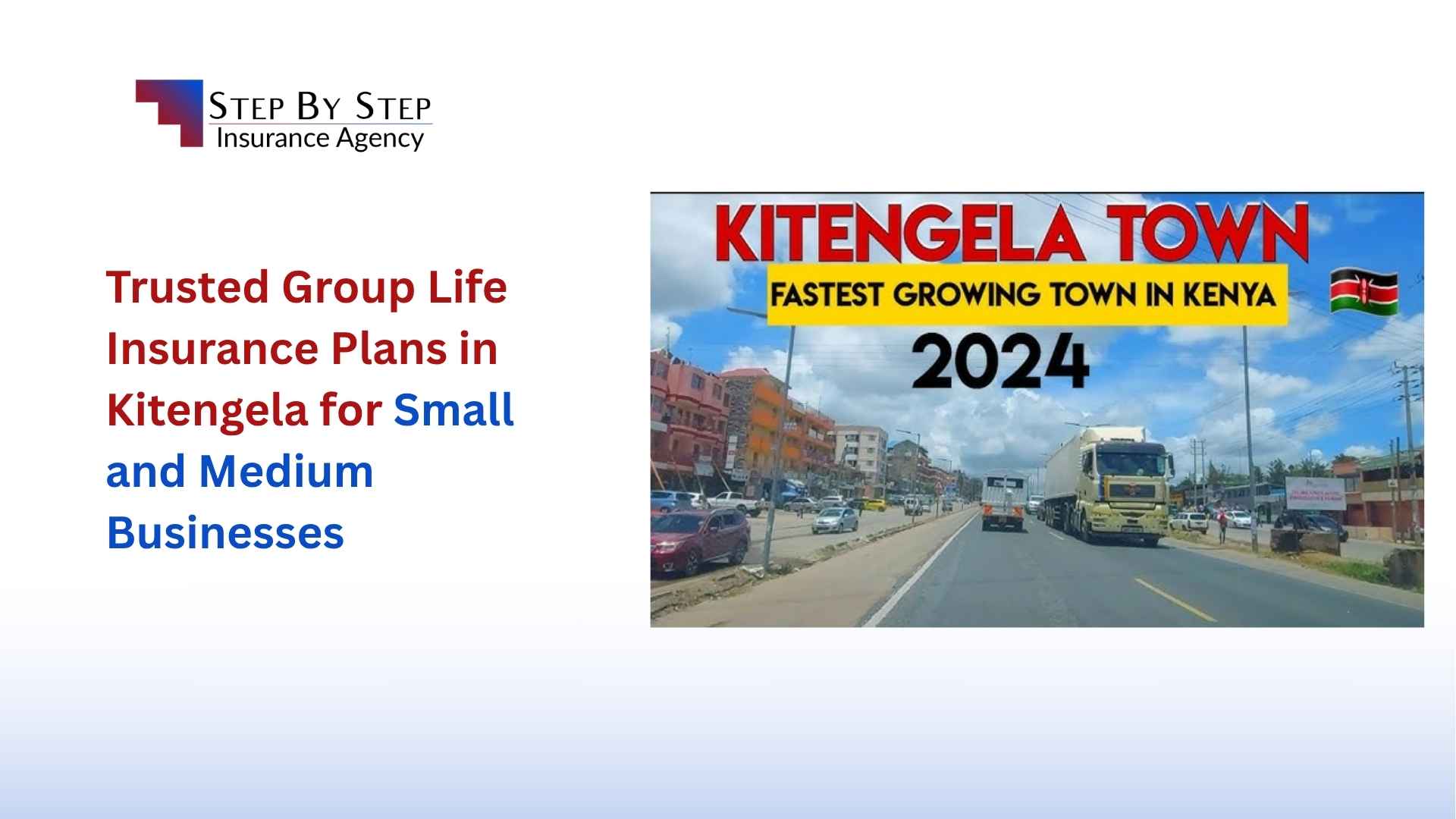
As Kitengela rapidly evolves into a hub for entrepreneurs and SMEs, small and medium-sized businesses are under growing pressure to attract, retain, and protect their workforce. One of the most effective and affordable ways to do that is through group life insurance.
At Step by Step Insurance, we understand the needs of businesses in Kitengela and across Kajiado County. That’s why we offer trusted, flexible, and scalable group life insurance plans tailored to your team size and budget.
Key Takeaways
Group life insurance is an affordable solution for employee protection
Enhances employee loyalty and job satisfaction
Position your business as a caring, responsible employer
Group life insurance is a policy taken out by a business or organization to cover its employees. In the unfortunate event that a team member passes away, the policy pays a lump sum benefit to their family or next of kin.
Benefits for Employers
Benefits for Employees
Enhances employee loyalty and job satisfaction
Peace of mind for families
Demonstrates care and responsibility
Access to affordable life cover
May qualify for tax benefits
No medical exams required for basic coverage
Why Kitengela SMEs Should Consider Group Life Insurance
Kitengela is booming—with new businesses, factories, SACCOs, and tech start-ups emerging every month. However, competition for skilled labor is fierce, and offering employee benefits is now a major differentiator.
Providing group life insurance:
Positions your business as a caring, responsible employer
Helps attract and retain top talent
Provides support to families during difficult times
Builds trust with your team and within the local community
How to Choose a Trusted Insurance Provider in Kitengela
Not all insurance providers are created equal. When selecting a group life insurance partner, consider the following:
Are they licensed and regulated by IRA Kenya?
Do they have experience with SMEs and group plans?
Do they offer local support in Kitengela?
How quick is their claims process?
With Step by Step Insurance, you get the advantage of working with a locally-based, trusted broker who partners with top-tier insurers like Britam, Jubilee, ICEA Lion, and more.
Why Choose Step by Step Insurance in Kitengela
As a leading insurance broker in Kitengela, we specialize in serving small and medium businesses. Here’s what sets us apart:
Personalized advice and needs analysis
On-site consultations at your business premises
Claims support when you need it most
Access to affordable group life insurance plans from leading insurers
Fast, paperless quotes and enrollment
“We believe in protecting the people who power your business.”
How to Get Started
Getting covered is fast and easy:
1. Request a consultation with one of our local insurance advisors
Offering group life insurance in Kitengela is more than a business decision—it’s a way to support your employees, improve morale, and stand out in a competitive market. Whether you’re a growing SME or an established organization, Step by Step Insurance is here to guide you every step of the way.
Secure your team’s future. Start building a safer workplace today.
7 Essential Things to Know About Car Insurance in Kitengela | Step by Step Insurance
Searching for trusted car insurance in Kitengela, Kajiado? Whether you’re commuting daily to Nairobi, running a business vehicle, or simply protecting your investment, the right car insurance plan matters—especially in a high-traffic area like Kitengela.
As the town continues to grow, so do the risks for drivers. From busy highways like Namanga Road to unpredictable boda boda traffic, having the right level of car insurance coverage is essential.
Here are 7 important things every Kitengela driver should know before buying or renewing a policy.
Key Takeaways
Third-party insurance is legally required for all vehicles in Kenya
Kitengela’s unique driving risks may require comprehensive coverage
Local brokers provide personalized advice and faster claims support
Multiple factors affect your premium including vehicle type and security features
Under the Motor Vehicle Insurance Act, all Kenyan drivers must have at least Third-Party insurance to operate legally. This covers damage or injury to others but doesn’t protect your own vehicle.
In Kitengela, police checks on roads like Namanga Road and Acacia are frequent. Driving without valid insurance could result in fines or your car being impounded.
Avoid penalties — make sure your insurance is always up to date.
2
Kitengela Presents Unique Driving Risks
Kitengela’s rapid development brings increased vehicle congestion, unregulated boda bodas, and busy intersections. These factors contribute to:
Higher accident rates
Risk of car theft or break-ins
Increased wear and tear on vehicles
Insurers factor in local risk when calculating premiums. If you regularly drive within Kitengela or to Nairobi, you’re exposed to more incidents and may benefit from broader coverage.
3
Know the 3 Main Types of Car Insurance in Kenya
Before buying a policy, it’s important to understand your options:
Type
Covers
Best For
Third-Party Only
Damage or injury to others (required by law)
Older vehicles with low market value
Third-Party Fire & Theft
Includes fire damage and theft of your own car
Mid-range vehicles in moderate-risk areas
Comprehensive Cover
Includes theft, fire, damage to your vehicle, and others
New or high-value vehicles in high-risk areas like Kitengela
Pro Tip: Comprehensive coverage is recommended for new or high-value vehicles operating in busy towns like Kitengela.
4
Premiums Are Affected by More Than Location
Insurance companies look at multiple factors when calculating your premium:
Vehicle type, model, and age
Vehicle usage (private or commercial)
Driver’s claims history
Security features (alarm, tracker, etc.)
For example, frequent commuting between Kitengela and Nairobi may result in a higher risk profile, while installing anti-theft devices could reduce your costs.
5
A Local Broker Makes the Process Easier
Why buy blindly online when you can speak to a local expert?
Working with a Kitengela-based broker like Step by Step Insurance offers:
Personalized advice based on your needs
Help choosing the most affordable and trusted insurer
Car insurance in Kitengela is more than just a legal requirement—it’s your defense against financial loss. Whether you drive daily or occasionally, getting the right coverage from a trusted local provider can save you money and stress.
Ready to Get Started?
✔️ Talk to a local insurance expert
✔️ Get the best rates from top Kenyan insurers
✔️ Support with claims, quotes, and renewals—all in Kitengela
Kenya’s New Referral Hospital Insurance & Cash Policy – Analysis
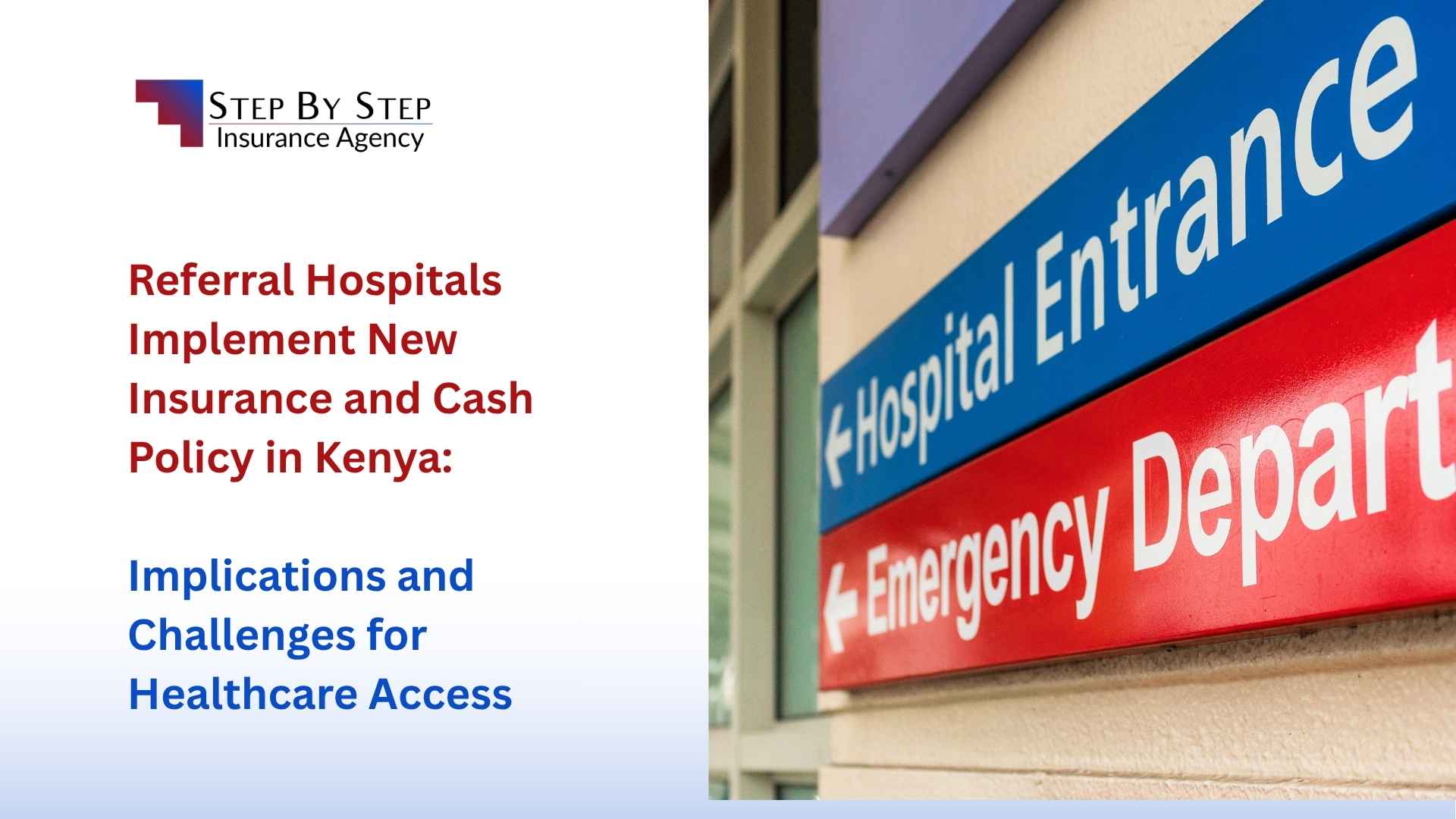
As of July 25, 2025, referral hospitals in Kenya began enforcing a new policy that requires patients to either present valid health insurance or pay cash upfront before receiving treatment. This policy marks a significant shift in the operational protocols of both national and county referral hospitals, which serve as critical healthcare access points for millions of Kenyans. The policy aims to enhance financial sustainability and reduce the vast accumulation of unpaid medical bills in the public health system.
However, it also raises serious concerns regarding access to healthcare for millions of uninsured or underinsured Kenyans, particularly vulnerable populations who may be unable to comply with these payment requirements.
Referral hospitals are the highest tier in Kenya’s public healthcare structure, providing specialized and complex services (Level 5 and Level 6 hospitals). They handle referrals from lower-level health facilities and are essential for managing serious health conditions across the country’s 47 counties. The enforcement of the insurance or cash upfront policy directly impacts how these facilities admit and treat patients, reshaping the landscape of healthcare accessibility nationwide.
Key Takeaways
New policy requires insurance proof or cash payment before treatment at referral hospitals
22 million Kenyans now covered under SHA, but many remain uninsured
Policy aims to improve hospital finances but risks excluding vulnerable populations
Implementation affects both national and county referral hospitals
Emergency cases may face treatment delays or denials
Part of broader shift toward Universal Health Coverage through SHIF
Policy Description and Implementation: What Does the New Policy Entail?
The new directive mandates that patients seeking care at Kenya’s referral hospitals must show evidence of active health insurance coverage or make an immediate cash payment before accessing medical services. This policy affects both national referral hospitals, such as Kenyatta National Hospital, and county referral hospitals across the country, which are classified as Level 5 and Level 6 health facilities providing advanced medical services.
Rationale for the Policy
Financial Sustainability: Referral hospitals have faced chronic underfunding and high rates of unpaid patient bills that threaten their operational capacity.
Reducing Accumulated Debts: The government and hospital management argue that requiring payment or insurance upfront will curb the growing backlog of unpaid medical fees.
Encouraging Health Insurance Uptake: The policy also intends to promote insurance enrollment, particularly under Kenya’s new Social Health Insurance Fund (SHIF), which aims to increase coverage nationwide.
This policy reflects a broader shift in healthcare financing in Kenya, where universal health coverage (UHC) goals hinge partly on increasing formal health insurance uptake across the population. For more details on SHIF packages, see our comprehensive guide to SHA packages.
Impact on Patients and Healthcare Access: Barriers for the Vulnerable
While the policy’s financial goals are clear, its practical implications for patients—especially the uninsured and underinsured—are stark.
Exclusion of Millions
Kenya currently has about 22 million registered members under the Social Health Authority (SHA), a dramatic increase from 8 million under the old National Hospital Insurance Fund (NHIF). However, a significant portion of the population remains uninsured or only partially insured.
Many Kenyans, especially in rural and low-income urban areas, depend on out-of-pocket payments for medical care, and the requirement to pay upfront excludes those without readily available funds.
Emergency cases, which often arrive without prior insurance or cash, face delays or outright denial of critical treatment at referral hospitals. Learn how to navigate the Afya Yangu registration process to secure coverage.
Challenges for Vulnerable Groups
Low-income families, informal sector workers, and marginalized communities are disproportionately affected.
Patients requiring urgent and long-term care face a dilemma: delay treatment while securing funds or forgo care entirely, potentially leading to worsened health outcomes.
The policy risks worsening healthcare disparities and may increase preventable morbidity and mortality if not accompanied by adequate safety nets or emergency exceptions.
Reactions and Concerns: Voices from the Public and Health Sector
The policy has been met with widespread concern and criticism:
Patient Advocacy Groups warn that enforcing payment or proof of insurance upfront may violate the right to healthcare and lead to increased suffering among the poor.
Healthcare Workers have expressed worries about ethical dilemmas when patients in need are turned away for financial reasons.
Some government officials emphasize the necessity of fiscal discipline and argue the policy will stabilize healthcare financing.
Civil society organizations urge the government to balance revenue generation with equitable access and caution against policies that create barriers to care.
An internal memo leaked to the press highlighted the operational challenges hospitals face, but also detailed the severe impact on patients turned away.
Relation to Universal Health Coverage and Social Health Insurance Fund (SHIF)
Kenya’s commitment to Universal Health Coverage (UHC) is a cornerstone of its health policy framework, with the Social Health Insurance Fund (SHIF) launched to increase inclusion and affordability of healthcare services.
The SHIF is aimed at widening insurance coverage, with over 22 million Kenyans already registered under the scheme as of mid-2025. The Fund is designed to subsidize healthcare costs at empaneled facilities, including referral hospitals, and promote prepayment over out-of-pocket expenses.
However, gaps remain, including:
Uneven enrollment across regions and socioeconomic groups.
Delays and inefficiencies in claims processing and reimbursement to facilities.
Lack of full insurance coverage for all essential services and populations.
The new upfront payment policy reflects efforts to integrate hospital operations into the SHIF framework more strictly but risks undermining the UHC philosophy if not carefully managed to avoid excluding vulnerable populations. For help with registration, see our step-by-step SHIF registration guide.
Contact SHA Directly
The Social Health Authority (SHA) in Kenya can be contacted through various channels:
Toll-free: 0800 720 601
Email: customercare@sha.go.ke or info@sha.go.ke
Headquarters: Ground Floor, SHA Building, Ragati Road, Nairobi City
Financial and Operational Challenges for Referral Hospitals
Kenyan referral hospitals face substantial financial pressures that underpin this policy:
Hospitals operate with tight budgets rarely matching patient service demand.
Large outstanding debts from patients unable to pay or delay payments strain operational cash flow.
Government allocations have increased (e.g., Sh138.1 billion allocated to healthcare in 2025) but remain insufficient to cover all patient care costs fully.
Referral hospitals require stable revenue streams to maintain specialist services, procure medicines, and upgrade infrastructure.
The policy attempts to reduce financial risk and improve hospital financial viability, but without complementary financing reforms and social protection, it may export the burden onto patients.
Potential Solutions and Forward-Looking Measures
To address the access barriers while maintaining hospital financial health, multiple measures are critical:
Expanding Insurance Coverage
Accelerate enrollment into the SHIF, targeting informal sector workers and low-income households.
Promote community-based health insurance schemes that integrate with SHIF.
Implement subsidies or waivers for indigent or vulnerable populations.
Improving Insurance and Claims Systems
Digitize patient registration and claims processing to ensure faster reimbursements.
Introduce direct billing arrangements where hospitals bill insurers directly, reducing upfront payment burdens on patients.
Emergency Care Guarantees
Enact policies mandating emergency treatment irrespective of payment status with subsequent billing arrangements.
Strengthen primary healthcare to reduce burden on referral hospitals.
Stakeholder Collaboration
Facilitate public-private partnerships to bridge funding gaps.
Engage civil society and patient groups in policy design to ensure inclusivity.
Policy Recommendations
Develop social safety nets to protect patients from catastrophic health expenditures.
Increase government healthcare budgets aligned with patient care realities.
Enhance transparency and accountability in hospital financial management.
Conclusion: Balancing Financial Sustainability and Equitable Access
The enforcement of the insurance or cash upfront policy at Kenyan referral hospitals reflects a critical juncture in the country’s health system. It underscores the ongoing struggle to balance financial sustainability of public healthcare facilities with the imperative of equitable and timely access to essential medical services.
While the policy seeks to reduce hospital arrears and promote insurance enrollment under Kenya’s ambitious UHC agenda, it risks excluding millions of vulnerable Kenyans from needed care if safeguards are not implemented. Moving forward requires multisectoral commitment to expanding insurance coverage, streamlining healthcare financing, safeguarding emergency access, and embedding social protections to ensure that no Kenyan is denied care due to inability to pay upfront.
This policy and its implications serve as a litmus test for Kenya’s broader health reforms, highlighting the complex intersection of healthcare financing, social justice, and public health outcomes in a rapidly evolving landscape. For answers to common questions, see our SHA Frequently Asked Questions guide.
Summary Table: Key Aspects of Kenya’s New Referral Hospital Insurance and Cash Policy
Aspect
Details
Policy Effective Date
July 25, 2025
Facilities Affected
National and County Referral Hospitals (Level 5 and 6)
Requirement for Service Access
Valid health insurance coverage or cash payment upfront
DISCLAIMER: WE ARE NOT AFFILIATED WITH SHIF/SHA. WE ARE A PRIVATE INSURANCE COMPANY DEALING WITH VARIOUS INSURANCE PRODUCTS INCLUDING AFFORDABLE MEDICAL INSURANCE THAT CAN BE BUNDLED WITH SHA TO GIVE YOU THE BEST COVERAGE.
FOR SHA INQUIRIES, CONTACT THE SOCIAL HEALTH AUTHORITY DIRECTLY AT THEIR TOLL-FREE NUMBER 0800 720 601 OR EMAIL CUSTOMERCARE@SHA.GO.KE OR INFO@SHA.GO.KE.