Why Group Life Insurance is Essential for Small Businesses in Kenya

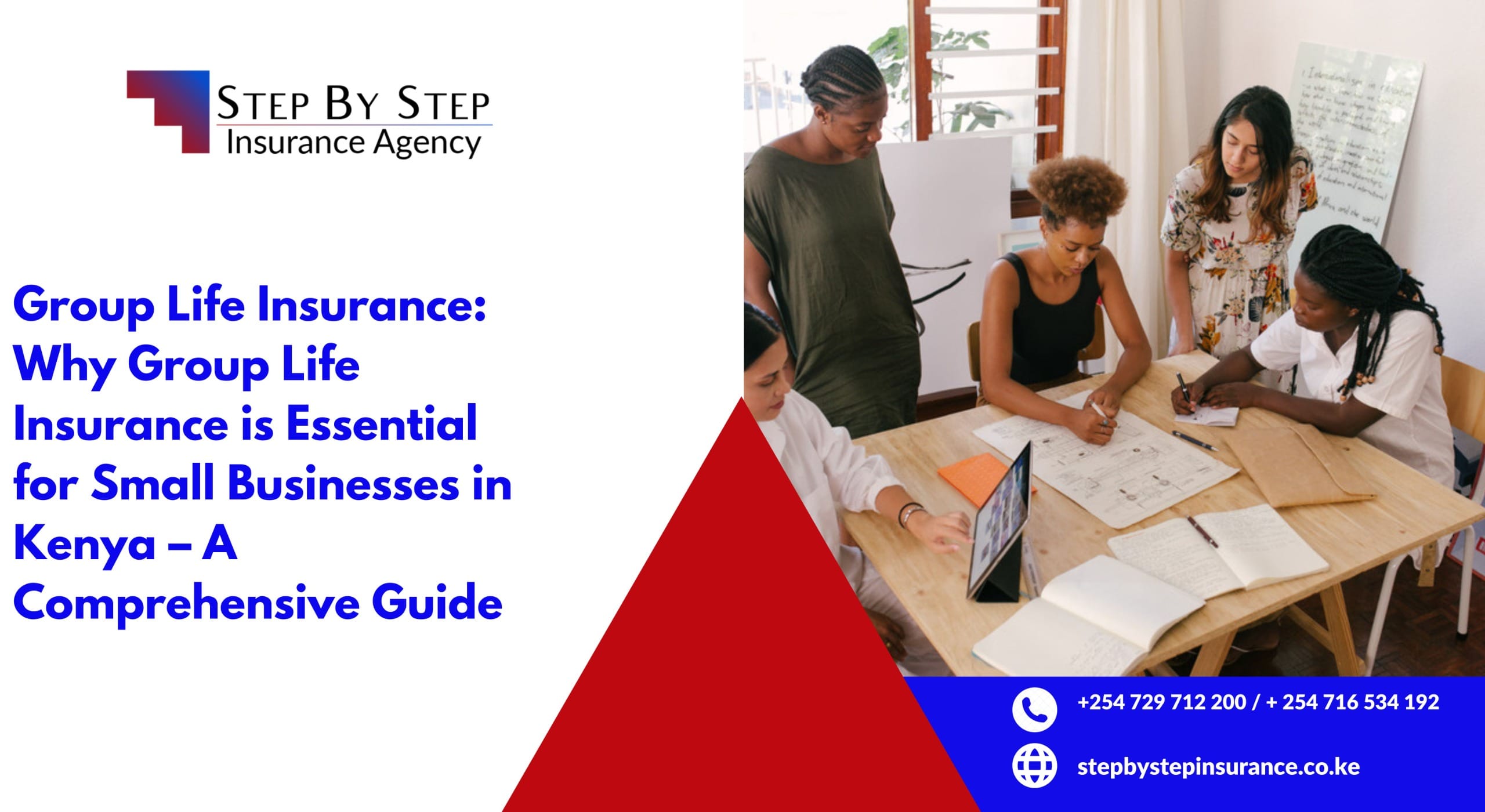
Running a small business in Kenya comes with many challenges—from managing cash flow to retaining skilled employees. While Group Life Insurance is not mandatory under Kenyan labour law, many SMEs now offer it as part of employee benefits, especially in professional services, manufacturing, NGOs, and growing startups. Employers use it to attract talent, build loyalty, and provide basic financial security to staff families. At Step By Step Insurance Agency, we help businesses structure Group Life Insurance correctly—so both employers and employees clearly understand what is covered.
Key Takeaways
- Group Life Insurance is a valuable employee benefit that helps Kenyan businesses attract and retain talent
- Premiums are typically employer-paid and may be tax-deductible as a business expense
- Coverage stops immediately when employment ends, making it different from personal life insurance
- Understanding policy conditions upfront prevents claim disputes later
- Step By Step Insurance Agency simplifies enrollment with multiple insurer options
Join Our Insurance Community
Connect with other Kenyan professionals interested in insurance trends, news, and insights. Share experiences and stay updated on the latest in employee benefits and business protection.
Join WhatsApp GroupTable of Contents
| Related Articles & Resources | |
|---|---|
| How Group Life Insurance Works in Kenya: Everything HR Managers Need to Know | |
| Group Last Expense Cover in Kenya: Secure a Dignified Farewell | |
What Is Group Life Insurance?
Group Life Insurance is a life insurance policy taken by an employer to cover employees under one policy. If an employee dies while still employed and listed on the policy, their beneficiaries receive a lump-sum payment (death benefit). Cover is directly tied to employment status—once an employee exits the company, their cover stops. This makes Group Life Insurance a workplace benefit rather than personal life insurance.
Premiums in Kenya
In Kenya, Group Life Insurance premiums are mostly paid by the employer as part of staff benefits. In some cases, employers may agree with staff to share the cost, depending on internal company policy—but employee contribution is not the norm.
Who Needs Group Life Insurance?
| Organization Type | Why It’s Beneficial |
|---|---|
| Businesses and Employers | Ideal for companies seeking competitive benefits to attract and retain talent while supporting employee welfare. |
| SMEs and Startups | Smaller businesses can offer affordable life cover to teams, improving morale and job satisfaction. |
| NGOs and Member Organisations | Associations and non-profits often use Group Life Insurance to protect members and demonstrate commitment to welfare. |
| Schools and Educational Institutions | Institutions may insure teachers and staff, giving families peace of mind. |
| Public Sector and Parastatal Organisations | These may offer Group Life Insurance as part of staff benefit schemes, depending on government policy and required approvals. |
How Group Life Insurance Works in Kenya
When a business enrolls, eligible employees are covered under one policy. The benefit is usually linked to salary—for example, two or three times annual pay.
Key Policy Conditions Employers Should Know
These are common causes of claim disputes in Kenya:
- Cover applies only while the employee is actively at work
- New employees may wait for a short period before cover starts
- Suicide is usually not covered in the first policy year
- Cover stops immediately when employment ends
Understanding these conditions upfront prevents misunderstandings later.
Tax Treatment
Group Life Insurance premiums are generally allowed as a business expense for tax purposes, subject to KRA rules and proper record-keeping. Always ensure documentation is maintained to support deductibility.
Why Group Life Insurance Makes Sense for Small Businesses
Offering Group Life Insurance shows responsibility toward employee welfare and strengthens trust within teams. Many Kenyan businesses also include it in their Employee Value Proposition (EVP) to stand out in competitive hiring markets—while still managing costs.
Group Life Insurance Claims Process in Kenya
If a covered employee passes away:
- The employer notifies the insurer (claims should be reported within the policy timeline—usually within 30 days).
- Required documents are submitted:
- Completed claim form
- Death certificate
- IDs of deceased and beneficiary
- Employer confirmation that the employee was covered at time of death
- Medical report where applicable
- The insurer verifies details and may request additional information.
- Once approved, the payout is released to beneficiaries—typically as a lump sum.
Employer confirmation of active employment is essential for claims to proceed.
Challenges Facing Group Life Insurance in Kenya
| Challenge | Impact |
|---|---|
| Low awareness among employers and employees | Limited uptake and understanding of benefits |
| Cost constraints for SMEs | Small businesses may struggle with premium costs |
| Administrative complexity in managing staff data | Time-consuming to maintain accurate records |
| Regulatory compliance gaps | Varying interpretations of requirements |
| High claim levels and fraudulent claims | Insurers apply stricter terms and higher premiums for high-risk industries |
Easy Enrollment with Step By Step Insurance Agency
At Step By Step, we work with multiple underwriters to simplify enrollment—from selecting the right policy to onboarding employees—ensuring your business gets practical, compliant coverage.
Conclusion
Group Life Insurance does not replace personal life insurance. It simply provides employees with basic financial protection while helping employers build trust, stability, and stronger teams. In Kenya’s evolving business environment, this cover offers a balanced way to support staff welfare without overwhelming company budgets.
GET QUOTEContact / Request a Consultation
Ready to explore Group Life Insurance for your organization? Get in touch with our experts for personalized advice.
stepbystepinsurance.co.ke/contact/
+254 (0) 729 712 200
+254 (0) 716 534 192
0722 888 350